Celebrating SIEPR's 40th Anniversary: A look back at our history

TL;DR
Seeper is a non-partisan research center at Stanford University that utilizes economic tools to solve a wide range of complex problems, going beyond traditional economic theory.
Transcript
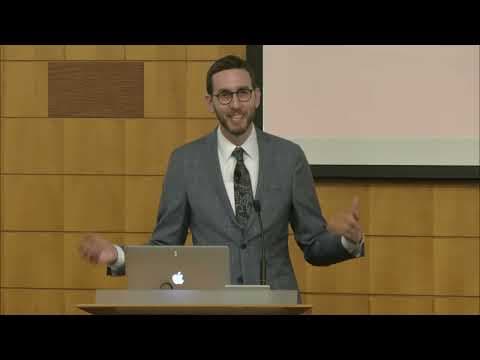
how do you describe Seafood to your friends who know nothing about it that's a tough one you can't find a place like this hardly anywhere else in the world I describe sleeper as being non-partisan very pragmatic Problem Solver focused on economics and they are using economic tools to solve a wide range of problems Way Beyond just what you think of ... Read More
Key Insights
- 🤪 Seeper goes beyond traditional economics, utilizing economic tools to tackle a wide range of real-world problems.
- 😖 The organization was founded to bridge the gap between academic economists and policy makers, with a focus on economic policy-relevant research.
- 🏗️ Key milestones, such as the Economic Summit and the construction of a new building, have contributed to Seeper's growth and influence.
- 👨🔬 Seeper's commitment to young scholars and education helps shape the future of economic policy research.
- ❓ The Advisory Board's expertise and guidance enhance Seeper's impact and contribute to the spread of economic knowledge.
- 🪛 Seeper's focus on action and optimism drives its efforts to make policies better and prioritize the collective benefit.
- 🖐️ Research plays a significant role in shaping economic policy, and Seeper aims to increase its influence in this area.
Install to Summarize YouTube Videos and Get Transcripts
Explore YouTube Video Summarizer or Get YouTube Transcript Extractor
Questions & Answers
Q: What is Seeper's main focus and how does it differ from traditional economics?
Seeper's focus extends beyond classic economics, as it tackles a broad range of issues such as healthcare and marginalized populations. It utilizes economic tools to find pragmatic solutions to real-world problems.
Q: How did Seeper evolve and gain influence over time?
Seeper started as an institution to bring together economists across various disciplines at Stanford. It gained traction through the leadership of individuals like Michael Boskin and George Schultz and achieved greater recognition with the Economic Summit. The construction of a new building also allowed for expansion and collaboration.
Q: How does Seeper support young scholars and promote their involvement in economic policy research?
Seeper established a post-doc program to provide opportunities for young economists to conduct research and start their careers with a sabbatical-like experience. The organization is committed to cultivating the next generation of economists and influencing the profession at large.
Q: What is the significance of Seeper's Advisory Board?
Seeper's Advisory Board consists of influential business, political, and thought leaders, including Nobel Prize winners. Their expertise and guidance contribute to the organization's impact and success in spreading economic thought and driving positive change.
Summary & Key Takeaways
-
Seeper was founded to support economic policy-relevant research and bridge the gap between academic economists and policy makers.
-
The organization evolved from focusing on economic theory to addressing real-world issues such as healthcare and work-from-home dynamics.
-
Seeper's growth was facilitated by key milestones, including the Economic Summit and the construction of a new building, allowing for expanded programming and the training of young scholars.
Read in Other Languages (beta)
Share This Summary 📚
Summarize YouTube Videos and Get Video Transcripts with 1-Click
Try YouTube Summary with ChatGPT & Claude or YouTube Transcript Generator
Explore More Summaries from Stanford Institute for Economic Policy Research (SIEPR) 📚
Summarize YouTube Videos and Get Video Transcripts with 1-Click
Try YouTube Summary with ChatGPT & Claude or YouTube Transcript Generator