How to Analyze SEO Competitors Effectively
TL;DR
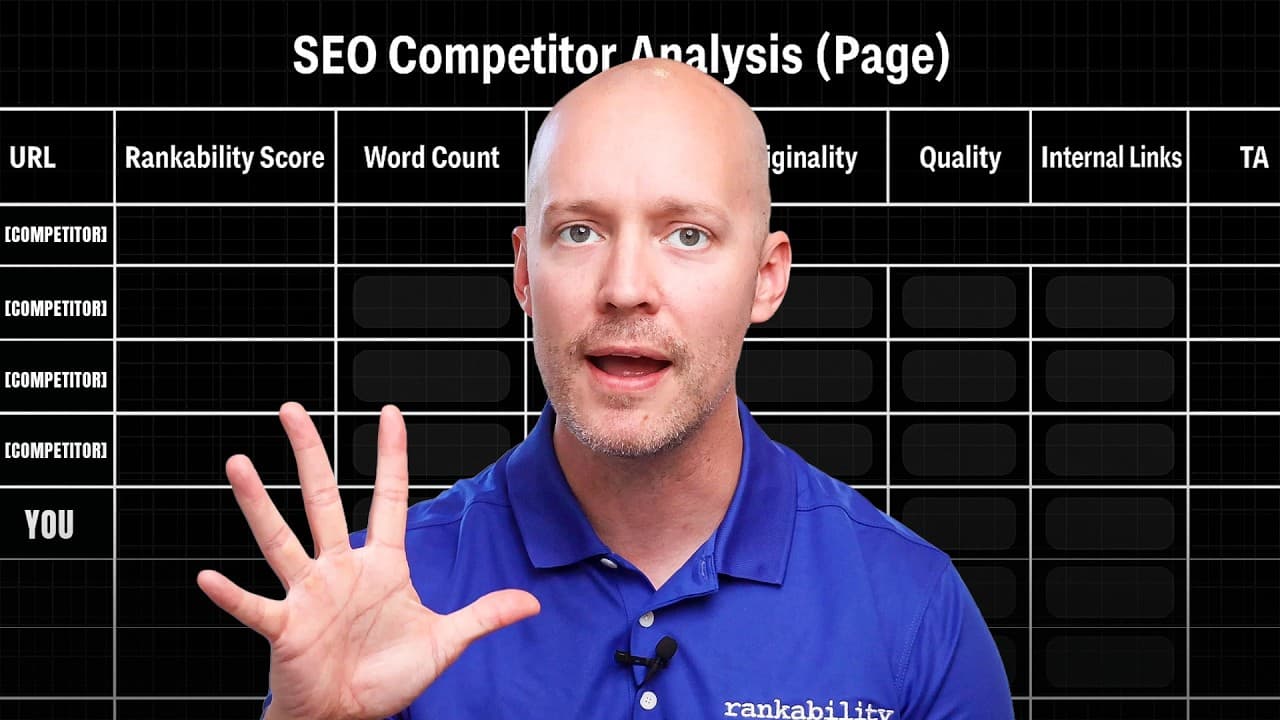
To effectively reverse engineer your SEO competitors, gather comprehensive organic traffic and backlink data using tools like Semrush. Identify gaps in keyword rankings, content depth, and brand presence. Use this data to refine your SEO strategy, focusing on areas where competitors excel. Prioritize actions that offer high returns with minimal effort, such as optimizing existing content.
Transcript
this is the last SEO competitor analysis video you'll ever need to watch so start by scanning the QR code on screen to get the free SEO competitor research template I'll be using in this video and let's begin with the broadlevel analysis here's how to do it so step number one gather organic traffic and backlink data so here's the SEO competitor ana... Read More
Key Insights
- SEO competitor analysis involves gathering organic traffic and backlink data using tools like Semrush.
- Identifying keyword gaps can reveal opportunities where competitors rank but you do not.
- Crawling competitor websites provides insights into their content strategy and site structure.
- Analyzing branded keyword volume and social media presence helps gauge brand awareness.
- Measuring on-page SEO basics ensures keywords are in core locations like URL, title, and H1.
- Using tools like originality.ai can reveal if competitors use AI-generated or human-written content.
- Internal links and topic authority are critical factors in determining a page's ranking potential.
- Domain authority and page-specific backlinks are key metrics to assess when narrowing the SEO gap.
Install to Summarize YouTube Videos and Get Transcripts
Explore YouTube Video Summarizer or Get YouTube Transcript Extractor
Questions & Answers
Q: How to gather organic traffic and backlink data?
To gather organic traffic and backlink data, use tools like Semrush. Enter at least three top competitors and your domain into the bulk analysis tool. Compare the results to see traffic data, authority scores, referring domains, and total backlinks. Export this data for further analysis and input it into your SEO competitor research template.
Q: What is the purpose of crawling competitor websites?
Crawling competitor websites provides valuable insights into their content strategy and site structure. By analyzing indexed pages, word count, and internal links, you can identify gaps in your own website's content and structure. This information helps you build a more relevant and competitive website, improving your chances of ranking higher in search results.
Q: Why is branded keyword volume important?
Branded keyword volume indicates the level of brand awareness and recognition a competitor has achieved. A high volume suggests effective content marketing and advertising efforts. By measuring branded keyword volume, you can identify gaps in your brand's visibility and set targets for increasing your brand's search presence through similar marketing strategies.
Q: How does originality.ai help in SEO analysis?
Originality.ai helps determine whether competitors use AI-generated or human-written content. This information is crucial because if competitors rely on human-written content, you may need to do the same to compete effectively. Conversely, if AI content is prevalent, you might consider using AI-generated content, aligning your strategy with proven models in your niche.
Q: What is the role of internal links in SEO?
Internal links play a vital role in SEO by distributing page authority throughout a website and enhancing user experience. They help search engines understand the site's structure and content relationships. A high number of internal links to important pages can improve their visibility and ranking potential, making it crucial to match or exceed competitors' internal link strategies.
Q: How to measure topic authority for SEO?
To measure topic authority, assess the number of pages a competitor has built around a specific topic. Use the site colon search method to find relevant pages. Assign scores based on the number of supporting assets, with higher scores indicating more comprehensive coverage. This analysis helps identify content gaps and opportunities to strengthen your site's authority on the topic.
Q: Why analyze domain authority and page-specific backlinks?
Analyzing domain authority and page-specific backlinks is crucial for understanding the competitive landscape. Domain authority reflects the overall strength of a website, while page-specific backlinks indicate the level of trust and authority a page has earned. Narrowing these gaps is essential for improving your site's ranking potential and competing effectively against top-performing competitors.
Q: How to optimize existing SEO content for better results?
Optimizing existing SEO content involves updating and enhancing content to improve relevance and performance. Focus on aligning content with current keyword trends, improving on-page SEO elements, and increasing internal links. This strategy often yields high returns with minimal effort, as it leverages existing content assets to enhance their visibility and ranking potential in search results.
Summary & Key Takeaways
-
To reverse engineer SEO competitors, start by gathering organic traffic and backlink data using Semrush. Identify gaps in keyword rankings and content depth to refine your SEO strategy. Use tools like Screaming Frog and ChatGPT to analyze competitors' site structures and content quality, focusing on areas where they excel.
-
Crawling competitor websites provides insights into their content strategy, revealing gaps in your own approach. Measure on-page SEO basics, such as keyword placement, and analyze branded keyword volume and social media presence to gauge brand awareness. This comprehensive analysis helps you prioritize actions for maximum SEO impact.
-
Analyzing domain authority and page-specific backlinks is crucial for narrowing the SEO gap. Use originality.ai to understand if competitors rely on AI-generated or human-written content. Focus on optimizing existing content and building internal links to enhance topic authority and improve your site's ranking potential.
Read in Other Languages (beta)
Share This Summary 📚
Summarize YouTube Videos and Get Video Transcripts with 1-Click
Try YouTube Summary with ChatGPT & Claude or YouTube Transcript Generator
Explore More Summaries from Nathan Gotch 📚



Summarize YouTube Videos and Get Video Transcripts with 1-Click
Try YouTube Summary with ChatGPT & Claude or YouTube Transcript Generator