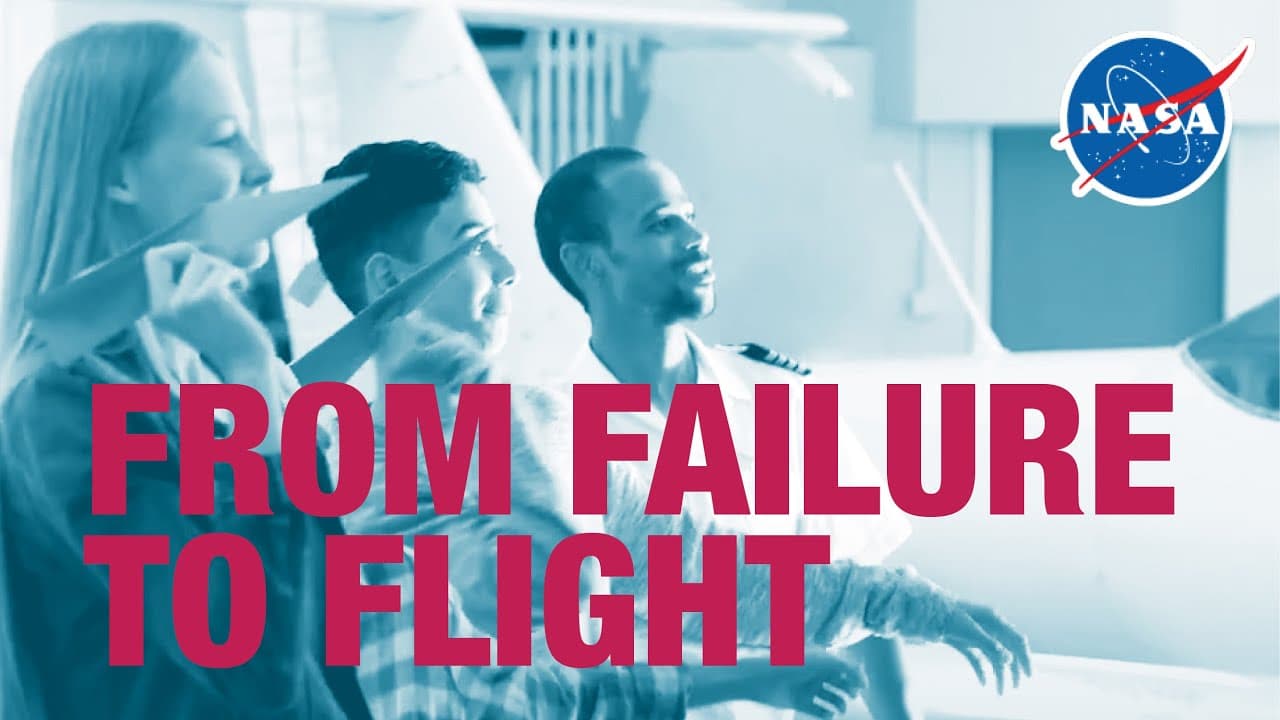
Throw a Paper Airplane 100 Feet With NASA
TL;DR
Engineer fails multiple times in designing a paper airplane that can fly 100 feet but receives crucial tips from NASA that finally lead to success.
Transcript
Have you ever accepted a challenge and thought...This is way too easy? So you didn't prepare? Hi, I'm David Alexander, and I wanted to share with you what it took for me and my friend James Ryan to design and throw a paper airplane more than 100 feet. Spoiler alert. We failed so many times. It was actually embarrassing. Here's the story. NASA chall... Read More
Key Insights
- 🧑🏭 Designing a paper airplane that can fly a long distance requires considering factors such as minimizing drag, optimizing stability, and maintaining a proper center of gravity.
- ✈️ NASA's aerospace engineers have extensive knowledge and expertise in flight optimization, which can be applied to various forms of aviation, including paper airplanes.
- 😤 Failure is an essential part of the learning process. The team's initial failures taught them valuable lessons and helped them improve their designs.
- 🛩️ Sustainability principles employed by NASA in aircraft design can also be effective in improving flight performance and distance even with a small paper airplane.
- ✈️ Folding the paper airplane's wings tightly, focusing on the leading edge, can reduce drag and enhance flight efficiency.
- 📎 Applying weight to the nose of the paper airplane, such as using a paper clip or tape, can improve stability by preventing the nose from pitching up and risking a stall.
- ✈️ Incorporating dihedral (angling the wingtips up) helps the airplane roll stabilize itself, leading to better flight performance.
Install to Summarize YouTube Videos and Get Transcripts
Explore YouTube Video Summarizer or Get YouTube Transcript Extractor
Questions & Answers
Q: What was the initial goal set by NASA for designing the paper airplane?
NASA challenged David and James to create a paper airplane that could fly 100 feet or farther as a fun, aeronautics-related activity for students.
Q: Why did the team struggle to achieve the desired distance with their paper airplane designs?
The team had difficulty figuring out what went wrong with their designs. They couldn't reach the desired distance because they didn't consider crucial factors like minimizing drag, maintaining stability, and optimizing the center of gravity.
Q: How did Jesse Quinlan from NASA help the team improve their paper airplane design?
Jesse advised them to make tight folds, especially on the leading edge of the wings, to minimize drag. He also suggested adding a paper clip or tape to the nose for better stability and incorporating dihedral (angling the wingtips up) to roll stabilize the aircraft.
Q: What was the outcome of implementing Jesse's tips in the paper airplane design?
Implementing Jesse's tips proved to be successful, and the team finally achieved a distance of 102 feet, surpassing the 100-feet challenge set by NASA.
Summary & Key Takeaways
-
David and James are challenged by NASA to design a paper airplane that can fly 100 feet or more, but their initial attempts fail miserably with the farthest distance being only 62 feet.
-
Realizing they need help, James contacts an aerospace engineer at NASA named Jesse Quinlan, who provides them with important tips to optimize the airplane's design and improve its stability.
-
Implementing the advice, the team successfully throws a paper airplane that reaches a distance of 102 feet, proving the effectiveness of NASA's flight optimization techniques.
Read in Other Languages (beta)
Share This Summary 📚
Summarize YouTube Videos and Get Video Transcripts with 1-Click
Try YouTube Summary with ChatGPT & Claude or YouTube Transcript Generator
Explore More Summaries from NASA STEM 📚
Summarize YouTube Videos and Get Video Transcripts with 1-Click
Try YouTube Summary with ChatGPT & Claude or YouTube Transcript Generator