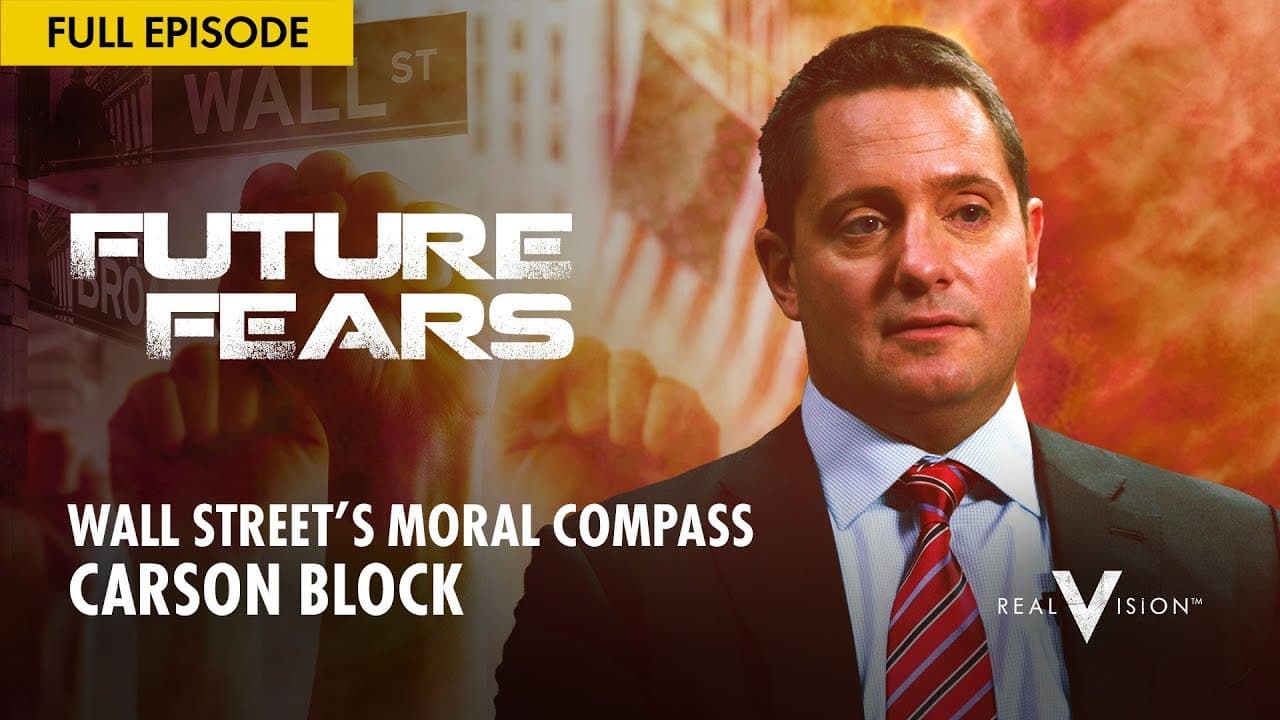
Why Is Investing Considered Amoral in Today's Market?
TL;DR
Investing is considered amoral because it focuses solely on profit without regard for ethical implications, leading to immoral outcomes. Technological advancements have shifted power to the private sector, increasing risks that can harm society, especially in industries like healthcare. To foster positive change, it's crucial to incorporate morality into investing practices and address the bad actors exploiting vulnerable individuals.
Transcript
Investing is inherently an amoral activity, OK? It's if I think this is going to go up, I'll buy it. If I think it's going to go down, I'll sell it. But the amorality of investing, I believe, is increasingly leading to immoral outcomes. I think it'd be delusions of grandeur for me to say that I can change that industry. But you're trying. Well, I w... Read More
Key Insights
- 🥺 Investing operates in an amoral framework where profit is the primary driver, leading to immoral outcomes in some cases.
- ✊ Technological advancements have given the private sector more power over our lives, creating risks that we don't fully understand.
- 🧑🏭 Certain industries, like healthcare, have numerous bad actors that exploit individuals and rip off the system, necessitating the need for regulation and change.
- 👨💼 Investing needs to incorporate morality, especially when the potential harm caused by businesses is significant.
- 💱 Changing the investing culture and targeting harmful companies can potentially bring positive change, but it may require sustained effort.
- 👶 The ability to create meaningful change in the long term is uncertain, and there may be challenges in preventing new bad actors from emerging.
- 💱 The tightening of monetary conditions may create an environment more conducive to promoting positive change.
Install to Summarize YouTube Videos and Get Transcripts
Explore YouTube Video Summarizer or Get YouTube Transcript Extractor
Questions & Answers
Q: Why is investing considered an amoral activity?
Investing is amoral because it is based on buying assets expected to rise in value and selling those expected to decline, devoid of moral consideration. Profit is the main goal, which can lead to unethical behavior if not regulated.
Q: How has the private sector gained power over the government?
Technological advancements have made the private sector surpass the government in terms of understanding and regulating certain industries. The pace of innovation often outpaces our ability to manage risks effectively.
Q: What are the implications of private sector power?
With the private sector being more influential in our lives than ever before, mistakes and unethical behavior by companies can have far-reaching consequences. Examples include Purdue Pharma's role in the opioid crisis, leading to a significant number of overdose deaths.
Q: Can investors bring morality into investing?
It is challenging to change the culture of investing given its amoral foundation. While there may be agreement on cases where companies could cause substantial harm, true morality in investing still lacks widespread adoption.
Summary & Key Takeaways
-
Investing is an amoral activity based on predicting market trends, but this amorality can lead to immoral outcomes.
-
Technological advancements have given more power to the private sector, creating risks that we don't fully understand or manage.
-
The private sector's influence over our lives is greater now, and certain companies can cause significant harm, particularly in the healthcare industry.
Read in Other Languages (beta)
Share This Summary 📚
Summarize YouTube Videos and Get Video Transcripts with 1-Click
Try YouTube Summary with ChatGPT & Claude or YouTube Transcript Generator
Explore More Summaries from Real Vision 📚


Summarize YouTube Videos and Get Video Transcripts with 1-Click
Try YouTube Summary with ChatGPT & Claude or YouTube Transcript Generator