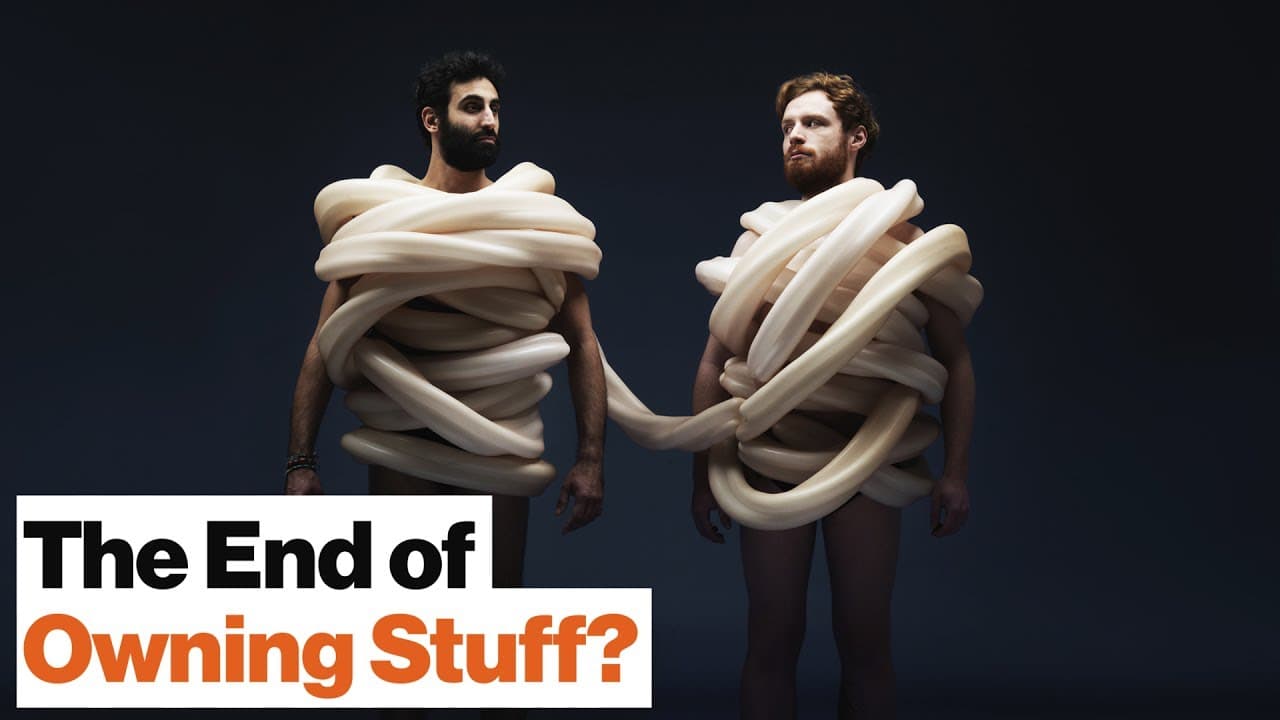
Why Buy Things You Only Use Once? Enter the Subscription Economy | Kevin Kelly | Big Think
TL;DR
The value of intangible goods is increasing, leading to a shift from owning physical items to subscribing or accessing them on-demand.
Transcript
More and more of the things that we find valuable weigh less and less. More and more of their value is in the things that don’t have any weight or mass. These intangibles are really what becomes the driver of our economy and if we can deliver these intangibles anytime, anywhere to anybody that instant aspect of them means that we, in fact, don’t ha... Read More
Key Insights
- 🙃 Intangible goods are increasingly valuable in the economy, leading to a shift from owning physical items to accessing them on-demand.
- 👾 Subscription-based models for movies, music, and games are already popular, replacing the need for physical ownership.
- 🙃 The benefits of accessing goods and services instead of owning them include convenience, flexibility, and the elimination of liabilities.
- 🔪 The shift from ownership to access can potentially extend to various items such as clothing, furniture, toys, kitchen equipment, and camping gear.
- 🖐️ Instant delivery, 3D printing, and personalized experiences play a role in the transition from ownership to access.
- 💨 The transition towards access-based models offers a more sustainable and efficient way of utilizing resources.
- 🙃 The subscription model allows individuals to always have access to the latest and greatest products without the burden of owning them.
Install to Summarize YouTube Videos and Get Transcripts
Explore YouTube Video Summarizer or Get YouTube Transcript Extractor
Questions & Answers
Q: Why is the value of intangible goods becoming more important in the economy?
Intangible goods, such as digital content and on-demand services, are increasing in value because they can be delivered instantly and accessed anytime, anywhere. This convenience and flexibility make them more desirable than physical ownership.
Q: What are the benefits of subscribing to something rather than owning it?
Subscribing to goods or services eliminates the need for storing, cleaning, maintaining, and upgrading them. It provides access to a wide range of options without the responsibilities and liabilities of ownership.
Q: How far can the shift from ownership to access go?
The vision presented suggests that individuals may eventually not own much of anything and instead subscribe or access everything they need. This could include clothing, furniture, toys, tools, kitchen equipment, and even camping gear.
Q: How can the subscription model be applied to clothing?
In the future, clothes could be subscribed to, delivered, and then recycled and cleaned for someone else to use. This could include daily wear, with body scanning and digital avatars ensuring proper fit.
Summary & Key Takeaways
-
The value of intangible goods is becoming more important in the economy, leading to a decrease in the importance of physical ownership.
-
Subscription-based models for movies, music, and games are replacing the need for owning these items.
-
Accessing goods and services on-demand, such as through apps like Uber, is becoming more desirable than owning them due to the associated liabilities.
Read in Other Languages (beta)
Share This Summary 📚
Summarize YouTube Videos and Get Video Transcripts with 1-Click
Try YouTube Summary with ChatGPT & Claude or YouTube Transcript Generator
Explore More Summaries from Big Think 📚

Summarize YouTube Videos and Get Video Transcripts with 1-Click
Try YouTube Summary with ChatGPT & Claude or YouTube Transcript Generator