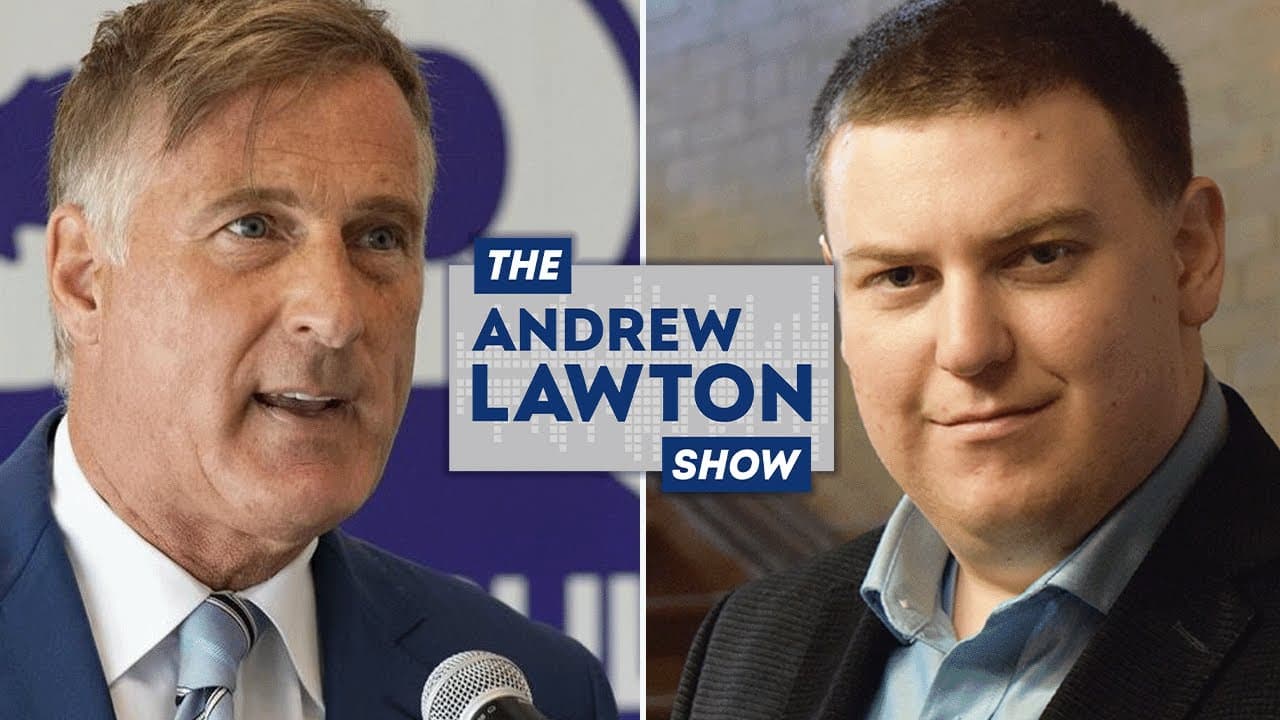
What does Poilievre’s win mean for the PPC? (ft. Maxime Bernier)
TL;DR
Maxime Bernier discusses the Conservative Party's strategies and the People's Party's distinct positions.
Transcript
you're tuned in to the Andrew Lawton show we covered a little over a week ago the conservative party of Canada's leadership results in which Pierre pauliev very handily won the leader Party of Canada on the first ballot and what we see now is I think a big question about the place that the Conservative Party of Canada has in Canadian politics and w... Read More
Key Insights
- 💯 The People's Party of Canada positions itself as a principled alternative amid a shifting Conservative landscape, emphasizing core values over popular opinion.
- 🙈 Polling and surveys are seen as detrimental to the authenticity of political discourse, with Bernier advocating for a focus on fundamental beliefs and ideas.
- 💋 Immigration policy differences mark a significant ideological divide, with the PPC calling for reduced immigration levels focused on skilled applicants.
- 🛄 The PPC aims to capture momentum from disillusioned voters seeking choices beyond the mainstream Conservative narrative, primarily through consistent messaging.
- 🙈 Regional resentments, particularly among Western Canadians, are seen as critical issues that the PPC intends to prioritize more than the Conservatives.
- 🧑⚕️ Recent advocacy efforts yielded tangible results, showcasing the PPC's commitment to addressing concerns about mental health and healthcare policy.
- 🛩️ The PPC's adherence to smaller government principles is juxtaposed with Bernier's criticisms of what he describes as compromised conservative values.
Install to Summarize YouTube Videos and Get Transcripts
Explore YouTube Video Summarizer or Get YouTube Transcript Extractor
Questions & Answers
Q: What distinguishes the People's Party of Canada from the Conservative Party?
The PPC emphasizes a principled approach based on ideas and conviction, while the Conservative Party, led by Pierre Poliev, allegedly relies more on polling and public opinion. Bernier argues that this difference is crucial for appealing to voters who prioritize authenticity over popularity.
Q: How does the PPC plan to retain support from former Conservative voters?
Bernier believes the PPC's consistent platform and clear stances on issues like immigration and government autonomy resonate with disillusioned Conservative voters. By maintaining their commitment to principles rather than shifting narratives based on popularity, they aim to build a loyal voter base.
Q: What issues does the PPC anticipate will emerge in the next election?
While Bernier acknowledges uncertainty regarding emerging issues, he highlights immigration, economic policy, and Western Canadian autonomy as likely focal points. The PPC is committed to advocating for sustainable immigration policies and addressing regional grievances.
Q: What recent victory did the PPC achieve in Saskatchewan?
Bernier celebrated the removal of a problematic option on Saskatchewan's public health phone line that promoted assisted death. This change followed public pressure and advocacy from the PPC and underscores the party's commitment to mental health awareness and proper healthcare priorities.
Q: What role will vaccine mandates play in the PPC's future strategy?
Although Bernier notes that COVID-19 may not dominate future elections, he emphasizes that the PPC remains committed to fighting for those impacted by vaccine mandates. Their legal efforts aim to establish precedents to prevent future mandates, promoting personal freedoms.
Q: How does Bernier view the possibility of a merger with the Conservative Party?
Bernier expresses strong opposition to a merger, citing historical lessons where conservative parties compromised on their principles. He insists that the PPC will continue to uphold its core values instead of diluting them for electoral success within the existing Conservative framework.
Summary & Key Takeaways
-
Maxime Bernier, leader of the People's Party of Canada, contrasts his party's focus on conviction and ideas with the Conservative Party's polling-driven approach under new leader Pierre Poliev.
-
Bernier highlights key policy differences between the PPC and Conservatives regarding immigration, environmental regulations, and federal relations with Western provinces.
-
The conversation touches on potential electoral strategies, public sentiment, and a recent victory against promoting assisted death in Saskatchewan's healthcare system.
Read in Other Languages (beta)
Share This Summary 📚
Summarize YouTube Videos and Get Video Transcripts with 1-Click
Try YouTube Summary with ChatGPT & Claude or YouTube Transcript Generator
Explore More Summaries from True North 📚




Summarize YouTube Videos and Get Video Transcripts with 1-Click
Try YouTube Summary with ChatGPT & Claude or YouTube Transcript Generator