How to measure complexity of life | Lee Cronin and Lex Fridman
TL;DR
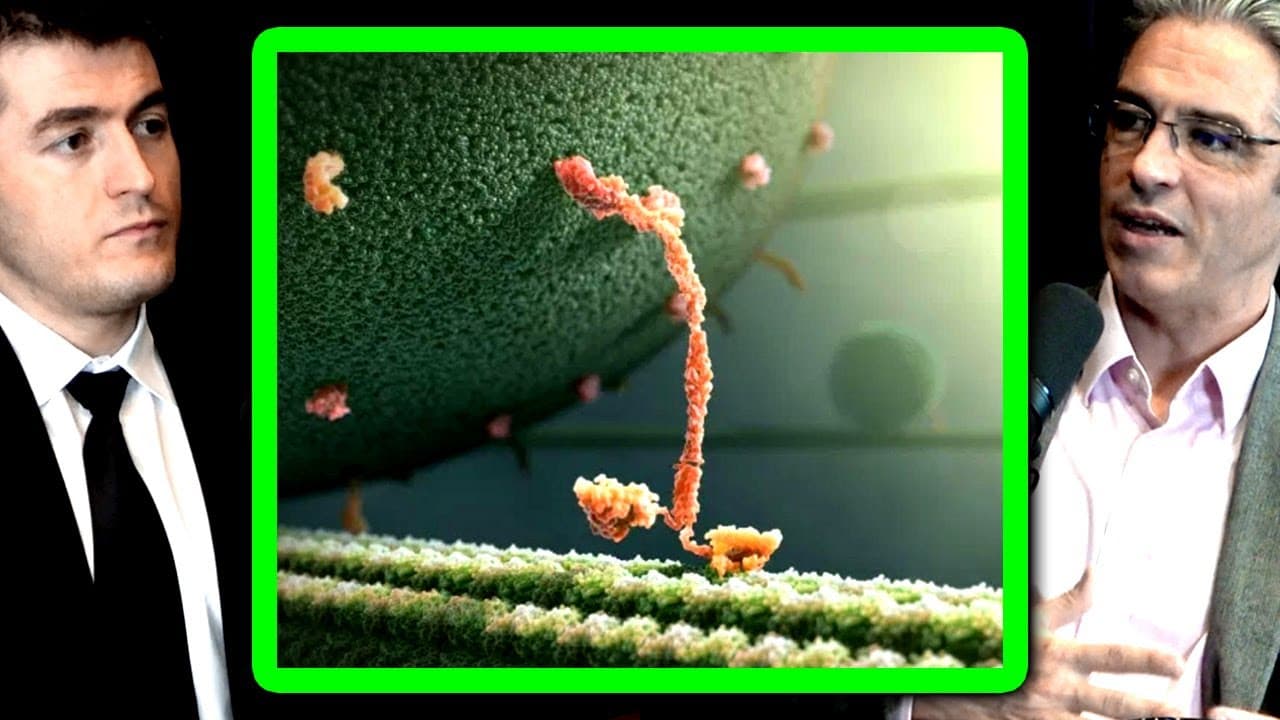
Assembly theory suggests that the more an object can be broken into unsymmetrical parts, the more likely it is to have been created through evolutionary or information processes. This theory can be applied to molecules and other objects to determine if they were produced by chance or by causation.
Transcript
what is assembly theory and generally speaking how would we recognize life if we saw it so assembly theory is a theory goes back a few years now my struggle for maybe almost 10 years when i was going to origin of life conferences and artificial life conferences where i thought that everybody was dancing around the problem of what life is and what i... Read More
Key Insights
- 🥳 Assembly theory focuses on the number of unsymmetrical parts in an object to determine if it has been created through evolutionary or information processes.
- 😨 Initially developed for molecules, assembly theory can be applied to various objects, including books and cars, to assess if they were formed by chance or causation.
- 💁 The theory provides a measure of complexity and can be used to differentiate objects formed by natural phenomena from those produced by a living organism or technological processes.
- 🎚️ Assembly theory challenges the idea that causation does not exist at the fundamental level and suggests that objects in the universe exhibit varying levels of assembly.
Install to Summarize YouTube Videos and Get Transcripts
Explore YouTube Video Summarizer or Get YouTube Transcript Extractor
Questions & Answers
Q: What is assembly theory?
Assembly theory suggests that objects with a higher number of unsymmetrical parts are more likely to have been created through evolutionary or information processes. It provides a way to differentiate between objects created by chance and those created through causation.
Q: How does assembly theory apply to molecules?
In the context of molecules, assembly theory measures the complexity of a molecule by determining the minimum number of steps required to reform it from its individual atoms or bonds. This allows researchers to differentiate between molecules formed by chance and those formed through an informational process.
Q: Can assembly theory be applied to objects other than molecules?
Yes, assembly theory can be applied to any object. By counting the number of unsymmetrical parts and assessing the abundance of the object, it is possible to determine if the object has been created through an informational process or by chance.
Q: How does assembly theory relate to the concept of causation?
Assembly theory suggests that objects with a higher assembly number have a higher causation power. It implies that causation exists at the fundamental level of the universe, contrary to the beliefs of some physicists.
Summary & Key Takeaways
-
Assembly theory states that objects with a higher number of unsymmetrical parts are more likely to have been created through evolutionary or information processes.
-
The theory was initially developed for molecules, with the idea that complex molecules could not have arisen by chance.
-
By applying assembly theory to different objects, such as books or cars, it is possible to determine if they have been created through an informational process.
Read in Other Languages (beta)
Share This Summary 📚
Summarize YouTube Videos and Get Video Transcripts with 1-Click
Try YouTube Summary with ChatGPT & Claude or YouTube Transcript Generator
Explore More Summaries from Lex Clips 📚



Summarize YouTube Videos and Get Video Transcripts with 1-Click
Try YouTube Summary with ChatGPT & Claude or YouTube Transcript Generator