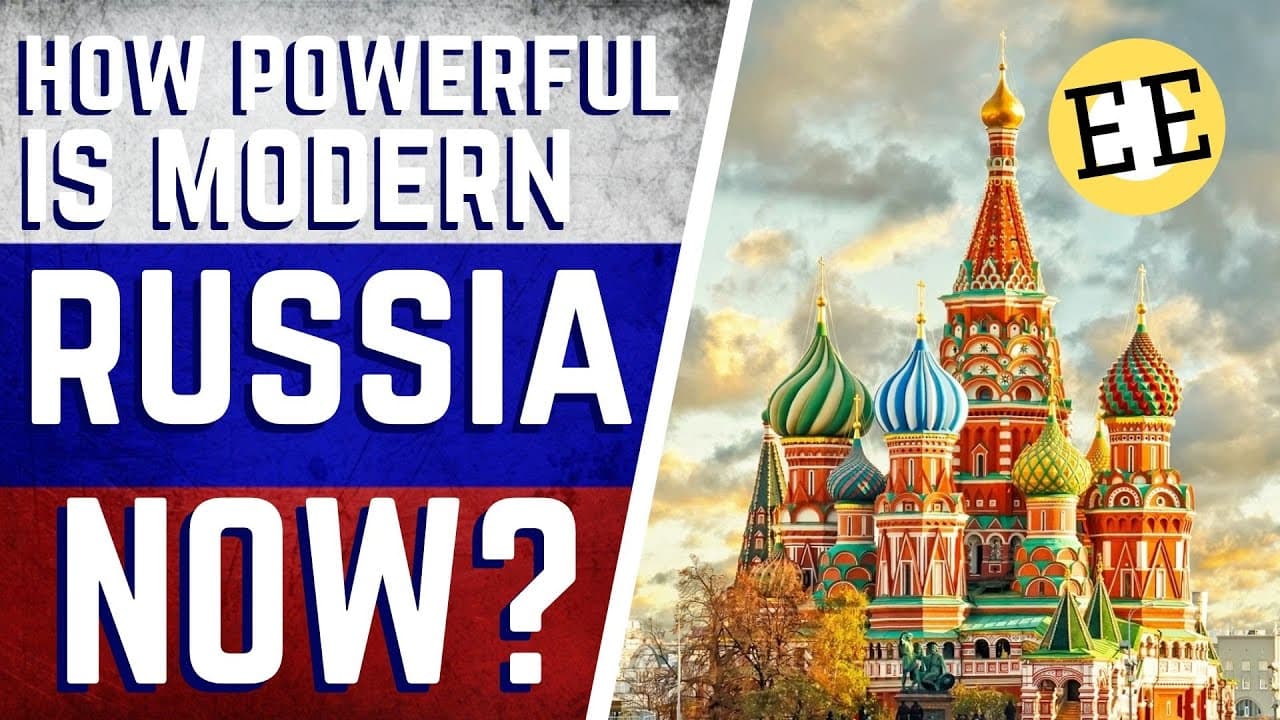
The Modern Economy of Russia
TL;DR
Russia's economy struggles despite vast resources and military power.
Transcript
this is Russia the largest country on earth by pure landmass the country is the center of many controversies that have today made it a bit of a blue man in the international community it is an enormous military power with the largest nuclear arsenal in the world even beating out the United States which comes as a hangover from the time when the nat... Read More
Key Insights
- Russia's economy, despite its vast natural resources and military power, is not as strong as other major world economies like the USA or China, with a GDP comparable to Canada or Brazil.
- The transition from a Soviet economy to a market economy was abrupt and problematic, unlike China's gradual shift, leading to economic instability and corruption.
- Boris Yeltsin's 'shock therapy' reforms, based on the Washington Consensus, intended to revitalize the economy but resulted in monopolized markets and oligarch-run industries.
- The privatization of state enterprises in Russia led to a concentration of wealth among a few oligarchs, who benefited more than the general population from open markets and international trade.
- Russia experiences significant economic inequality, with wealth concentrated among a few individuals, many of whom store their wealth offshore, exacerbating domestic economic issues.
- The Gini coefficient for Russia suggests average inequality, but studies indicate it is the most unequal major country due to wealth held overseas.
- The lack of reinvestment of wealth back into the Russian economy by its billionaires limits economic growth and development opportunities for the broader population.
- Political instability and corruption continue to plague Russia's economy, affecting its potential growth and the equitable distribution of its natural resource wealth.
Install to Summarize YouTube Videos and Get Transcripts
Explore YouTube Video Summarizer or Get YouTube Transcript Extractor
Questions & Answers
Q: What is the current economic standing of Russia compared to other major powers?
Russia's economy, with a GDP of approximately 1.7 trillion USD, is comparable to countries like Canada or Brazil rather than major powers like the USA or China. Despite its vast natural resources and military strength, its economic influence is relatively limited.
Q: How did Russia transition from a Soviet to a market economy?
Russia's transition from a Soviet economy to a market economy was rapid and problematic. Unlike China's gradual shift, Russia's transition, overseen by Boris Yeltsin, was characterized by 'shock therapy' reforms, leading to economic instability and corruption.
Q: What were the effects of Boris Yeltsin's economic reforms?
Boris Yeltsin's 'shock therapy' reforms, based on the Washington Consensus, aimed to revitalize Russia's economy but resulted in monopolized markets and industries dominated by oligarchs. This concentration of wealth limited the benefits of open markets for the general population.
Q: How has wealth inequality affected Russia's economy?
Wealth inequality in Russia is significant, with a few individuals holding a substantial portion of the country's wealth, much of which is stored offshore. This limits domestic reinvestment, exacerbating economic challenges and hindering growth and development opportunities for the broader population.
Q: What is the Gini coefficient, and how does it apply to Russia?
The Gini coefficient measures wealth inequality, with Russia's reported figure suggesting average inequality. However, studies indicate Russia is the most unequal major country due to significant wealth held overseas, affecting the distribution of economic resources domestically.
Q: Why is there a lack of reinvestment in Russia's economy?
The lack of reinvestment in Russia's economy is primarily due to the concentration of wealth among a few oligarchs who store their wealth offshore. This limits the capital available for domestic economic growth and development, exacerbating existing economic issues.
Q: What role do political instability and corruption play in Russia's economy?
Political instability and corruption are significant challenges for Russia's economy, affecting its potential for growth and equitable distribution of resources. These issues contribute to economic inefficiencies and limit the effectiveness of reforms aimed at improving economic conditions.
Q: How have international trade and open markets impacted Russia?
International trade and open markets have allowed Russia to leverage its natural resources, but the benefits have been unevenly distributed. The oligarch class has benefited more than the general population, with wealth concentration limiting broader economic development and growth.
Summary & Key Takeaways
-
Russia's economy is underwhelming compared to its military might and natural resources. Its GDP aligns with mid-sized economies, not global giants like the USA or China. The transition from a Soviet to a market economy was rushed, causing instability.
-
Boris Yeltsin's economic reforms led to an oligarch-dominated market, with wealth concentrated among a few, leaving the broader population with limited benefits. The privatization of state enterprises fueled this inequality, despite open markets.
-
Russia's wealth inequality is significant, with much of its wealth held offshore by billionaires. This limits domestic economic reinvestment, exacerbating economic challenges. Political instability and corruption further hinder equitable economic growth.
Read in Other Languages (beta)
Share This Summary 📚
Summarize YouTube Videos and Get Video Transcripts with 1-Click
Try YouTube Summary with ChatGPT & Claude or YouTube Transcript Generator
Explore More Summaries from Economics Explained 📚

Summarize YouTube Videos and Get Video Transcripts with 1-Click
Try YouTube Summary with ChatGPT & Claude or YouTube Transcript Generator