What Are the Dangers of Social Media for Truth?
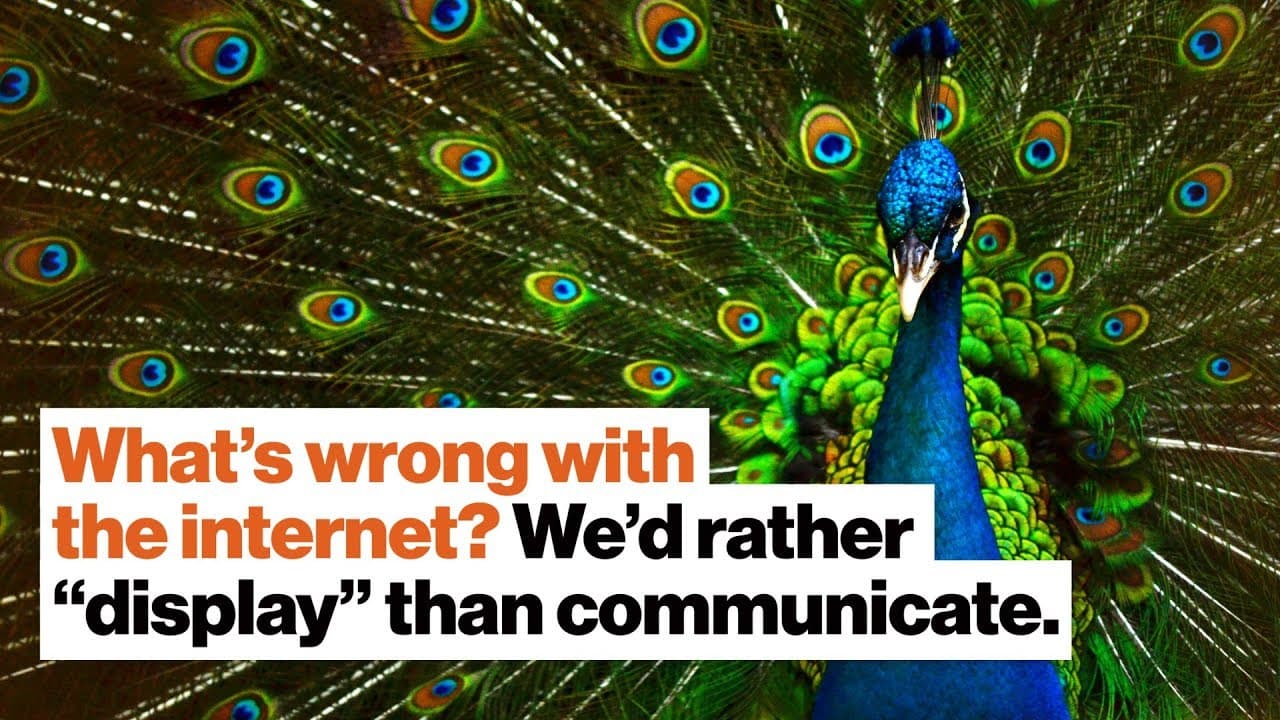
TL;DR
Social media poses significant dangers to the pursuit of truth, as it encourages tribalism and the spread of fake news. Platforms initially intended for communication have become arenas for outrage and emotional display, leading to a culture where misinformation spreads faster than factual content. Efforts to promote truth without censorship are ongoing, including nudging users away from false information through context and warnings.
Transcript
A lot of people are trying to figure out what's changed in this world we suddenly find ourselves in, with fake news and alternate facts. Well, it turns out that human beings are not really wired to be logical creatures that pursue objective truth. We're wired to be tribal creatures that try to ingratiate ourselves with our group and improve our sta... Read More
Key Insights
- 🥺 Human beings are wired to prioritize tribalism and group affiliation over objective truth, leading to the spread of fake news.
- 👾 Social media platforms have devolved into spaces for displaying tribalism, outrage, and emotional content, rather than fostering meaningful communication.
- 👾 Fake news spreads faster than truth on the internet, posing a significant challenge to rebuilding trust and promoting truth in online spaces.
- ✔️ Platforms like Facebook are attempting to guide users towards fact-checked information without resorting to heavy-handed censorship.
- 🥺 Anonymity on social media can lead to irresponsible behavior and the erosion of reputation-based norms and institutions.
Install to Summarize YouTube Videos and Get Transcripts
Explore YouTube Video Summarizer or Get YouTube Transcript Extractor
Questions & Answers
Q: Why are humans wired to display tribalistic behavior rather than pursue objective truth?
Human beings have evolved as tribal creatures, seeking group affiliation and status. The display of outrage and hostility towards other groups helps us ingratiate ourselves within our own group.
Q: How has social media failed to live up to its initial promise of enabling global communication?
Social media platforms have primarily become spaces for individuals to display their group affinity rather than communicate with others. People tend to prioritize showing solidarity and insulting others to affirm their group affiliation.
Q: Why are clickbait and outrage-driven content more prevalent on social media?
The addictive nature of highly emotional display and outrage makes it contagious. In the clickbait model, where financial rewards are tied to clicks, content tends to gravitate towards hyper-partisanship, fake news, and conspiracy theories.
Q: How are platforms like Facebook addressing the issue of fake news without resorting to censorship?
Facebook is demoting fake news on users' news feeds, making it less prominent. They also provide context and fact-checking notices when users try to repost potentially false information, encouraging users to think before spreading misinformation.
Summary & Key Takeaways
-
Throughout history, new technologies have enabled tribalistic behavior and the spread of fake news, such as the witchcraft panic during the printing press era.
-
Social media platforms were initially seen as positive revolutionary tools for communication, but they have devolved into platforms for displaying tribalism and outrage.
-
The addictive nature of emotional content, coupled with the clickbait model, has made the spread of fake news more prevalent than truth on the internet.
Read in Other Languages (beta)
Share This Summary 📚
Summarize YouTube Videos and Get Video Transcripts with 1-Click
Try YouTube Summary with ChatGPT & Claude or YouTube Transcript Generator
Explore More Summaries from Big Think 📚




Summarize YouTube Videos and Get Video Transcripts with 1-Click
Try YouTube Summary with ChatGPT & Claude or YouTube Transcript Generator