Richard Dawkins: Why Religion and Evolution Don't Mix Well | Big Think
TL;DR
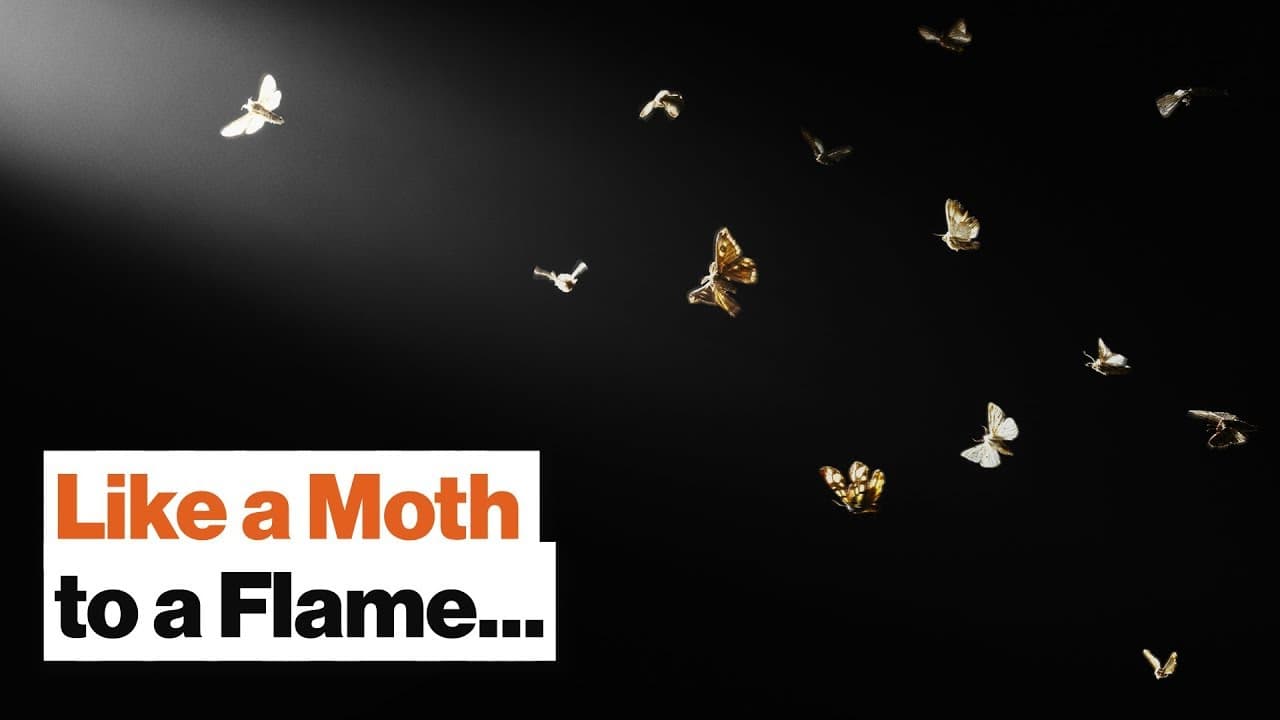
Moths flying into candle flames is not suicidal behavior, but rather a misfiring of their natural instinct to maintain a fixed angle to celestial objects.
Transcript
I’m very often asked, "What is the Darwinian survival value of religion?" and I usually reply, "That may be the wrong question." You may have to rephrase the question and it may turn out to be not the survival value of religion but the survival value of something else in the brain, which manifests itself as religion under the right circumstances. N... Read More
Key Insights
- 🦣 Moths flying into candle flames is not suicidal behavior but a misfiring of their navigational instincts.
- 😒 Insects use celestial objects as compasses to maintain a straight flight path.
- 🙂 Candles emit light differently from celestial objects, causing moths to spiral into the flame.
- ❓ The survival value of a behavior may not be directly related to the behavior itself but to another underlying mechanism.
- ❓ Proximate explanations focus on the physiological and neurological aspects, while ultimate explanations consider the overall benefit to the animal and its genes.
- 😋 Breeding seasons in birds have both proximate (hormonal responses to changing day length) and ultimate (optimal timing for food availability) explanations.
- 😷 Asking the right question is crucial in understanding the survival value of behaviors.
Install to Summarize YouTube Videos and Get Transcripts
Explore YouTube Video Summarizer or Get YouTube Transcript Extractor
Questions & Answers
Q: Is moths flying into candle flames suicidal behavior?
No, moths are not intentionally killing themselves. It is a misfiring of their natural behavior to maintain a fixed angle with celestial objects like the sun or moon.
Q: Why do insects use celestial objects for navigation?
Celestial objects provide a stable reference point for insects to fly in a straight line. Keeping a celestial object at a fixed angle helps them maintain their course.
Q: How do moths navigate in the absence of artificial light?
In the absence of artificial light, moths use celestial objects for navigation effectively. Their natural behavior works well in natural darkness.
Q: What is the difference between proximate and ultimate answers to behavior-related questions?
Proximate answers focus on the physiological and neurological mechanisms that cause an animal to behave in a certain way. Ultimate answers consider the overall survival value and benefits to the animal and its genes.
Summary & Key Takeaways
-
Moths and insects use celestial objects like the sun or the moon as compasses to move in a straight line for survival.
-
Insects have compound eyes that allow them to keep a celestial object at a fixed angle, but this behavior misfires when it comes to candles.
-
The rays of light from candles are not parallel like celestial objects, leading moths to spiral into the flame.
Read in Other Languages (beta)
Share This Summary 📚
Summarize YouTube Videos and Get Video Transcripts with 1-Click
Try YouTube Summary with ChatGPT & Claude or YouTube Transcript Generator
Explore More Summaries from Big Think 📚




Summarize YouTube Videos and Get Video Transcripts with 1-Click
Try YouTube Summary with ChatGPT & Claude or YouTube Transcript Generator