How to Use Magic Words for Effective Persuasion
TL;DR
Language plays a crucial role in persuasion, impacting how we influence others and hold their attention. Subtle changes in word choice can transform actions into identities, enhance creativity, and convey confidence. By understanding and applying the S.P.E.A.C.C. framework—similarity, posing questions, emotion, agency, concreteness, and confidence—individuals can significantly increase their persuasive power in both personal and professional contexts.
Transcript
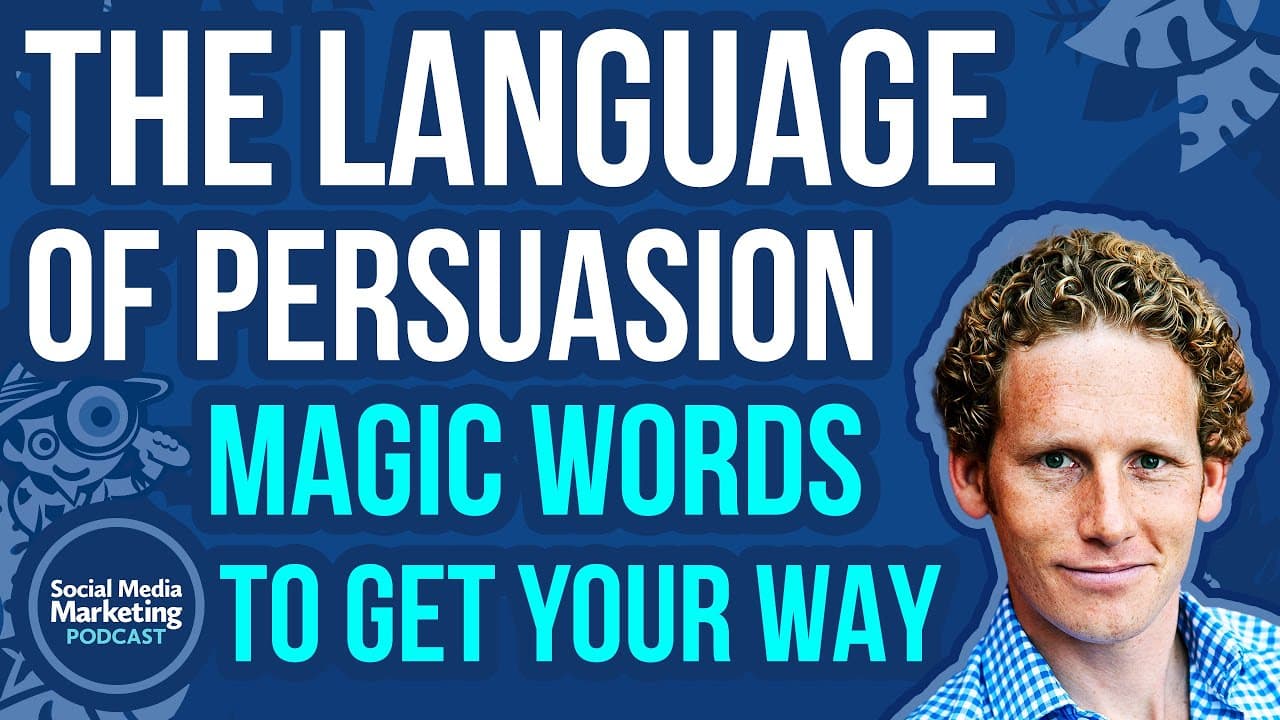
the language we use can have a huge impact on a variety of different outcomes subtle shifts in language can shape how influential we are in shaping our audience's mind so they're very excited to be joined by Jonah Berger if you don't know who Jonah is he's a marketing professor at the University of Pennsylvania's Wharton School he's also the ... Read More
Key Insights
- Language is a powerful tool that influences outcomes in communication.
- Jonah Berger's S.P.E.A.C.C. framework includes six types of persuasive language: similarity, posing questions, emotion, agency, concreteness, and confidence.
- The language of agency and identity can enhance persuasion by framing actions as desirable identities.
- Concreteness in communication improves understanding and engagement by providing specific, tangible details.
- Confidence in language, conveyed through certain words and present tense, increases the persuasiveness of a message.
- Hedges, such as 'I think' or 'might', can undermine confidence and should be used judiciously.
- The choice of pronouns, such as 'I' versus 'we', affects perceived responsibility and customer satisfaction.
- Concrete language can be effective in both customer service and marketing to maintain engagement and clarity.
Install to Summarize YouTube Videos and Get Transcripts
Explore YouTube Video Summarizer or Get YouTube Transcript Extractor
Questions & Answers
Q: How do subtle changes in language affect persuasion?
Subtle changes in language can significantly affect persuasion by transforming actions into identities, which makes them more desirable. For instance, using 'helper' instead of 'help' increases participation because it frames the action as part of one's identity. Such shifts in word choice can enhance the persuasiveness of a message by appealing to the audience's self-perception.
Q: What is the S.P.E.A.C.C. framework?
The S.P.E.A.C.C. framework, developed by Jonah Berger, outlines six types of persuasive language: similarity, posing questions, emotion, agency, concreteness, and confidence. Each element offers strategies to enhance communication impact, such as using concrete language for clarity and confidence to convey certainty, ultimately improving persuasive effectiveness in various contexts.
Q: How does concreteness improve communication?
Concreteness improves communication by providing specific, tangible details that enhance understanding and engagement. For example, stating 'your refund will be there tomorrow' is more concrete and reassuring than 'soon.' Concrete language shows attentiveness and understanding, making the message clearer and more likely to hold the recipient's attention, whether in customer service or marketing.
Q: Why is confidence important in persuasive language?
Confidence is crucial in persuasive language because it increases the likelihood that the audience will trust and follow the message. Using present tense and avoiding hedges like 'might' or 'I think' conveys certainty, while quick responses and extreme statements further enhance perceived confidence. This assurance encourages the audience to accept and act on the communicator's suggestions.
Q: What role do pronouns play in communication?
Pronouns like 'I' and 'we' play a significant role in communication by affecting perceived responsibility and engagement. 'I' suggests personal accountability and can enhance trust in customer service, while 'we' might imply shared responsibility. Choosing the right pronoun helps clarify roles and can influence how a message is received, impacting customer satisfaction and engagement.
Q: How can language enhance creativity and problem-solving?
Language enhances creativity and problem-solving by shifting from 'should' to 'could,' encouraging exploration of a broader range of solutions. This subtle change opens up possibilities, fostering innovative thinking and leading to more creative and effective outcomes. By expanding the scope of potential solutions, individuals and teams can approach challenges with a more open and inventive mindset.
Q: How does identity framing influence behavior?
Identity framing influences behavior by turning actions into desirable identities, thereby increasing the likelihood of engagement. For example, asking someone to 'be a voter' instead of 'vote' frames the action as part of their identity, encouraging participation. This approach leverages the human desire to maintain positive self-perceptions, making individuals more likely to adopt behaviors aligned with those identities.
Q: What impact does response speed have on perceived confidence?
Response speed impacts perceived confidence by signaling certainty and decisiveness. Quick responses suggest that the speaker is sure of their information, enhancing their credibility and persuasiveness. In contrast, hesitation can indicate uncertainty, undermining the audience's trust in the message. Therefore, responding promptly can boost the speaker's authority and influence in communication.
Summary & Key Takeaways
-
Language influences various outcomes, and subtle shifts can enhance persuasion. Jonah Berger's S.P.E.A.C.C. framework—similarity, posing questions, emotion, agency, concreteness, and confidence—offers strategies to increase impact. By framing actions as identities and using concrete language, individuals can improve communication effectiveness.
-
Confidence is key in persuasion, with hedges like 'I think' reducing impact. Present tense and quick responses convey certainty, while pronoun choice affects perceived responsibility. Concrete language in customer service and marketing maintains engagement and clarity, ensuring messages are understood and impactful.
-
Understanding the power of words allows for increased impact across contexts. The S.P.E.A.C.C. framework provides tools to transform communication, helping individuals persuade more effectively by using language strategically to shape perceptions and drive desired outcomes.
Read in Other Languages (beta)
Share This Summary 📚
Summarize YouTube Videos and Get Video Transcripts with 1-Click
Try YouTube Summary with ChatGPT & Claude or YouTube Transcript Generator
Explore More Summaries from Social Media Examiner 📚


Summarize YouTube Videos and Get Video Transcripts with 1-Click
Try YouTube Summary with ChatGPT & Claude or YouTube Transcript Generator