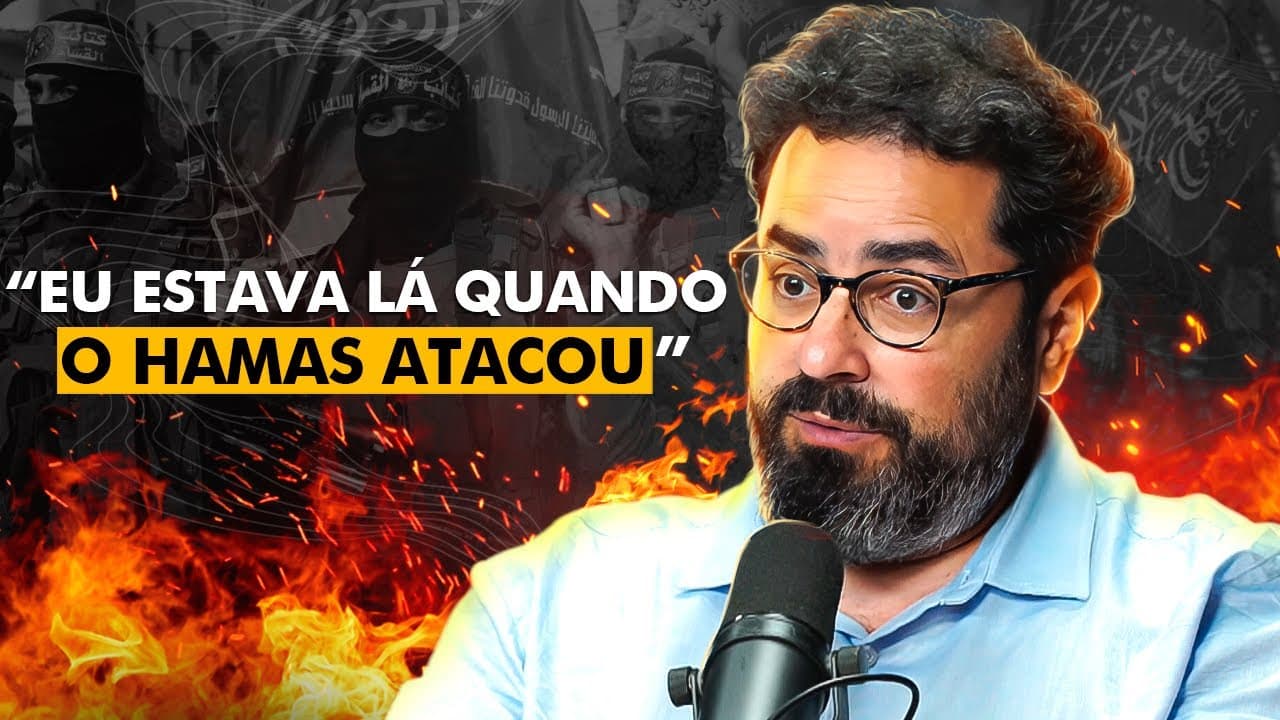
ISRAEL VS HAMAS: O QUE NÃO TE CONTARAM [com Hillel Neuer]
TL;DR
Discussion on the complexity and misinformation in the Israel-Hamas conflict.
Transcript
un watch for English hello let's start uh on what happened October 7th right uh things are still happening like there are still hostages and stuff and I was telling you before we start the recording that uh it's pretty difficult to know what's really happening there uh especially because uh I suppose it's very far from here uh I don't I don't think... Read More
Key Insights
- The Israel-Hamas conflict is deeply complex, influenced by historical, political, and religious factors, making it difficult to grasp the full truth.
- Media and political biases often distort the narrative, with different sides supporting either Israel or Palestine based on political affiliations.
- Hamas's attack on October 7th was strategically planned, taking advantage of a Jewish holiday when defenses were down.
- The United Nations has been criticized for its inadequate response to the conflict, with accusations of bias and failure to address the root causes.
- The education system in Gaza, influenced by UN schools, is seen as perpetuating anti-Israel sentiment, complicating peace efforts.
- Human shields and civilian casualties are a significant part of Hamas's strategy, making military responses by Israel highly controversial.
- The UN's structure and political dynamics often hinder effective action against human rights abuses, with calls for reform and accountability.
- Social media plays a dual role, spreading both misinformation and providing a platform for truth, highlighting the need for critical engagement.
Install to Summarize YouTube Videos and Get Transcripts
Explore YouTube Video Summarizer or Get YouTube Transcript Extractor
Questions & Answers
Q: What was the significance of the October 7th attack by Hamas?
The October 7th attack by Hamas was significant because it was a well-planned assault that took advantage of a Jewish holiday, Simchat Torah, when many Israelis were in synagogues and defenses were down. This attack resulted in a high number of casualties and hostages, marking a severe breach of security for Israel and highlighting the ongoing tensions and complexities in the Israel-Hamas conflict.
Q: How has the United Nations been criticized in relation to the Israel-Hamas conflict?
The United Nations has been criticized for its perceived bias and inadequate response to the Israel-Hamas conflict. Despite its mandate to uphold human rights, the UN has been accused of failing to address the root causes of the conflict and for not taking a firm stance against Hamas's actions. The UN's handling of the situation has led to calls for reform and greater accountability in its operations.
Q: What role does education play in the Israel-Palestine conflict?
Education plays a crucial role in the Israel-Palestine conflict, particularly in Gaza, where UN schools are said to perpetuate anti-Israel sentiment. The curriculum often teaches that Gaza is not the true home of Palestinians, fostering a narrative of displacement and resistance. This educational approach complicates peace efforts by instilling a mindset that is resistant to coexistence with Israel, highlighting the need for educational reform focused on peace and mutual understanding.
Q: What are the challenges of negotiating peace with Hamas?
Negotiating peace with Hamas presents significant challenges due to its charter, which calls for the destruction of Israel. Hamas's strategy includes using civilians as human shields, complicating military responses and making peace talks difficult. The group's fundamental opposition to Israel's existence means that traditional diplomatic efforts are often ineffective, highlighting the need for a shift in leadership or ideology within Palestinian governance for meaningful peace negotiations to occur.
Q: How does social media impact the Israel-Hamas conflict?
Social media impacts the Israel-Hamas conflict by serving as both a tool for spreading misinformation and a platform for truth. On one hand, it allows for the rapid dissemination of biased or false narratives, influencing public perception and political discourse. On the other hand, it provides a means for individuals and organizations to share firsthand accounts and counter misinformation, emphasizing the importance of critical engagement and media literacy in understanding the conflict.
Q: What is the role of UNRWA in the Israel-Palestine conflict?
UNRWA, the United Nations Relief and Works Agency, plays a controversial role in the Israel-Palestine conflict. Initially established to aid Palestinian refugees, it has been criticized for perpetuating a narrative of resistance against Israel, rather than facilitating resettlement and peace. Accusations of employing individuals with ties to Hamas and promoting anti-Israel sentiment in its schools have led to calls for reform and a reevaluation of its mandate to better support peace and development in the region.
Q: How has the international community responded to the Israel-Hamas conflict?
The international community's response to the Israel-Hamas conflict has been mixed, with some countries condemning Hamas's actions while others focus on criticizing Israel's military responses. Political alliances and interests often influence these stances, leading to a fragmented international approach. There are calls for a more unified and principled stance that addresses human rights violations on all sides and supports efforts towards a peaceful resolution.
Q: What are the implications of the UN's perceived ineffectiveness in the Israel-Hamas conflict?
The UN's perceived ineffectiveness in the Israel-Hamas conflict has significant implications, undermining its credibility as a global peacekeeping body. This perception can weaken international trust in multilateral institutions and hinder efforts to address human rights violations and achieve peace. It underscores the need for reform within the UN to ensure accountability, impartiality, and effectiveness in handling complex international conflicts, ultimately aiming to restore confidence in its role as a mediator and protector of human rights.
Summary & Key Takeaways
-
The Israel-Hamas conflict is fraught with misinformation and political bias, making it challenging to understand the full picture. The media often portrays the conflict through a skewed lens, reflecting political allegiances rather than facts.
-
Hamas's attack on Israel was meticulously planned to coincide with a Jewish holiday, exploiting the lowered defenses. The conflict has historical roots, with both sides claiming legitimate grievances, complicating peace efforts.
-
The United Nations has faced criticism for its perceived failure to address the conflict effectively. Accusations of bias and inadequate responses to human rights violations highlight the need for reform and more principled international engagement.
Read in Other Languages (beta)
Share This Summary 📚
Summarize YouTube Videos and Get Video Transcripts with 1-Click
Try YouTube Summary with ChatGPT & Claude or YouTube Transcript Generator
Explore More Summaries from Flow Podcast 📚



![MINHA NAMORADA QUASE BEIJOU MEU IRMÃO GÊMEO [Willou e Watson] - Flow #437 thumbnail](/_next/image?url=https%3A%2F%2Fi.ytimg.com%2Fvi%2F1woQLtKzbPo%2Fhqdefault.jpg&w=750&q=75)
Summarize YouTube Videos and Get Video Transcripts with 1-Click
Try YouTube Summary with ChatGPT & Claude or YouTube Transcript Generator