Epic robot fails of DARPA Robotics Challenge | Robert Playter and Lex Fridman
TL;DR
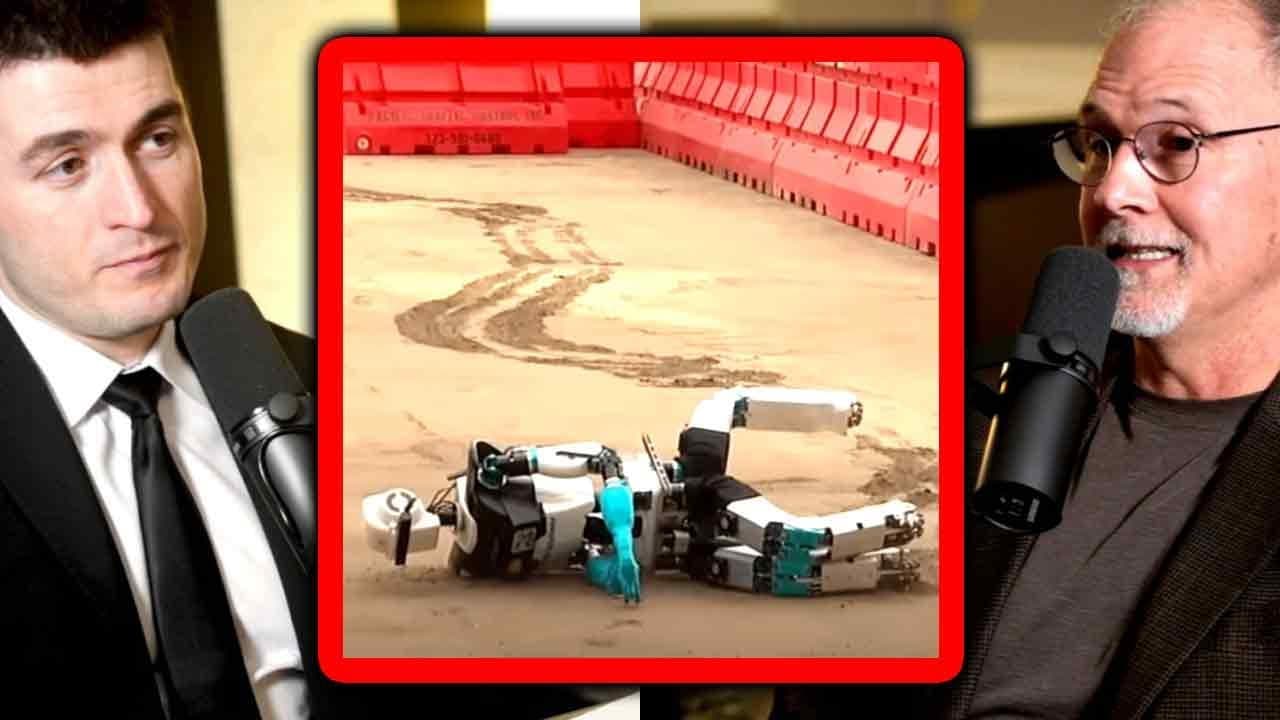
The DARPA Robotics Challenge in 2015 showcased the difficulty of creating general purpose robots that can handle a wide variety of tasks and deal with uncertainties, emphasizing the need for fast feedback loops and predictive control.
Transcript
if we can just rewind a little bit to uh the DARPA robotics challenge in 2015 I think which was for people who are familiar with the DARPA challenges it uh was first with autonomous vehicles and there's a lot of interesting challenges around that and the DARPA robotics challenges when uh humanoid robots were tasked to do all kinds of uh you know ma... Read More
Key Insights
- 🤖 The DARPA Robotics Challenge revealed the struggle in creating general purpose robots with the ability to handle diverse tasks and uncertainties.
- 😨 Specific tasks like entering and exiting a car may require tailored designs that do not align with a general purpose robot like Atlas.
- 🤖 General purpose robots need to predict and adjust their actions based on the environment to ensure stability and mission success.
- 🚄 Fast feedback loops and high-speed computational capabilities are essential for running multiple control loops simultaneously.
- 🎮 Advancements in computation offer opportunities for more sophisticated models and improved predictive control.
- 🤖 The challenge highlighted the importance of dealing with uncertainties and unexpected situations to make robots useful in real-world scenarios.
- 🤖 Simple actions like grasping objects accurately and maintaining balance can be challenging for robots due to their lack of perception and adaptation.
Install to Summarize YouTube Videos and Get Transcripts
Explore YouTube Video Summarizer or Get YouTube Transcript Extractor
Questions & Answers
Q: What was the purpose of the DARPA Robotics Challenge?
The challenge aimed to push the robotics industry forward by encouraging the development of general purpose robots capable of various tasks, promoting autonomy and dealing with uncertainties.
Q: Why were the tasks in the challenge considered difficult?
The tasks required the robots to navigate different environments and perform complex actions like getting in and out of a car, which posed challenges for robots designed for general purposes like Atlas.
Q: What were some failures observed during the challenge?
Robots encountered difficulties in grasping objects accurately and maintaining balance, which showcased their limitations in handling unexpected situations and interactions with the environment.
Q: Why is predictive control crucial for robots?
Predictive control allows robots to anticipate and adapt to changes in the environment, enabling them to respond effectively and maintain stability. It requires fast feedback loops and updating predictions based on real-world observations.
Summary & Key Takeaways
-
The DARPA Robotics Challenge involved humanoid robots performing tasks such as driving a car, opening doors, and manipulating objects.
-
The goal was to create a general purpose robot with mobility, manipulation, and perception capabilities.
-
It highlighted the challenges of designing robots for specific tasks while also aiming for versatility and adaptability.
Read in Other Languages (beta)
Share This Summary 📚
Summarize YouTube Videos and Get Video Transcripts with 1-Click
Try YouTube Summary with ChatGPT & Claude or YouTube Transcript Generator
Explore More Summaries from Lex Clips 📚




Summarize YouTube Videos and Get Video Transcripts with 1-Click
Try YouTube Summary with ChatGPT & Claude or YouTube Transcript Generator