How does a Solute Dissolve in a Solvent? | Solutions | Chemistry | Don't Memorise
TL;DR
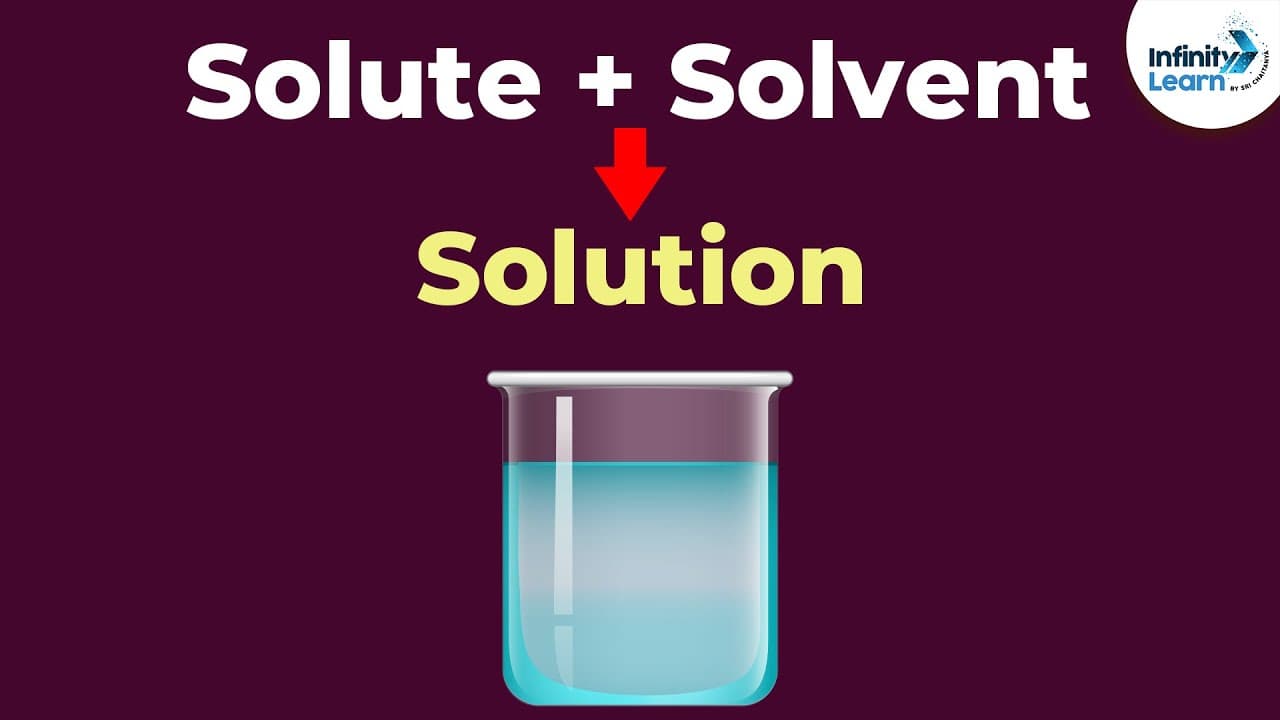
This video explains how solute dissolves in a solvent by forming a solution through a process called dissolution, where ions break free from the crystal and cluster around water molecules.
Transcript
have you seen a food color mix in a glass of water does it mix completely the moment you put it in the water no it's a gradual process and if you observe closely you can see it slowly spreads in the water similarly if you take salt crystals and put it in water you might also notice that the crystal becomes smaller with time we usually say that the ... Read More
Key Insights
- 💦 Salt dissolves in water through a gradual process called dissolution, where ions separate from the crystal and cluster around water molecules.
- 🥺 Dissolution and crystallization occur simultaneously, leading to a dynamic equilibrium in the solution.
- ❓ The solubility of a solution refers to the maximum amount of solute that can be dissolved in the solution at a given temperature and pressure.
- 💱 Changes in temperature and pressure can affect the solubility of a solution.
- ❓ Saturated solutions contain the maximum amount of solute that can be dissolved.
- 😑 The process of dissolution involves ion-dipole interactions between the solute ions and water molecules.
- ☠️ The solute particles in a solution are in constant motion, entering and leaving the solution at equal rates in dynamic equilibrium.
Install to Summarize YouTube Videos and Get Transcripts
Explore YouTube Video Summarizer or Get YouTube Transcript Extractor
Questions & Answers
Q: How does a salt crystal dissolve in water at a molecular level?
When a salt crystal is placed in water, the polar water molecules collide with the crystal, causing ions to break free. More water molecules then cluster around the ions due to their opposite charges, stabilizing them and dissolving the crystal.
Q: What is the process called when solute particles dissolve in a solvent?
The process is called dissolution. It involves the separation of ions from the crystal and their stabilization by water molecules, leading to the formation of a solution.
Q: What happens when dissolved solute particles collide with the crystal?
Due to the strong interaction between the ions and the crystal, some dissolved solute particles may collide with the crystal and become a part of it again. This process is called crystallization.
Q: What is a saturated solution?
A saturated solution is a solution in which no more solute can be dissolved at a given temperature and pressure. It occurs when the rate of dissolution is equal to the rate of crystallization, resulting in a dynamic equilibrium.
Summary & Key Takeaways
-
When a salt crystal is placed in water, the loosely held ions on its surface break free and attract water molecules, causing the crystal to dissolve gradually.
-
As the water molecules collide with the crystal, ions separate from the crystal and become surrounded by water molecules, stabilizing them through ion-dipole interactions.
-
Simultaneously, some dissolved solute particles can also collide with the crystal and reattach to it, in a process called crystallization.
Read in Other Languages (beta)
Share This Summary 📚
Summarize YouTube Videos and Get Video Transcripts with 1-Click
Try YouTube Summary with ChatGPT & Claude or YouTube Transcript Generator
Explore More Summaries from Infinity Learn NEET 📚


Summarize YouTube Videos and Get Video Transcripts with 1-Click
Try YouTube Summary with ChatGPT & Claude or YouTube Transcript Generator