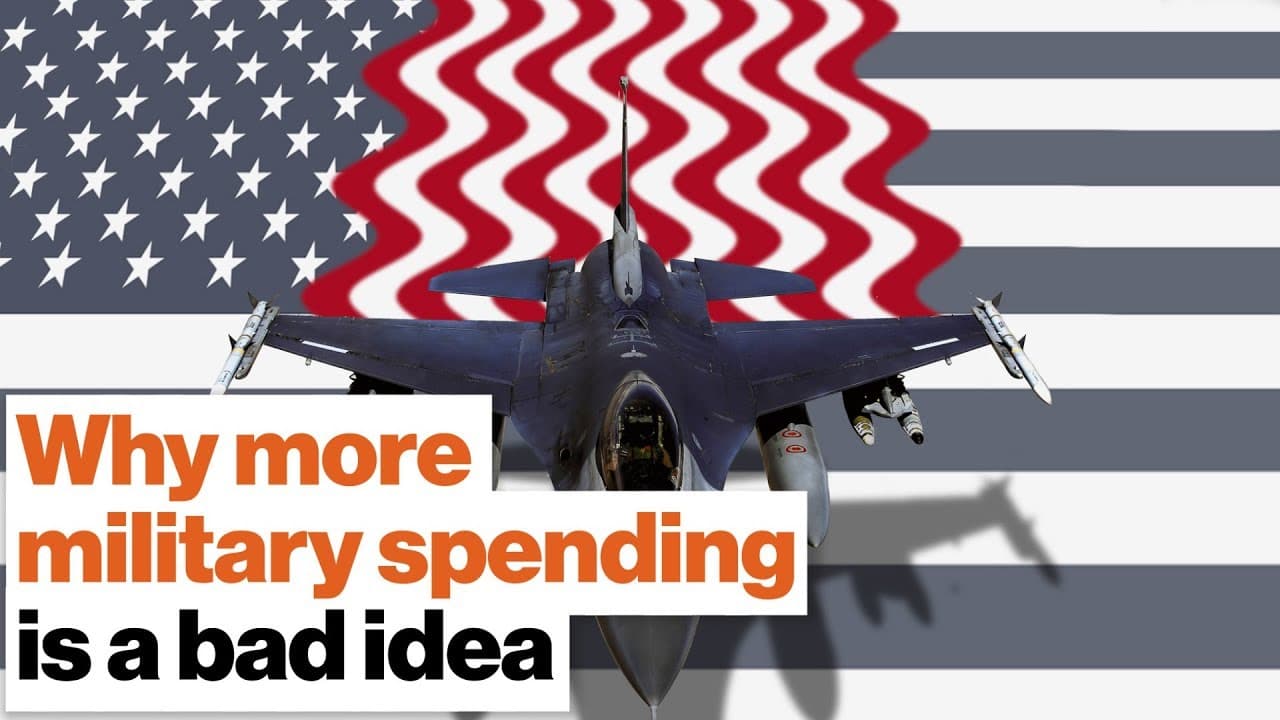
Why more military spending is a bad idea | Christopher Preble | Big Think
TL;DR
U.S. military primacy has remained costly but not necessarily effective, as simply increasing military spending does not guarantee success in conflicts. It is crucial for the U.S. to define when and how military force should be used, and to not overlook the importance of diplomacy in engaging with the world.
Transcript
It’s true the U.S. military is a costly enterprise. It cost us more as a share of our total output during the Cold War, but in absolute dollar terms we’re spending about as much now as we spent during the Cold War, so the cost to maintain primacy has remained relatively high. And the question is, could we spend much more on the military to cover so... Read More
Key Insights
- 🎖️ Increased military spending does not guarantee success in conflicts against determined adversaries.
- 🌍 It is crucial to define national security interests and consider public support before engaging in military action.
- 🫱 War should be approached with caution, and the American people should carefully scrutinize military missions.
- 🎖️ U.S. military primacy has discouraged some allies from developing nuclear weapons but may have encouraged adversaries to pursue them.
Install to Summarize YouTube Videos and Get Transcripts
Explore YouTube Video Summarizer or Get YouTube Transcript Extractor
Questions & Answers
Q: Does increasing military spending ensure success in conflicts?
No, despite having a powerful military, the U.S. has struggled to achieve decisive victories against determined foes in places like Iraq, Syria, and Afghanistan. Merely spending more money on the military does not solve the underlying problems.
Q: What criteria should be considered before deploying the military?
It is crucial to consider the national security interests at stake, the tasks assigned to the military, public support for the mission even in difficult times, and how the war will be funded. These criteria help ensure careful decision-making before risking military involvement.
Q: How does the U.S. population's support affect military missions?
The author argues that blindly expecting the American people to support the military for any reason is a disservice. It is essential for the public to scrutinize the missions and consider the wars fought on behalf of vital national security interests.
Q: Why is diplomacy given less importance in U.S. engagement with the world?
With heavy reliance on military power, the State Department and traditional diplomacy have taken a backseat. The military receives the majority of resources for engagement, overshadowing the importance of diplomatic efforts.
Summary & Key Takeaways
-
U.S. military spending has remained high, but increasing it does not guarantee victory in conflicts against determined adversaries.
-
It is important to define national security interests, consider public support, and determine how wars will be financed before engaging in military action.
-
War should be approached with caution, and the American people should carefully scrutinize the missions they ask the military to undertake.
Read in Other Languages (beta)
Share This Summary 📚
Summarize YouTube Videos and Get Video Transcripts with 1-Click
Try YouTube Summary with ChatGPT & Claude or YouTube Transcript Generator
Explore More Summaries from Big Think 📚




Summarize YouTube Videos and Get Video Transcripts with 1-Click
Try YouTube Summary with ChatGPT & Claude or YouTube Transcript Generator