How Distributed Work Can Unlock Your Potential | Avani Prabhakar | TED
TL;DR
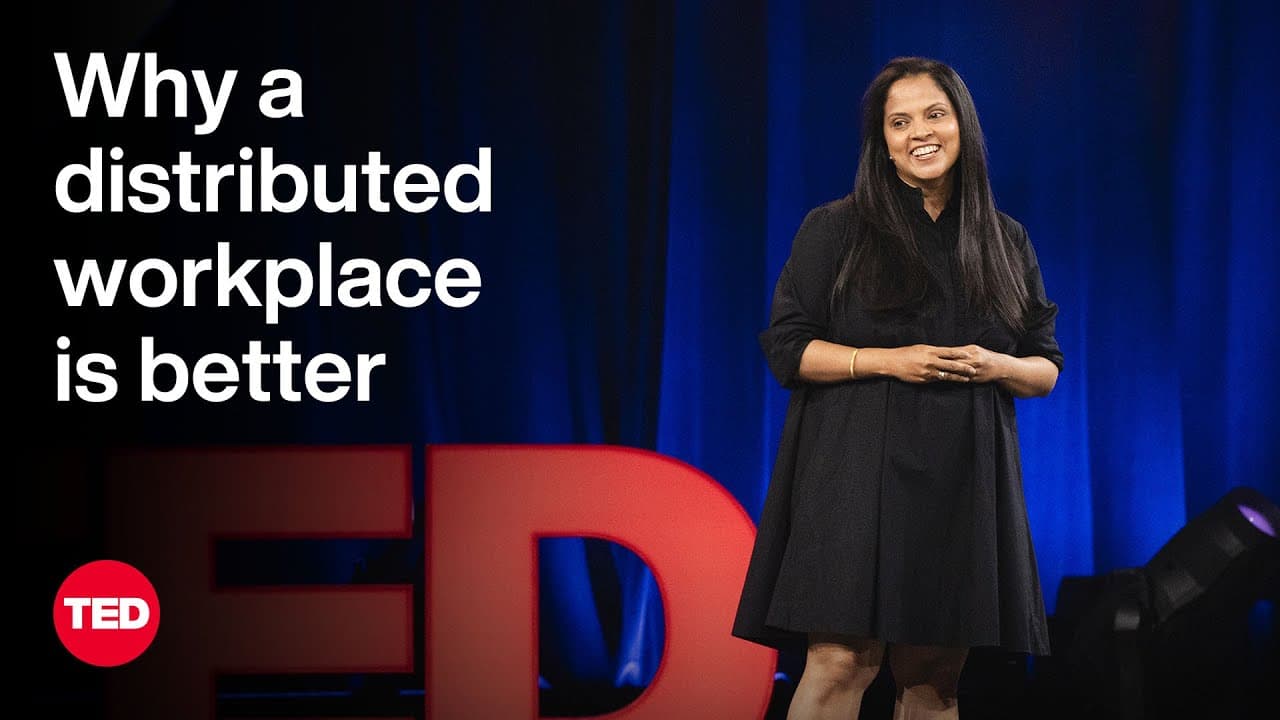
Distributed work empowers introverts, enhancing collaboration and productivity by shifting focus on how work is done.
Transcript
Like many of you, I am an introvert. And I know it sounds ironic because I'm the chief people officer of a large tech company. But I've never been the loudest in the room. In fact, I've never been the first, second or even third to offer my opinion. I've always listened more than I speak. And in a world where most dominant voices are often seen as ... Read More
Key Insights
- ♻️ Introverts can struggle in environments that favor extroverted traits, impacting their career progression and job satisfaction.
- 💦 The pandemic's shift to remote work facilitated a distributed workforce, granting autonomy that benefits productivity.
- 👻 Asynchronous work models allow for more thoughtful collaboration, reducing unnecessary meetings and enhancing focus.
- 😤 Intentional connections are crucial for building relationships in a distributed environment; purpose-driven interactions foster deeper team bonds.
- 😑 Employees report heightened job satisfaction and productivity in distributed roles, with many expressing that they produce their best work.
- 💦 The successful implementation of distributed work necessitates clear communication and collaboration guidelines to overcome challenges related to time zone differences.
- ❓ Mentoring practices must evolve in distributed settings, prioritizing personalized onboarding and effective remote communication for growth.
Install to Summarize YouTube Videos and Get Transcripts
Explore YouTube Video Summarizer or Get YouTube Transcript Extractor
Questions & Answers
Q: How does being an introvert impact professional success in a corporate environment?
Introverts often face challenges in corporate settings due to the preference for outgoing, vocal styles of communication that dominate most discussions. The pressure to conform to extroverted norms can lead to exhaustion and decreased job satisfaction. However, with the right environment, such as a distributed workforce, introverts may find greater opportunities to express their talents and contribute effectively, often excelling in collaboration and creative problem-solving when not pressured to conform.
Q: What role did the shift to a distributed work model play in employee productivity?
The transition to a distributed work model allowed employees to escape traditional corporate constraints that often diminish productivity. With options to work from anywhere, teams embraced asynchronous communication strategies, such as using tools like Loom for video updates. This shift improved focus, decreased the number of unnecessary meetings, and allowed individuals to design their workday to maximize productivity. The result was a workforce reporting the best work experiences of their careers.
Q: Why is asynchronous work emphasized in the speaker's approach to team collaboration?
Asynchronous work prioritizes flexibility, allowing team members to engage on their terms rather than being tied to the immediate demands of a scheduled meeting. This approach supports deeper concentration and project-focused time blocks, which can lead to more thoughtful contributions, improved communication, and overall enhanced team performance. Essentially, it transforms typical workflows into more productive and satisfying experiences for knowledge workers.
Q: How does the speaker define "intentional togetherness," and why is it important?
"Intentional togetherness" refers to the purposeful interactions among team members working in a distributed setup, emphasizing collaboration on meaningful projects rather than casual office presence. Such interactions foster real connections and team cohesion, driving innovation and problem-solving. The speaker argues that building relationships requires shared experiences that serve a clear purpose, making teamwork more effective and fulfilling.
Q: What strategies does the speaker recommend for mentoring in a distributed workforce?
The speaker advocates for a tailored mentoring approach within a distributed workforce, beginning with intentional onboarding experiences to assist newcomers. Leaders should develop skills for effective remote performance discussions and facilitate bite-sized learning opportunities. By adapting mentoring methods to fit distributed settings, organizations can enhance engagement and development while minimizing the barriers that distance creates.
Q: How can organizations maintain a strong company culture in a distributed model?
To sustain a robust company culture, organizations must acknowledge the unique dynamics of distributed teams and customize their cultural initiatives accordingly. This means identifying core values that guide decision-making and fostering connections through purposeful activities. By valuing inclusivity and recognizing cultural variances, companies create an environment that retains a sense of belonging, even when physical proximity is absent.
Summary & Key Takeaways
-
The speaker shares her journey as an introvert working in a corporate environment, highlighting the challenges faced due to the demand for extroverted behaviors and communication styles.
-
The shift to remote work during the pandemic transformed her company into a distributed workforce, emphasizing the importance of asynchronous collaboration and intentional team connections.
-
The speaker notes significant productivity improvements, with a majority of employees thriving in a distributed work environment, breaking traditional notions of work location and allowing talent to flourish regardless of geography.
Read in Other Languages (beta)
Share This Summary 📚
Summarize YouTube Videos and Get Video Transcripts with 1-Click
Try YouTube Summary with ChatGPT & Claude or YouTube Transcript Generator
Explore More Summaries from TED 📚



Summarize YouTube Videos and Get Video Transcripts with 1-Click
Try YouTube Summary with ChatGPT & Claude or YouTube Transcript Generator