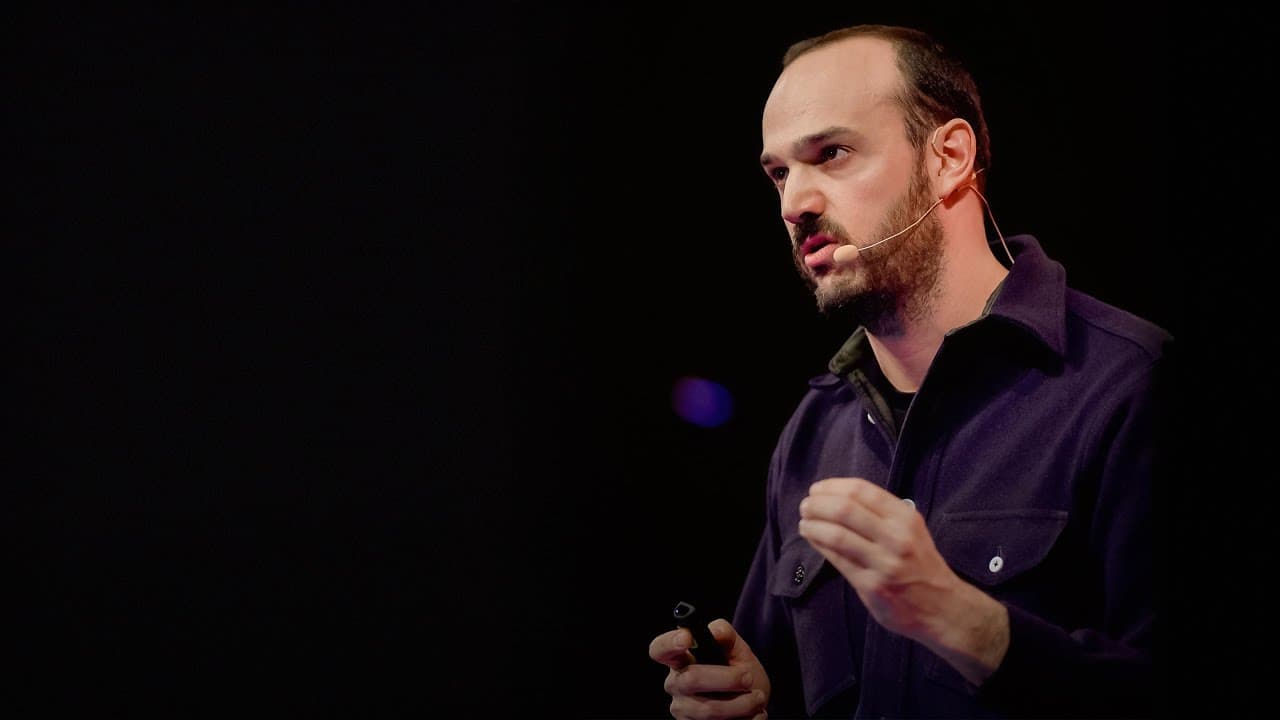
Everything you hear on film is a lie | Tasos Frantzolas
TL;DR
In this content, the speaker discusses the power of sound in creating illusions and enhancing storytelling, and highlights various techniques and tools used by sound designers to manipulate and deceive our auditory perception.
Transcript
I want to start by doing an experiment. I'm going to play three videos of a rainy day. But I've replaced the audio of one of the videos, and instead of the sound of rain, I've added the sound of bacon frying. So I want you think carefully which one the clip with the bacon is. (Rain falls) (Rain falls) (Rain falls) All right. Actually, I lied. They'... Read More
Key Insights
- 🍿 Our brains are conditioned to embrace deception in films. All the sounds we hear, apart from dialogue, are fake and created in post-production.
- 🎥 Sound designers use creative methods to create realistic sound effects, such as using kitchen gloves to imitate bird flapping or cabbage to create punching sound effects.
- 🔊 Reverberation, or reverb, adds depth and creates a sense of space in sound. It can also convey emotions and establish the setting of a scene.
- 🔇 Silence is a powerful tool in filmmaking. Moments of silence create tension and can be used to draw attention to important moments.
- 🎧 Ambiences, background sounds specific to each location, can subconsciously affect our perception of a scene. They can create a sense of normality or carry negative connotations.
- 🎬 Offscreen sounds, or acousmatic sounds, create mystery and tension by separating the source of the sound from its visibility. It can also convey authority and create a sense of ubiquity.
- 🎶 Sound effects can tap into our emotional memory and become characters in a film. Different sounds evoke different emotions and associations.
- 🗣 Sound is a language and has the power to transport, change mood, and create meaning in storytelling. It is an important tool for filmmakers to enhance the audience's experience.
Install to Summarize YouTube Videos and Get Transcripts
Explore YouTube Video Summarizer or Get YouTube Transcript Extractor
Questions & Answers
Q: What is the purpose of the experiment described in the video?
The purpose of the experiment is to show that our brains are conditioned to embrace deception and that we're not always looking for accuracy.
Q: What is the main idea behind Oscar Wilde's quote from "The Decay of Lying" that is mentioned in the video?
Oscar Wilde suggests that all bad art comes from copying nature and being realistic, while great art comes from lying and deceiving by telling beautiful, untrue things.
Q: How are sound effects created in movies?
Sound effects in movies are often created using alternative methods rather than recording the actual sound source. For example, the sound of a bird flapping its wings can be created by recording a sheet or shaking kitchen gloves.
Q: What is the purpose of adding reverb to sound effects?
Adding reverb to sound effects helps to create a sense of space and immerse the audience in the world of the story. It can also convey emotional depth or indicate different perspectives or settings.
Q: What is the significance of silence in sound design?
Moments of silence can create tension and grab the audience's attention. Silence needs loudness and loudness needs silence in order to have the desired effect. Additionally, silence can be used to place the audience inside the head of a character or provoke contemplation and thought.
Q: What are ambiences and how are they used in sound design?
Ambiences are the unique background sounds specific to each location or room. They can speak directly to our subconscious and help to establish a sense of normality or carry emotional connotations. Ambiences are also used to create an authentic sense of place and immerse the audience in the story.
Q: What is the concept of acousmatic sound?
Acousmatic sound refers to sounds that are heard without seeing their source or cause. The separation of the voice from its source creates a sense of mystery and can evoke a feeling of authority or tension. Acousmatic sound has been used in various traditions and art forms to heighten the sensory experience for the audience.
Q: How can sound function as a language in storytelling?
Sound in storytelling can transport the audience geographically, alter mood, establish pace, and evoke specific emotions. It can communicate nonverbal cues, create a sense of authenticity or illusion, and enhance the overall narrative. By expanding the vocabulary of sound design, filmmakers and designers can continue to tell compelling stories and captivate audiences.
Summary & Key Takeaways
-
Our brains are conditioned to embrace lies and not look for accuracy, as demonstrated by the experiment of replacing the sound of rain with the sound of bacon frying.
-
Sound designers use various techniques and tools to create realistic sound effects in movies, such as recording and manipulating different objects to produce desired sounds.
-
Sound is a powerful language that can manipulate emotions, create tension, and enhance storytelling in films, and expanding the vocabulary of sound allows for even better storytelling.
Read in Other Languages (beta)
Share This Summary 📚
Summarize YouTube Videos and Get Video Transcripts with 1-Click
Try YouTube Summary with ChatGPT & Claude or YouTube Transcript Generator
Explore More Summaries from TED 📚

Summarize YouTube Videos and Get Video Transcripts with 1-Click
Try YouTube Summary with ChatGPT & Claude or YouTube Transcript Generator