What Would A World With Self-Driving Cars Look Like?
TL;DR
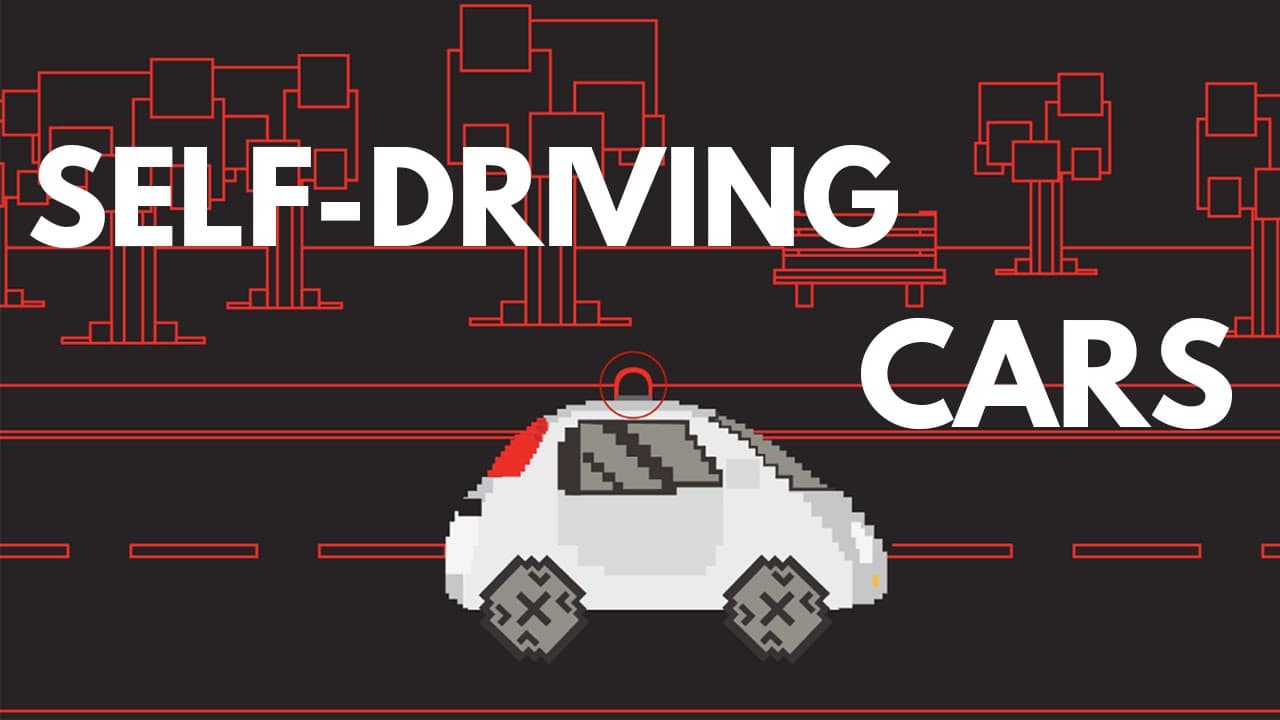
Self-driving cars could revolutionize transportation, making roads safer, providing mobility to visually-impaired or elderly individuals, and allowing people to be productive during their commute.
Transcript
Hey there and welcome to Life Noggin! When sci-fi writers think of the future, they tend to think of flying cars and human-like robots that do our work for us. And while we’re not quite there yet with either of those, we’re getting close to a different innovation -- self-driving cars. In fact, companies like Google and Tesla are already working on ... Read More
Key Insights
- 😨 Self-driving cars have the potential to reduce the number of traffic accidents caused by human error.
- 🤕 They can provide mobility to individuals who can't drive due to impairments or age.
- 😨 Self-driving cars rely on GPS, sensors, and advanced software to navigate and make decisions.
- 😃 The biggest challenge in self-driving car development is creating software that can efficiently process and analyze data.
- 😨 In unavoidable crash scenarios, self-driving cars must make difficult decisions about prioritizing passenger safety or minimizing harm to others.
- 😨 Public perception of self-driving cars is complex, with people wanting them to prioritize passenger safety but preferring to ride in cars that prioritize their safety over others.
- 😨 Companies hope to have self-driving cars on the road by 2020.
Install to Summarize YouTube Videos and Get Transcripts
Explore YouTube Video Summarizer or Get YouTube Transcript Extractor
Questions & Answers
Q: How do self-driving cars work?
Self-driving cars rely on GPS systems to navigate and have sensors that scan the surroundings for hazards, including other vehicles, cyclists, and pedestrians. The software processes data from the sensors and GPS to make decisions about steering, stopping, and other driving actions.
Q: What is the biggest challenge in developing self-driving cars?
The most challenging aspect is developing software that can effectively process data from various sources, including sensors, GPS, traffic, and weather conditions. This software needs to make safe and efficient decisions based on this data.
Q: What happens when a self-driving car is faced with an unavoidable crash?
In such situations, the car's software must make a decision, potentially choosing between crashing into pedestrians or endangering the car's passengers. Research shows that people prefer self-driving cars to prioritize the common good, sacrificing the passengers if necessary.
Q: What is the public perception of self-driving cars?
There is a discrepancy between what people want self-driving cars to do and what they would want if they were the passengers. People generally prefer self-driving cars to prioritize passenger safety, but they would rather ride in cars that prioritize their safety over others.
Summary & Key Takeaways
-
Self-driving cars are being developed by companies like Google and Tesla, with the potential to become common in the next ten or twenty years.
-
These cars have the potential to reduce the number of traffic accidents caused by human error, making roads safer.
-
Self-driving cars could provide mobility to individuals who can't drive, such as the visually-impaired or elderly.
Read in Other Languages (beta)
Share This Summary 📚
Summarize YouTube Videos and Get Video Transcripts with 1-Click
Try YouTube Summary with ChatGPT & Claude or YouTube Transcript Generator
Explore More Summaries from Life Noggin 📚




Summarize YouTube Videos and Get Video Transcripts with 1-Click
Try YouTube Summary with ChatGPT & Claude or YouTube Transcript Generator