Why did markets crash today? | CA Rachana Ranade
TL;DR
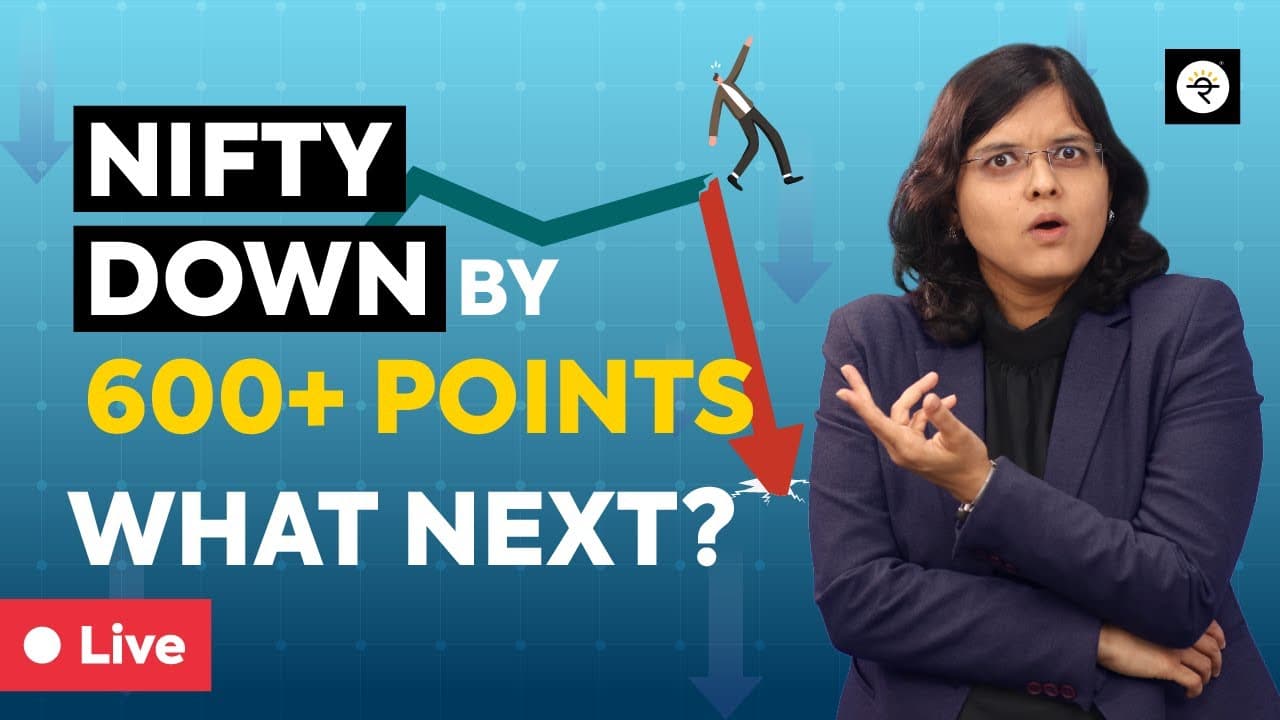
Today's market crash resulted from global sell-offs, primarily driven by U.S. recession fears.
Transcript
hey folks see already here and I welcome you all to a very very important live stream just let me check once whether uh the notification has gone in or not I still can't see any chats coming up uh okay okay take I myself have gotten the notification right now okay so maybe people will join um so just perfect okay okay perfect I can see people comin... Read More
Key Insights
- 😨 The Nifty index experienced a significant drop of nearly 3%, highlighting the global impact of recession fears.
- 🤩 Key psychological and technical support levels for investors include the 24,000 and 23,600 marks, which are crucial to watch.
- 😨 The recent job data from the U.S. indicates poor economic performance, contributing to heightened recession fears among investors.
- 📪 The Sam's rule serves as a red flag for potential recession, aligning with current economic indicators that show rising unemployment.
- 🏣 Carry trades from Japan are leading to global sell-offs, as hedge funds react to increased borrowing costs and currency fluctuations.
- 💉 Economic interdependencies underline the need for investors to monitor U.S. market health carefully, given its influence on global dynamics.
- ❓ Investors should adopt a systematic buying strategy rather than panic-selling in response to market downturns.
Install to Summarize YouTube Videos and Get Transcripts
Explore YouTube Video Summarizer or Get YouTube Transcript Extractor
Questions & Answers
Q: What were the primary reasons behind the market crash today?
The market crash is primarily attributed to fears of a potential recession in the U.S. These fears stem from disappointing job creation figures and rising unemployment rates. The global economy reacted negatively, causing significant sell-offs across major markets, including India.
Q: Should investors panic and sell their holdings during such a market drop?
Panic selling is generally discouraged. Instead, investors are advised to assess their positions. The speaker emphasizes that he has chosen to hold onto his investments and adopt a wait-and-watch approach, only buying small quantities selectively based on key market levels.
Q: What are the key support levels to watch in the current market?
Investors should monitor the 24,000 and 23,600 levels as crucial support points. If the market sustains below these levels, it may signal further declines. The speaker believes that these levels represent psychological and moving average supports that could stabilize the market.
Q: How does the U.S. economic situation impact global markets?
As the U.S. economy is viewed as a "mother market," negative developments there, like fears of recession and rising unemployment, often trigger global sell-offs. The interconnectedness means that economic downturns in the U.S. can lead to declines in other markets, affecting investor sentiment worldwide.
Q: What is the Sam's rule, and how does it indicate a potential recession?
Sam's rule is an economic indicator stating that a recession may be underway if the three-month moving average of unemployment rises by 0.5% over its low from the last 12 months. Current unemployment trends indicate a rise consistent with this rule, suggesting potential recessionary pressures.
Q: How should one approach investments during such market volatility?
The speaker suggests a cautious investment approach, advocating for purchasing assets in chunks rather than all at once. This strategy allows for average price entry and reduces risk exposure, especially in volatile conditions.
Q: What role do Japanese carry trades play in today's market dynamics?
Japanese carry trades involve borrowing at low-interest rates and investing elsewhere. Recent interest rate increases in Japan have caused hedge funds to close positions in U.S. markets to repay debts, contributing to significant sell-offs in both stocks and cryptocurrencies.
Q: Does the speaker believe that current market pain is temporary or long-term?
The speaker assesses the current market decline as a short to medium-term issue, primarily driven by external factors. He remains optimistic about eventual recovery, particularly if interest rate cuts occur in the U.S. as a response to economic slowdowns.
Summary & Key Takeaways
-
The live stream discusses the significant market crash impacting the Nifty index, which saw nearly a 3% drop due to global sell-offs linked to fears of a U.S. recession.
-
The speaker offers insights into key support levels for traders to monitor, including 24,000 and 23,600, emphasizing a wait-and-watch strategy instead of panic selling.
-
The speaker also mentions economic indicators, such as rising unemployment rates in the U.S. and the Sam's rule, which suggest a potential recession, while also touching on Japanese carry trades affecting the global markets.
Read in Other Languages (beta)
Share This Summary 📚
Summarize YouTube Videos and Get Video Transcripts with 1-Click
Try YouTube Summary with ChatGPT & Claude or YouTube Transcript Generator
Explore More Summaries from CA Rachana Phadke Ranade 📚






Summarize YouTube Videos and Get Video Transcripts with 1-Click
Try YouTube Summary with ChatGPT & Claude or YouTube Transcript Generator