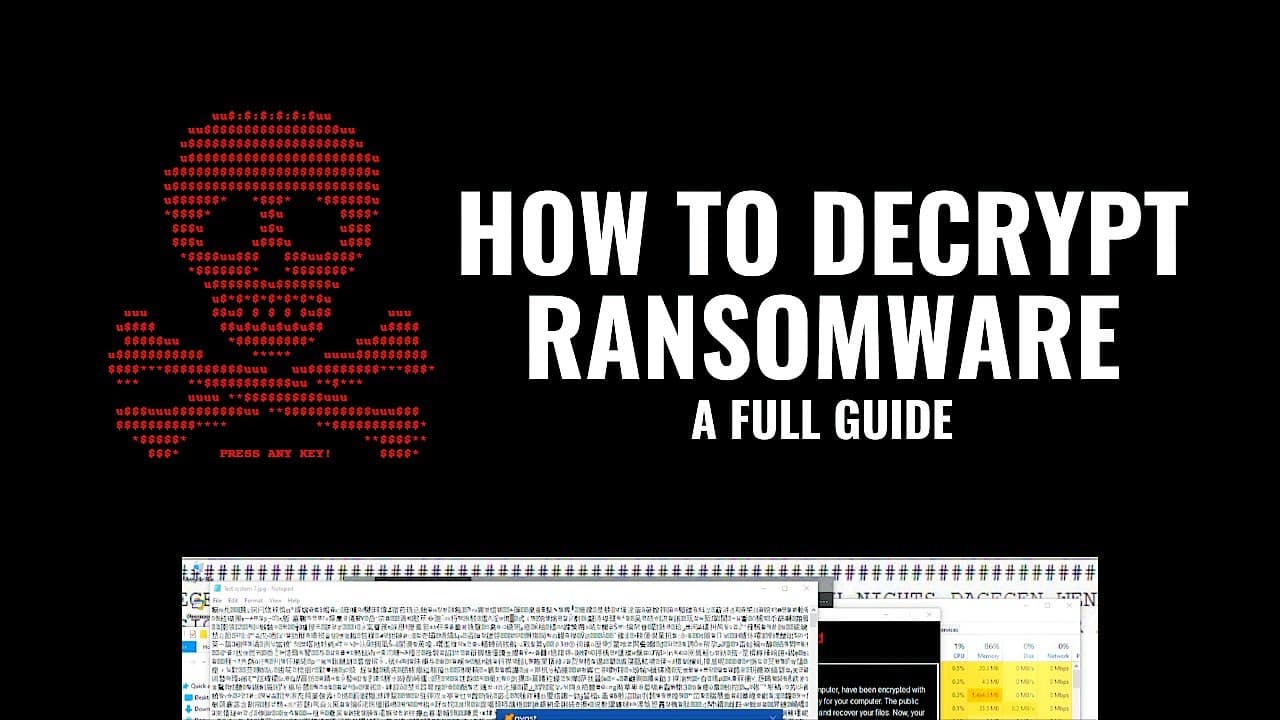
How to Decrypt Ransomware: A full guide
TL;DR
Learn different methods to decrypt files after a ransomware attack, including finding the encryption key, using decryption tools, and utilizing brute force.
Transcript
so you're looking at this and you're wondering what do I do now Leo from the PC security channel don't worry in this video we will talk about everything you can do to decrypt your files after a ransomware attack if you're lucky enough and your falls possibly aren't encrypted yet check out our full guide on how to deal with ransomware attack which i... Read More
Key Insights
- 🤩 Ransomware encrypts files, rendering them inaccessible without the encryption key.
- 🤩 Some ransomware variants have the encryption key hard-coded within the executable, allowing for decryption without paying the ransom.
- 💦 Publicly available decryption tools can identify the ransomware variant and provide a solution, but they may not work for all cases.
- 🤩 Brute force decryption attempts to find the key by trying every possible combination of characters, but it is unlikely to be successful for modern encryption methods.
- 👋 Prevention is the best defense against ransomware attacks, as recovering encrypted files is often challenging and costly.
- 👨💼 For businesses, paying the ransom may not guarantee a working decryption tool, so exploring professional decryption options or reformatting the system may be necessary.
- 🍂 Understanding the available decryption methods is crucial to avoid falling prey to scams promising easier solutions.
Install to Summarize YouTube Videos and Get Transcripts
Explore YouTube Video Summarizer or Get YouTube Transcript Extractor
Questions & Answers
Q: What is encryption in the context of ransomware attacks?
Encryption is the process of encoding data in a way that can only be understood by someone with the encryption key. Ransomware encrypts files, making them inaccessible to the victim.
Q: Is it possible to decrypt files without the encryption key?
Yes, in some cases, the encryption key may be hard-coded within the ransomware executable. By analyzing the executable, it may be possible to extract the key and use it to decrypt files.
Q: Are there publicly available decryption tools for ransomware?
Yes, there are resources like the Gnome or Ransom project and MC Soft decryption tools that offer free decrypters for certain types of ransomware. These tools can identify the ransomware variant and provide a solution if available.
Q: What is brute force decryption?
Brute force decryption involves trying every possible combination of characters to find the encryption key. This method is resource-intensive and time-consuming, especially for modern encryption methods like AES 256 or RSA.
Summary & Key Takeaways
-
Ransomware encrypts files and demands ransom for decryption, but there are methods to decrypt files without paying the ransom.
-
Some ransomware variants have the encryption key hard-coded within the executable, which can be extracted and used to decrypt files.
-
Publicly available decryption tools can be used to identify the type of ransomware and decrypt the files if a known solution exists.
-
If other methods fail, brute force can be attempted to find the key by trying every possible combination, although this is highly resource-intensive and unlikely to be successful for modern encryption methods.
Read in Other Languages (beta)
Share This Summary 📚
Summarize YouTube Videos and Get Video Transcripts with 1-Click
Try YouTube Summary with ChatGPT & Claude or YouTube Transcript Generator
Explore More Summaries from The PC Security Channel 📚



Summarize YouTube Videos and Get Video Transcripts with 1-Click
Try YouTube Summary with ChatGPT & Claude or YouTube Transcript Generator