Night Search for Whip Spiders | Explorers In The Field
TL;DR
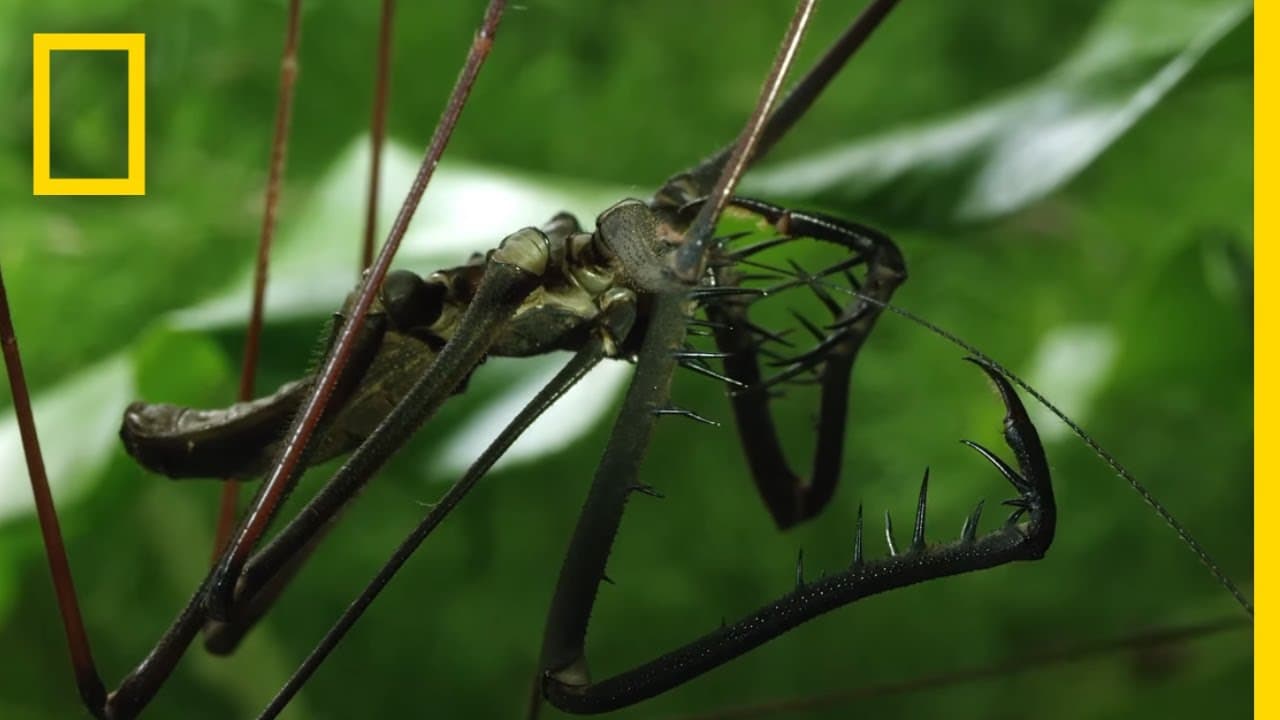
Behavioral neuroscientist Werner Bingman explores the navigational abilities of whip spiders in the Costa Rica rainforest.
Transcript
most of us see gigantic insects and politely head in the other direction other more adventurous types like behavioral neuroscientist and national geographic explorer werner bingman are apt to crawl around the costa rica rainforest in the dark trying to catch huge whip spiders we're looking for whip spiders tonight because they come back e... Read More
Key Insights
- 🇨🇷 Werner Bingman explores whip spiders' navigational abilities in the Costa Rica rainforest.
- 🕷️ Whip spiders are not spiders but a close relative in the arachnida class with evolved sensory legs.
- 👣 Temporary radio transmitters are used to track whip spiders' movements, indicating their remarkable navigational skills.
- 💅 Blocking the sensory abilities of whip spiders' legs with nail polish hinders their navigation, highlighting the significance of smell and touch in their orientation.
- 😟 This study provides insights into how a relatively simple nervous system can support effective navigation in whip spiders.
- 🤢 Whip spiders' navigational skills are comparable to that of homing pigeons and sea turtles.
- 🙂 Understanding whip spiders' navigational systems can shed light on the evolution of complex navigation with a simple nervous system.
Install to Summarize YouTube Videos and Get Transcripts
Explore YouTube Video Summarizer or Get YouTube Transcript Extractor
Questions & Answers
Q: What are whip spiders, and how do they differ from spiders?
Whip spiders are not spiders but a close relative belonging to the arachnida class. Unlike spiders, they have two legs that have evolved to perform sensory functions.
Q: How does Werner Bingman conduct his experiment on whip spiders?
Werner Bingman captures whip spiders in the rainforest and attaches temporary radio transmitters to track their movements. He takes them to a new location and observes their ability to navigate back to their original tree refuge.
Q: Why does Werner Bingman cover the tips of the whip spiders' antenna legs with nail polish?
By covering the tips of the antenna legs with nail polish, Werner Bingman blocks the sensory abilities of the legs. This helps determine the extent to which whip spiders rely on their antenna legs, their eight eyes, or other senses for navigation.
Q: What do the results of the experiment suggest about whip spiders' navigation?
The experiment suggests that whip spiders heavily rely on smell and touch information for navigation. The spiders with painted nails were unable to find their way back, indicating the importance of sensory abilities in their navigation.
Summary & Key Takeaways
-
Werner Bingman conducts an experiment to study the navigation of whip spiders in the Costa Rica rainforest.
-
Whip spiders are not spiders but a close relative belonging to the arachnida class and have evolved two legs for sensory functions.
-
Temporary radio transmitters are used to track whip spiders' movements and determine their navigational abilities.
Read in Other Languages (beta)
Share This Summary 📚
Summarize YouTube Videos and Get Video Transcripts with 1-Click
Try YouTube Summary with ChatGPT & Claude or YouTube Transcript Generator
Explore More Summaries from National Geographic 📚

Summarize YouTube Videos and Get Video Transcripts with 1-Click
Try YouTube Summary with ChatGPT & Claude or YouTube Transcript Generator