How to Use Portuguese Colloquial Expressions
TL;DR
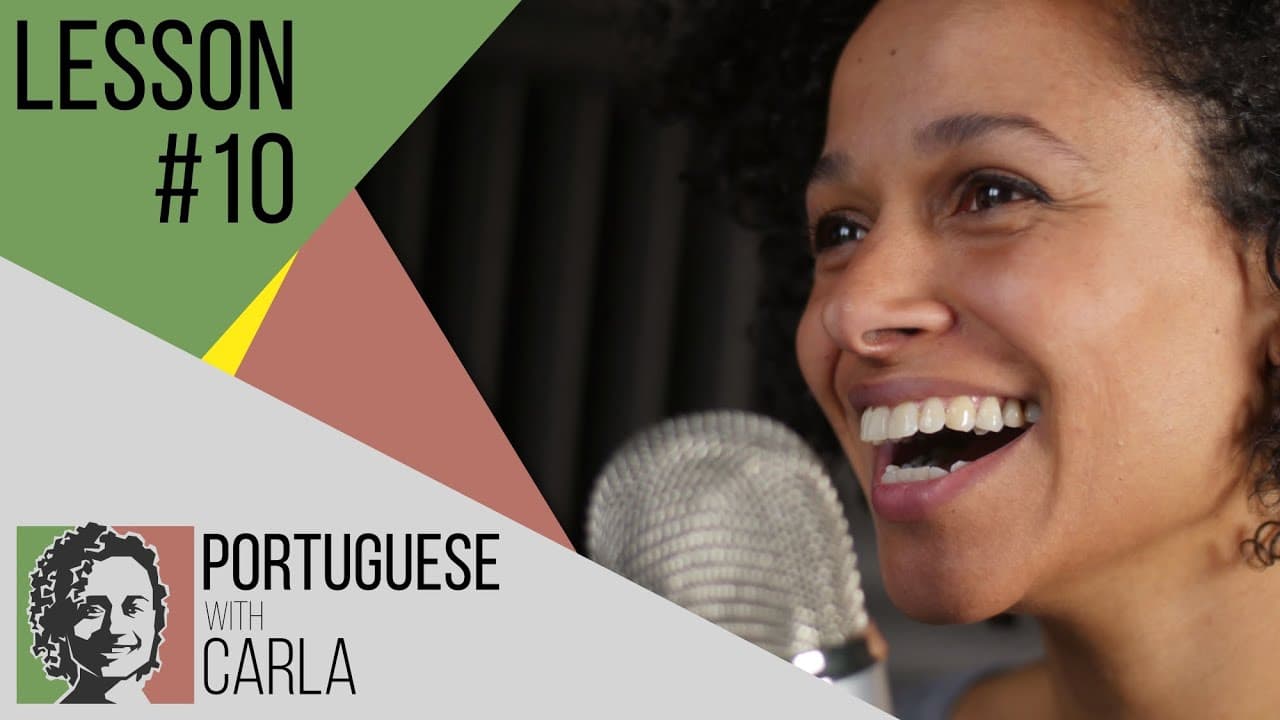
Learn useful Portuguese colloquial expressions to impress native speakers. The lesson includes practical examples in a restaurant setting, focusing on expressions related to ordering and discussing the bill. Practice pronunciation and understand the cultural context behind these phrases for better communication.
Transcript
la hello welcome to another podcast of Portuguese with Carla podcast 10 I'm Carla sabala from Portuguese with Cara and once again I have the husband with me that would be me yes Mr Malon sabala thank you yes I I should apologize um for the audio quality is slightly U different yes well different might that might be a good description of it um we we... Read More
Key Insights
- Portuguese colloquial expressions can enhance conversational skills and impress natives.
- Common restaurant phrases include asking if everything is okay and requesting the bill.
- In Portugal, 'um café' typically means an espresso, and ordering 'um cheio' means a double shot.
- The expression 'meia dúzia' translates to 'half a dozen,' often used in restaurant contexts.
- Understanding gender in Portuguese nouns is crucial; articles like 'o' and 'a' indicate masculine and feminine.
- Expressions like 'não sejas unha de vaca' mean 'don't be stingy,' showcasing cultural idioms.
- The word 'ficar' primarily means 'to stay' but can also mean 'to become' or 'to be' in different contexts.
- Flashcards and audio quizzes are effective tools for practicing vocabulary and pronunciation.
Install to Summarize YouTube Videos and Get Transcripts
Explore YouTube Video Summarizer or Get YouTube Transcript Extractor
Questions & Answers
Q: How to use Portuguese colloquial expressions in a restaurant?
In a Portuguese restaurant, use expressions like 'estava tudo bem?' to ask if everything was okay and 'pode trazer a conta, por favor?' to request the bill. To order a double espresso, say 'um cheio'. These phrases help in navigating common dining situations and understanding cultural nuances.
Q: What does 'não sejas unha de vaca' mean in Portuguese?
The expression 'não sejas unha de vaca' translates to 'don't be stingy' in English. It is a colloquial way to urge someone to be more generous, often used in social contexts where someone is reluctant to spend money or share resources. Understanding such idioms can enhance conversational skills.
Q: Why is understanding gender important in Portuguese nouns?
Gender is crucial in Portuguese nouns because it affects article usage and adjective agreement. For example, 'o' is used for masculine nouns and 'a' for feminine nouns. Knowing the gender helps in constructing grammatically correct sentences and is essential for effective communication in Portuguese.
Q: What is the cultural significance of ordering 'um café' in Portugal?
In Portugal, ordering 'um café' typically means requesting an espresso. It's a cultural norm, reflecting the Portuguese preference for strong, small coffees. Understanding this helps avoid confusion and ensures you get the coffee you expect. For a larger serving, you might order 'um cheio', a double shot.
Q: How do you say 'half a dozen' in Portuguese?
The phrase 'half a dozen' is translated to 'meia dúzia' in Portuguese. It's commonly used in various contexts, including ordering food items like olives in a restaurant. Familiarity with such expressions aids in everyday interactions and enhances language comprehension.
Q: What is a 'calque' and how does it relate to language learning?
A 'calque' is a literal translation of a foreign expression into another language, often resulting in non-standard usage. In language learning, understanding calques helps avoid awkward translations and encourages learning idiomatic expressions that are natural to native speakers.
Q: How can flashcards and audio quizzes aid in learning Portuguese?
Flashcards and audio quizzes are effective tools for reinforcing vocabulary and pronunciation in Portuguese. They offer interactive learning experiences, allowing learners to practice and memorize words and phrases. Using these tools regularly can improve language retention and conversational skills.
Q: What are some common Portuguese expressions for ordering coffee?
In Portugal, 'um café' usually means an espresso, while 'um cheio' refers to a double shot. When ordering, you might say 'queria um café, por favor' for a polite request. Understanding these expressions helps in navigating coffee culture and ensures accurate orders in Portuguese-speaking regions.
Summary & Key Takeaways
-
The podcast focuses on teaching Portuguese colloquial expressions through a restaurant scenario. Listeners learn how to order coffee, request the bill, and use idiomatic expressions like 'não sejas unha de vaca' (don't be stingy). The lesson emphasizes the importance of gender in Portuguese nouns and provides pronunciation practice.
-
Practical examples help learners understand the cultural context of expressions, such as the expectation to pay for starters like olives and bread if consumed. The podcast encourages using flashcards and quizzes for reinforcing vocabulary and pronunciation skills.
-
Listeners are guided through pronunciation exercises and introduced to the concept of 'calques,' which are literal translations from one language to another. The lesson aims to improve conversational Portuguese by focusing on expressions that are commonly used in everyday interactions.
Read in Other Languages (beta)
Share This Summary 📚
Summarize YouTube Videos and Get Video Transcripts with 1-Click
Try YouTube Summary with ChatGPT & Claude or YouTube Transcript Generator
Explore More Summaries from Portuguese With Carla 📚



Summarize YouTube Videos and Get Video Transcripts with 1-Click
Try YouTube Summary with ChatGPT & Claude or YouTube Transcript Generator