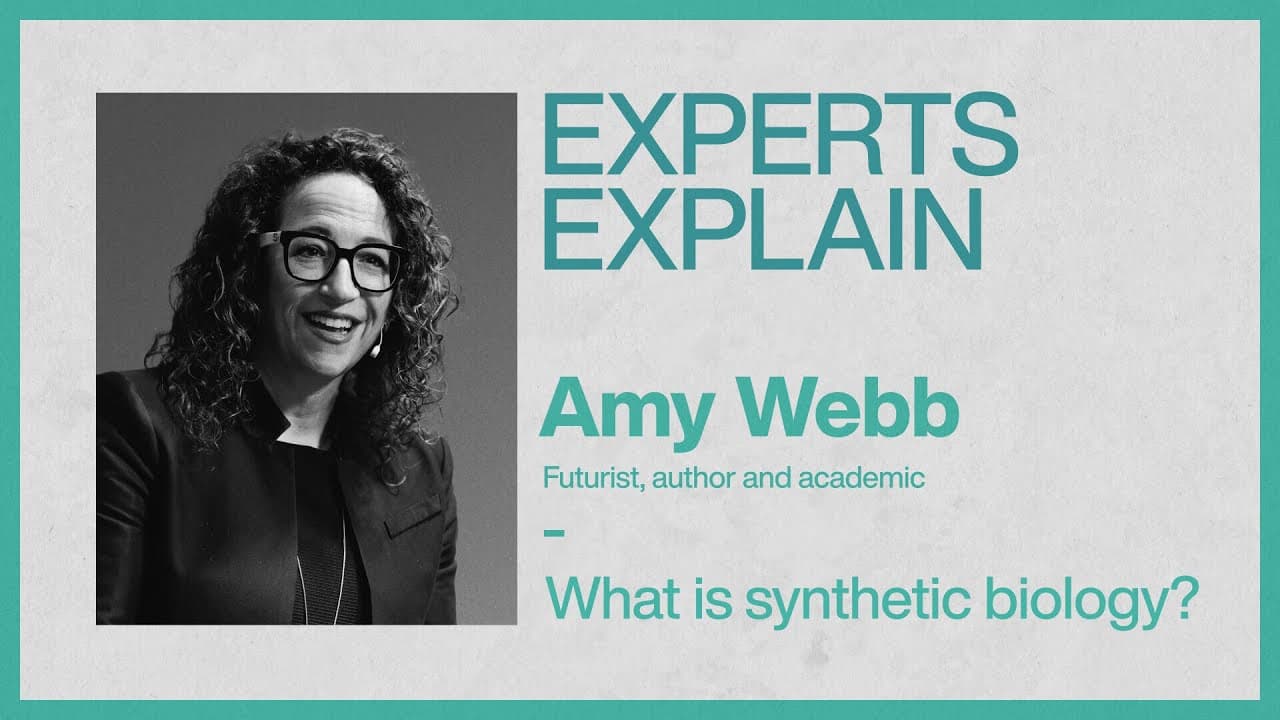
Experts Explain | Amy Webb | What is synthetic biology?
TL;DR
Synthetic biology is the emerging field of programming and engineering life at a molecular level, with potential applications in various industries, but also introducing risks and ethical considerations.
Transcript
synthetic biology is a young science while it may feel like a foreign concept chances are you've already encountered the fundamentals of it in your everyday life from plant-based Burgers to sourdough bread in the very near future this science will make the leap from engineering everyday things creating cells that take instructions and can edit the ... Read More
Key Insights
- 🛟 Synthetic biology combines engineering, computer science, and biology to program life at a molecular level, with applications in various industries.
- ❓ mRNA vaccines are a successful example of synthetic biology in healthcare.
- 😋 Future possibilities include sustainable fashion and converting CO2 into food.
- ♿ Risks include cyber threats and the potential for inequalities in access to genetic enhancements and advancements.
- 🛟 Ethical discussions regarding the definition of life, regulations, and societal impact are crucial.
- 😒 Global collaboration is necessary to establish frameworks and restrictions for responsible use of synthetic biology.
- 😒 Conversations about ethics, guardrails, and multilateral agreements are needed to ensure the responsible and beneficial use of this technology.
Install to Summarize YouTube Videos and Get Transcripts
Explore YouTube Video Summarizer or Get YouTube Transcript Extractor
Questions & Answers
Q: What is synthetic biology and its purpose?
Synthetic biology is the field that aims to understand and engineer natural elements at a molecular level for new or improved purposes, blurring the lines between traditional engineering, computer science, and biology.
Q: How is synthetic biology already being used in practical applications?
Synthetic biology is already being used in various industries, such as agriculture and healthcare. An example is the development of mRNA vaccines, which deliver new instructions to the body and have been effective in combating COVID-19.
Q: What are some potential future applications of synthetic biology?
Some future applications include sustainable fashion, where clothes could be designed to turn into compost, and transforming excessive CO2 into consumable food. Manipulating human biology to enhance disease resistance is another possibility.
Q: What are the risks and ethical considerations associated with synthetic biology?
One major risk is the potential for cyber biomalware, where genetic codes sent for printing can be intercepted and manipulated to become deadly pathogens. Ethical concerns include accessibility and equity, ensuring that the benefits of synthetic biology are widespread and not limited to a privileged few.
Summary & Key Takeaways
-
Synthetic biology harnesses existing elements in nature and re-engineers organisms at a molecular level for new or improved purposes.
-
It is already being used in industries like agriculture and healthcare, with mRNA vaccines as a successful application.
-
The future potential includes sustainable fashion, creating food from CO2, and even manipulating human biology.
Read in Other Languages (beta)
Share This Summary 📚
Summarize YouTube Videos and Get Video Transcripts with 1-Click
Try YouTube Summary with ChatGPT & Claude or YouTube Transcript Generator
Explore More Summaries from World Economic Forum 📚

Summarize YouTube Videos and Get Video Transcripts with 1-Click
Try YouTube Summary with ChatGPT & Claude or YouTube Transcript Generator