Deadlock Handling - Transaction Management In DBMS - Database Management System
TL;DR
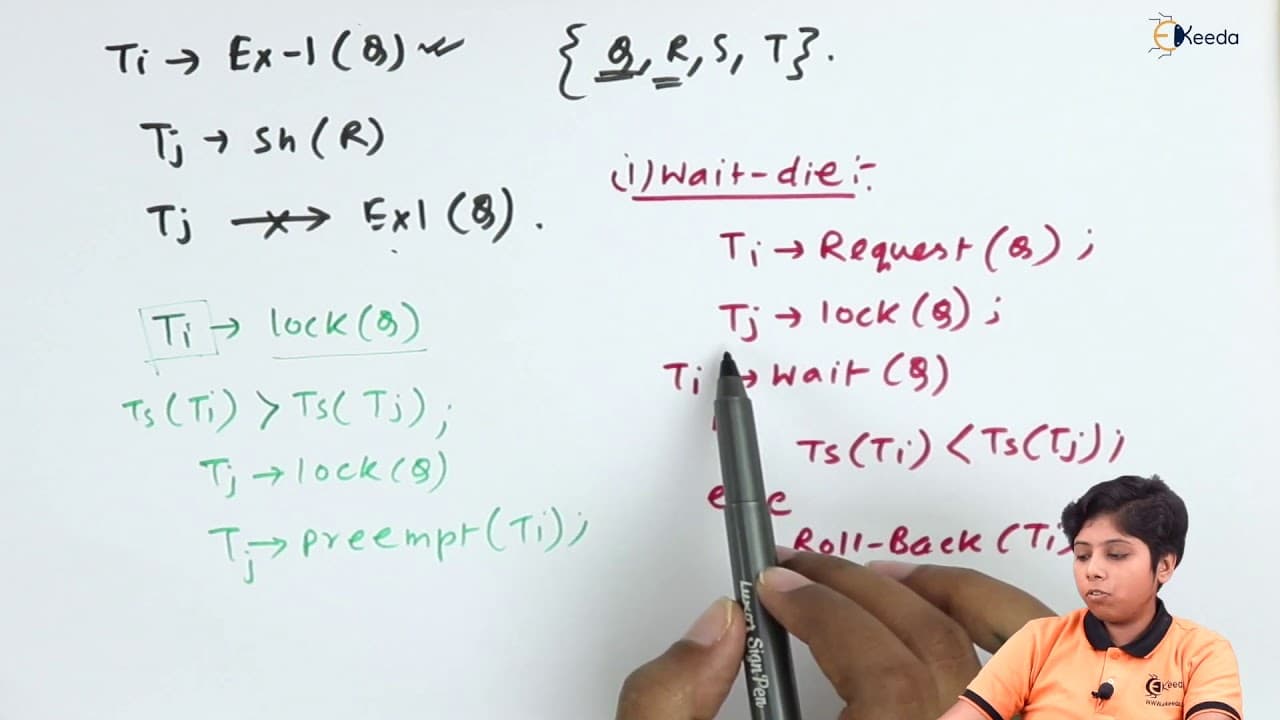
Deadlock handling in transaction management systems involves preventing, avoiding, detecting, and recovering from deadlocks.
Transcript
click the bell icon to get latest videos from ekeeda hello friends today we will talk about deadlock handling in the transaction and in a dbms system now when we talk about deadlock handling we should know how to prevent a deadlock how to avoid a deadlock and how to recover from a deadlock we will describe each of this section with the deadlock han... Read More
Key Insights
- 🕵️ Deadlock handling in transaction management systems involves preventing, avoiding, detecting, and recovering from deadlocks.
- 🇰🇼 Deadlock prevention focuses on avoiding cyclic waits and using transaction rollback to ensure a system never enters a deadlock.
- 🥺 Deadlock avoidance conditions transactions to prevent specific predicates that can lead to deadlocks.
- 🏍️ Deadlock detection involves maintaining a wait-for graph and determining if cycles exist to identify the presence of deadlocks.
- 🤣 Deadlock recovery techniques include selecting victims, rolling back transactions, and using starvation to free up resources.
- ❓ Partial and total rollbacks are used depending on the situation and frequency of deadlock occurrences.
- 🥶 Deadlock recovery aims to resolve deadlocks by selecting victims and freeing up resources.
Install to Summarize YouTube Videos and Get Transcripts
Explore YouTube Video Summarizer or Get YouTube Transcript Extractor
Questions & Answers
Q: What is deadlock prevention?
Deadlock prevention aims to ensure that the system never enters a deadlock by avoiding cyclic waits and using transaction rollback. By defining an order for data items and implementing two-phase locking protocols, cyclic waits can be prevented.
Q: How does deadlock avoidance differ from prevention?
Deadlock avoidance conditions transactions to prevent specific predicates that can lead to deadlocks, while prevention focuses on avoiding cyclic waits altogether. Avoidance considers the conditions but does not allow them to occur, while prevention does not consider those conditions.
Q: What is deadlock recovery?
Deadlock recovery deals with recovering from already occurred deadlocks. It involves selecting victims from the deadlock detection graph and rolling back their transactions. Recovery techniques can also involve starving a specific transaction to allow other transactions to complete.
Q: What is deadlock detection?
Deadlock detection involves maintaining a wait-for graph that represents transactions waiting for each other. By detecting cycles in the graph, it can determine if a deadlock is present. If no cycles exist, the system is deadlock-free.
Summary & Key Takeaways
-
Deadlock occurs when a set of transactions wait for each other to complete their operations, leading to a system in deadlock.
-
Deadlock prevention aims to ensure that the system never enters a deadlock by avoiding cyclic waits and using transaction rollback.
-
Deadlock avoidance conditions transactions to prevent deadlocks from occurring, while deadlock recovery deals with already occurred deadlocks.
-
Deadlock detection involves maintaining a wait-for graph to identify cycles and determine if a deadlock is present.
-
Deadlock recovery techniques include selecting victims, rolling back transactions, and using starvation to free up resources.
Read in Other Languages (beta)
Share This Summary 📚
Summarize YouTube Videos and Get Video Transcripts with 1-Click
Try YouTube Summary with ChatGPT & Claude or YouTube Transcript Generator
Explore More Summaries from Ekeeda 📚






Summarize YouTube Videos and Get Video Transcripts with 1-Click
Try YouTube Summary with ChatGPT & Claude or YouTube Transcript Generator