How Does Division of Labor Boost Economic Growth?
TL;DR
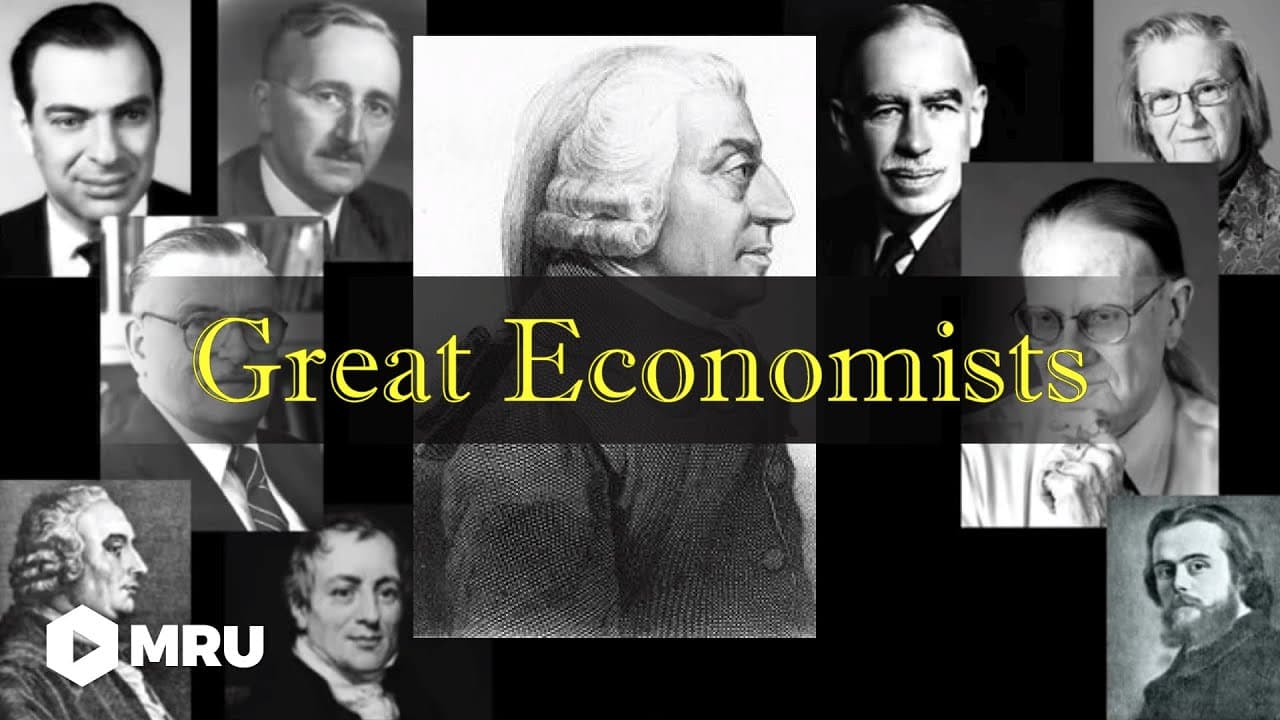
Adam Smith's theory emphasizes the division of labor as a key driver of economic growth. By allowing workers to specialize, productivity increases significantly through time savings, improved skills, and technological innovation. Larger markets and capital accumulation further enhance this process by promoting trade, trust, and good governance, which are essential for maximizing the benefits of specialization.
Transcript
Today we look at Adam Smith's Theory of Growth Smith begins the Wealth of Nations With a discussion of The Division of Labor And it's appropriate for us to begin There as well because The Division of Labor was Absolutely essential to Smith's thought Indeed, you could say he was consumed by this idea Why? Well, Smith gives his famous Example of the ... Read More
Key Insights
- The division of labor is crucial to increasing productivity, as demonstrated by Smith's pin factory example, where specialization boosts output significantly.
- Specialization leads to greater worker dexterity and learning by doing, enhancing task efficiency and knowledge depth.
- Invention and use of machines are driven by specialized workers seeking to reduce labor, contributing to productivity gains.
- Larger markets encourage specialization and investment in machinery, essential for maximizing productivity improvements.
- Trust and good governance are vital for trade and economic growth, ensuring secure property rights and contract enforcement.
- Free trade promotes international specialization, further enhancing division of labor and economic development.
- Geographical factors, such as proximity to waterways, historically facilitated larger markets and economic growth.
- Capital accumulation supports division of labor by enabling investment in labor and machinery, driving further productivity increases.
Install to Summarize YouTube Videos and Get Transcripts
Explore YouTube Video Summarizer or Get YouTube Transcript Extractor
Questions & Answers
Q: How does the division of labor increase productivity?
The division of labor increases productivity by allowing workers to specialize in specific tasks, which enhances their skills and efficiency. This specialization leads to time savings, as workers focus on a single task rather than switching between tasks. Additionally, specialized workers are more likely to innovate and develop new technologies, further boosting productivity.
Q: What role do larger markets play in economic growth?
Larger markets play a crucial role in economic growth by providing greater opportunities for specialization and trade. In larger markets, there is a higher demand for specialized services and products, encouraging investment in machinery and innovation. This leads to increased productivity and efficiency, ultimately driving economic development.
Q: Why is trust important for trade and economic growth?
Trust is essential for trade and economic growth because it ensures secure property rights and contract enforcement. When individuals and businesses trust that their rights will be protected and agreements honored, they are more likely to engage in trade and investment. This trust fosters a stable economic environment, promoting growth and development.
Q: How does free trade enhance economic development?
Free trade enhances economic development by promoting international specialization and the division of labor. By removing barriers to trade, countries can focus on producing goods and services in which they have a comparative advantage. This specialization increases efficiency, reduces costs, and fosters innovation, contributing to overall economic growth.
Q: What geographical factors support larger markets?
Geographical factors such as proximity to waterways, like sea-coasts and navigable rivers, support larger markets by facilitating trade and transportation. These locations historically allowed for easier and cheaper movement of goods, enabling larger markets to develop. As markets expanded, they encouraged specialization, investment, and economic growth.
Q: How does capital accumulation support the division of labor?
Capital accumulation supports the division of labor by providing the necessary resources for investment in labor and machinery. With more capital, businesses can employ more workers and purchase advanced equipment, facilitating specialization and increasing productivity. This creates a cycle of growth, as increased output leads to further savings and investment.
Q: What is the relationship between specialization and innovation?
Specialization and innovation are closely linked, as specialized workers gain deeper knowledge and skills in their tasks, leading to greater efficiency and the development of new methods or technologies. This 'learning by doing' process encourages workers to find ways to improve their tasks, resulting in innovative solutions that enhance productivity.
Q: Why did Adam Smith emphasize the importance of free trade?
Adam Smith emphasized the importance of free trade because it facilitates the division of labor and international specialization, leading to greater productivity and economic growth. By advocating for the removal of trade barriers, Smith believed that countries could benefit from increased efficiency, innovation, and wealth, ultimately improving the standard of living for all.
Summary & Key Takeaways
-
Adam Smith's theory highlights the division of labor as a fundamental mechanism for economic growth. Specialization allows workers to become more skilled and efficient, leading to substantial productivity gains. Larger markets and capital accumulation are essential for this process, as they facilitate trade and investment in machinery, further enhancing productivity.
-
Trust and good governance play a critical role in promoting trade and economic growth by ensuring secure property rights and contract enforcement. Free trade and geographical factors, such as access to waterways, have historically supported larger markets and specialization, driving economic development.
-
Smith's insights into the division of labor and its impact on productivity remain relevant today. By emphasizing specialization, larger markets, and capital accumulation, his theory provides a dynamic framework for understanding economic growth and the importance of policies that support trade, trust, and innovation.
Read in Other Languages (beta)
Share This Summary 📚
Summarize YouTube Videos and Get Video Transcripts with 1-Click
Try YouTube Summary with ChatGPT & Claude or YouTube Transcript Generator
Explore More Summaries from Marginal Revolution University 📚

Summarize YouTube Videos and Get Video Transcripts with 1-Click
Try YouTube Summary with ChatGPT & Claude or YouTube Transcript Generator