How Israel Was Created
TL;DR
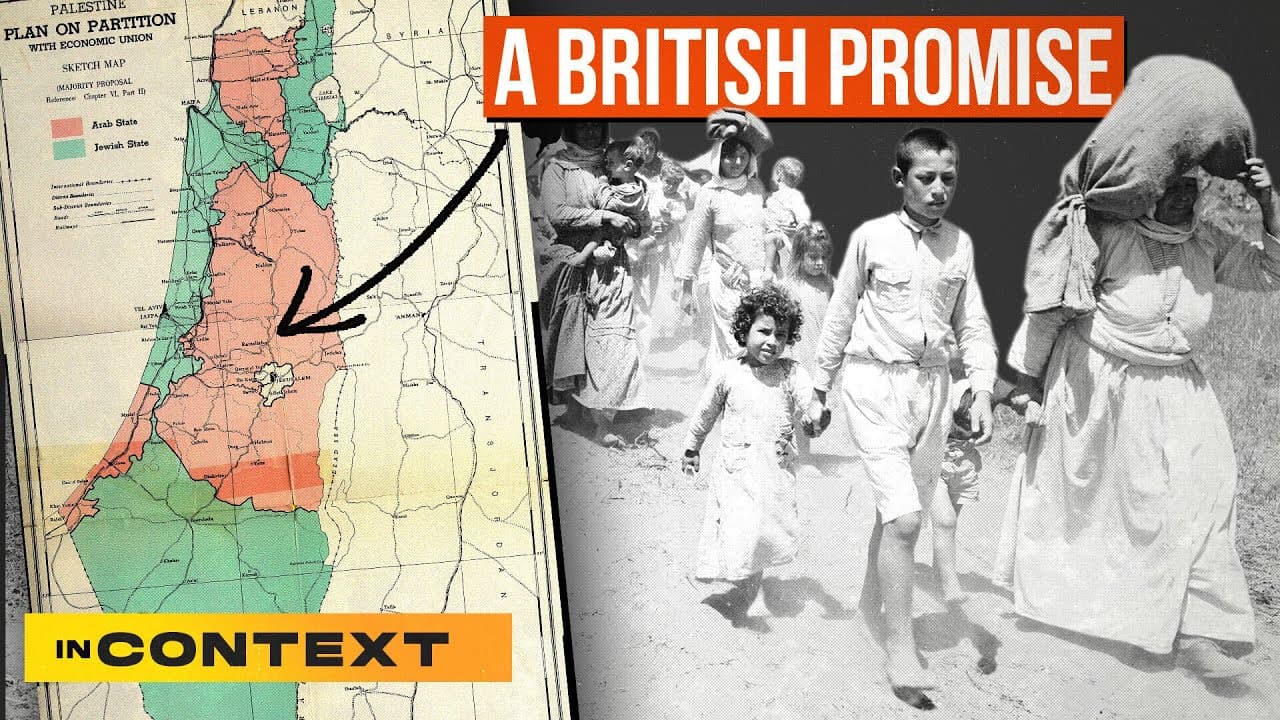
The Balfour Declaration, issued in 1917, pledged British support for the establishment of a Jewish homeland in Palestine. This led to the destruction of Palestine and the creation of the State of Israel.
Transcript
On November 2, 1917, Britain's Foreign Secretary, Arthur Balfour, wrote a letter that would set off a conflict still being fought more than 100 years later. His Majesty's government view with favor the establishment in Palestine of a national home for the Jewish people and will use their best endeavors to facilitate the achievement of this objec... Read More
Key Insights
- 😫 The Balfour Declaration, issued by the British in 1917, set the stage for the creation of a Jewish homeland in Palestine.
- 🥺 British rule in Palestine favored the Zionist movement, leading to conflict and tensions with the Palestinian population.
- 🇮🇱 The displacement and expulsion of Palestinians during the establishment of the State of Israel in 1948 are known as the Nakba.
Install to Summarize YouTube Videos and Get Transcripts
Explore YouTube Video Summarizer or Get YouTube Transcript Extractor
Questions & Answers
Q: Why did the British make promises about creating a Jewish homeland in Palestine?
The British made promises in hopes of gaining support from Jewish communities and leveraging their influence during World War I. Additionally, some officials held religious or political beliefs that aligned with the Zionist movement.
Q: What impact did British rule have on Palestine?
British rule allowed for the growth of the Zionist movement, resulting in increased Jewish immigration, land acquisitions, and the establishment of institutions and militias for the Jewish community. This created tensions with the Palestinian population, who felt their independence and rights were being undermined.
Q: How did the events of World War II shape the conflict?
The Holocaust and the persecution of Jews in Europe led to an increased desire for a Jewish homeland, with survivors seeking safety in Palestine. This intensified the conflict between Zionists and Palestinians, as well as the resistance against British rule.
Q: What was the significance of the 1947 UN partition plan?
The UN partition plan proposed dividing Palestine into separate Jewish and Palestinian states. While the Zionist leadership accepted the plan, Palestinians and other Arab nations rejected it, as it granted a Jewish state in a territory where Palestinians were the majority.
Summary & Key Takeaways
-
In 1917, Britain's Foreign Secretary, Arthur Balfour, wrote a letter promising to create a Jewish homeland in Palestine, despite the fact that the majority of people living there were not Jewish.
-
The Zionist movement, advocating for a Jewish homeland, gained momentum in the late 19th century and found support among high-ranking British officials.
-
British rule in Palestine favored the Zionist project, leading to conflict and resistance from the Palestinian population.
-
After British rule ended in 1948, the State of Israel was established, resulting in the displacement and expulsion of hundreds of thousands of Palestinians.
Read in Other Languages (beta)
Share This Summary 📚
Summarize YouTube Videos and Get Video Transcripts with 1-Click
Try YouTube Summary with ChatGPT & Claude or YouTube Transcript Generator
Explore More Summaries from AJ+ 📚
![This Is The Story Of Alaska Natives' Fight For Their Land [Our Fight To Survive, Pt. 1] | AJ+ thumbnail](/_next/image?url=https%3A%2F%2Fi.ytimg.com%2Fvi%2F50_kse-Uh-g%2Fhqdefault.jpg&w=750&q=75)




Summarize YouTube Videos and Get Video Transcripts with 1-Click
Try YouTube Summary with ChatGPT & Claude or YouTube Transcript Generator