What Mental Models Made Charlie Munger Rich?
TL;DR
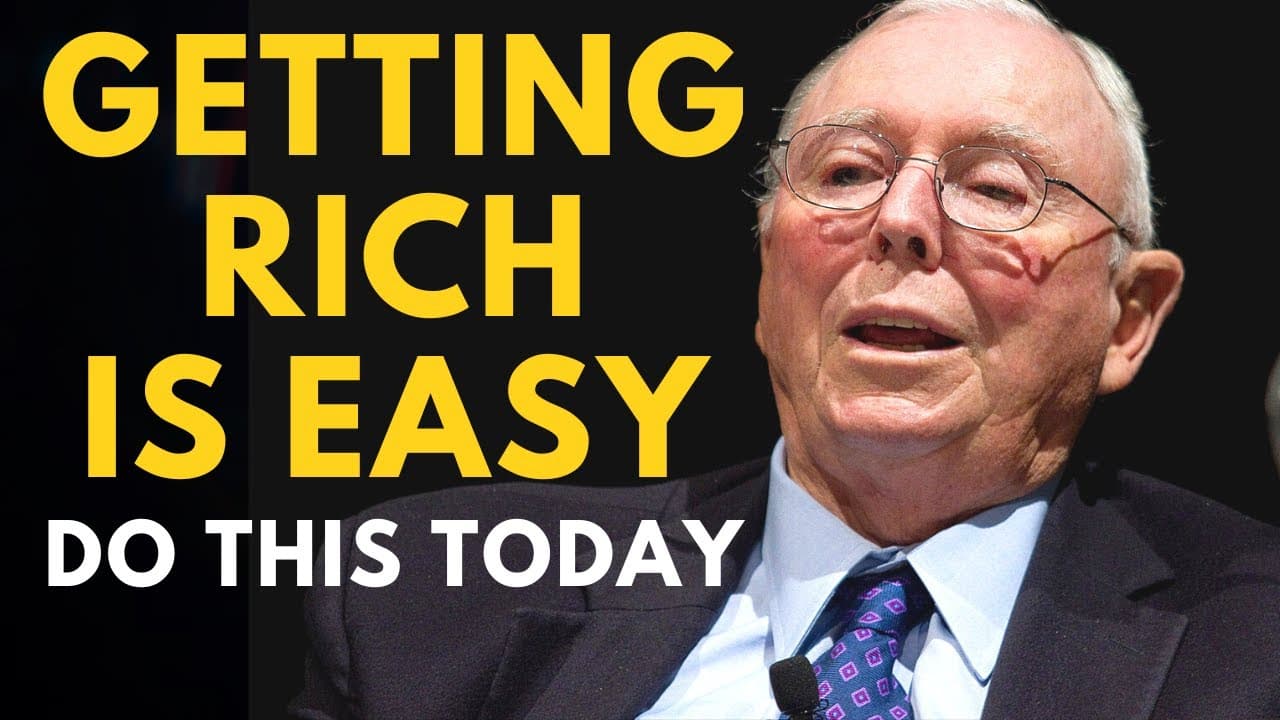
Charlie Munger says he got rich when he understood the power of mental models, and this breakdown covers the six he credits most: inversion, staying within your circle of competence, Occam's razor, margin of safety, learning from mistakes, and opportunity cost. Each one simplifies complex ideas into chunks that lead to better, more profitable decisions. Read on to see how Munger applies each model, from solving problems backwards to concentrating capital in his best ideas.
Transcript
billionaire investor Charlie Munger has said on countless occasions he got rich when he finally understood the power of what I referred to as mental models I have gone through hundreds of hours of Charlie munger's interviews and writings to identify the six most important mental models that will change your life Monger is one of the most celebrated... Read More
Key Insights
- 🖐️ Mental models, such as inversion and staying within your circle of competence, played a significant role in Charlie Munger's success as an investor. (25 words)
- 🦮 Occam's razor highlights the importance of simplicity in decision-making and is a guiding principle for Munger and Warren Buffett. (20 words)
- 🌸 Margin of safety is a critical concept in investing, protecting investors from losses and providing a buffer against unforeseen circumstances. (20 words)
- 🔑 Learning from mistakes, both personal and vicarious, is crucial for growth and avoiding repeated errors in investing. (19 words)
- 🧑💼 Opportunity cost helps investors make informed decisions by considering the trade-offs and losses associated with different investment choices. (19 words)
- ✋ Munger's investment strategy involves concentration rather than diversification, focusing on a few high-quality stocks within his circle of competence. (21 words)
- 😌 The power of mental models lies in their ability to simplify complex ideas and improve decision-making for better and more profitable outcomes. (20 words)
- 🎙️ More videos with Charlie Munger:
Install to Summarize YouTube Videos and Get Transcripts
Explore YouTube Video Summarizer or Get YouTube Transcript Extractor
Questions & Answers
Q: What mental models does Charlie Munger credit for making him rich?
The video identifies six mental models Munger attributes to his success: inversion, staying within your circle of competence, Occam's razor, margin of safety, learning from mistakes, and opportunity cost. Munger has said he got rich when he finally understood the power of mental models, which simplify complex ideas into understandable chunks. Together they shape how he thinks and helps him make better, more profitable decisions.
Q: What is inversion, and how does Charlie Munger use it?
Inversion is the process of solving problems backwards by thinking about the opposite of what you want. To become wealthy, for example, Munger would ask what he'd do to become poor, such as overspending, taking on large debt, and never investing, and then avoid those things. As Munger says, a big part of success is simply avoiding stupidity, and inversion acts as a filter that helps you avoid trouble.
Q: How does staying within your circle of competence affect investing?
Your circle of competence is the set of companies and industries you understand deeply enough to have an edge. Munger and Buffett focus only on stocks inside that circle, since investing outside it is where most investors get into trouble by becoming overconfident. Buffett has said the size of your circle matters less than staying strictly within it.
Q: How does Occam's razor apply to Munger and Buffett's investing?
Occam's razor holds that everything should be made as simple as possible but no simpler, so the simplest solutions tend to be best. Buffett and Munger keep a 'too hard' bucket on their desks where most potential investment ideas end up, and they hunt for simpler businesses that require fewer assumptions. Munger once said people calculate too much and think too little, and that they have a passion for keeping things simple.
Q: Why is margin of safety important in investing?
Margin of safety means buying a stock at a price well below its intrinsic value so you have a buffer against losses. It protects you from errors in estimating value or a deterioration in the company's performance. This reduces the risk of losing money and increases the probability of a successful investment.
Q: How does Charlie Munger learn from mistakes?
Munger believes in learning vicariously by studying the mistakes of others rather than only his own. He collects big calamities and stupidities in his head so he can avoid repeating them personally. By reading extensively and staying informed, he learns valuable lessons without having to experience the pain himself.
Q: What is opportunity cost, and why does Munger emphasize it?
Opportunity cost is the trade-off or loss from not choosing the next best alternative. In investing, it pushes you to weigh each potential investment against your other options and allocate capital toward your best ideas. This is why Munger favors a concentrated portfolio, focusing on a few high-quality stocks rather than diluting returns through broad diversification.
Q: How does Munger decide what information to use in an investment decision?
Munger simplifies by first avoiding the unknowable and unimportant. For a piece of information to enter his decision-making, it has to pass a two-step test: it must be both important and knowable. For example, whether the economy will enter a recession in the next five years matters greatly but is essentially unknowable, so it fails the test.
Summary & Key Takeaways
-
Charlie Munger, billionaire investor and vice president of Berkshire Hathaway, credits his success to mental models, which help simplify complex ideas and make better decisions.
-
Inversion is a mental model that involves solving problems backwards by considering the opposite of what you want, helping you avoid trouble and make progress.
-
Staying within your circle of competence is important in investing, as it ensures you have a deep understanding of the companies and industries you invest in.
-
Occam's razor emphasizes the importance of simplicity in decision-making, focusing on the simplest solutions that require fewer assumptions.
-
Margin of safety is crucial in investing, protecting you from losses by ensuring the intrinsic value of a stock is higher than its market price.
-
Learning from mistakes and studying the mistakes of others is essential for growth and avoiding repeated errors.
-
Opportunity cost is a critical mental model in investing, considering the trade-offs and losses incurred from not choosing the next best alternative.
Read in Other Languages (beta)
Share This Summary 📚
Summarize YouTube Videos and Get Video Transcripts with 1-Click
Try YouTube Summary with ChatGPT & Claude or YouTube Transcript Generator
Explore More Summaries from Investor Center 📚






Summarize YouTube Videos and Get Video Transcripts with 1-Click
Try YouTube Summary with ChatGPT & Claude or YouTube Transcript Generator