All My Color Lessons, In Order
TL;DR
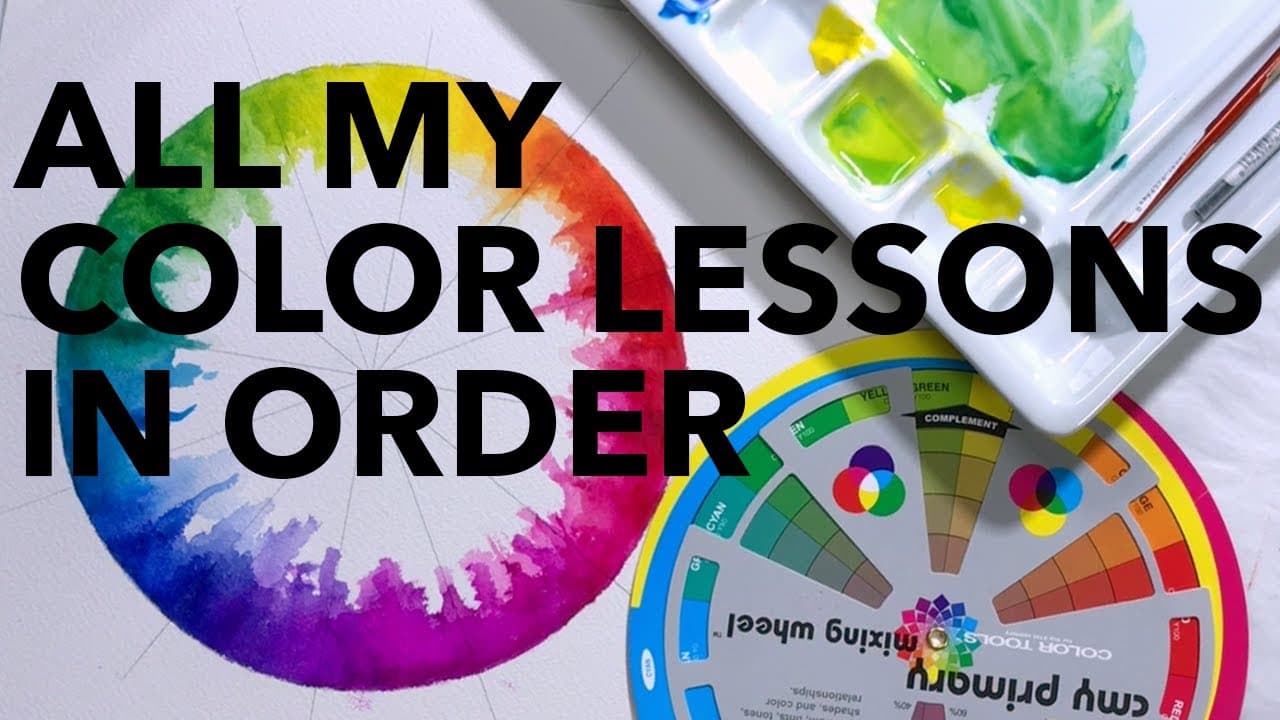
This video provides a comprehensive analysis of color theory concepts, including color modes, value, saturation, temperature, and color schemes. It also demonstrates how to mix paints using tints, shades, tones, and mutes. The Nickers gouache brand is used for the demonstrations.
Transcript
hey everyone welcome to the first video in the color Theory series color theory color concepts in this video I'm going to go over just a crap ton of color vocabulary and what those vocabulary words mean and in future videos I'm going to help you guys figure out color schemes for your design projects and how to mix colors more efficiently using fewe... Read More
Key Insights
- 👣 Understanding color modes is essential for determining how colors will appear in physical prints or digital screens.
- 🧑🏭 Value, saturation, and temperature are important factors in defining and mixing colors effectively.
- 😶 Tints, shades, tones, and mutes are different ways of desaturating colors and creating different color effects.
- 🖐️ Color schemes play a crucial role in design, providing visual interest and harmony.
- 👨🎨 Mixing colors using the CMYK method can be more efficient and cost-effective for painters.
- 🧑🎨 Nickers gouache is a quality brand that provides vibrant and versatile colors for artists.
Install to Summarize YouTube Videos and Get Transcripts
Explore YouTube Video Summarizer or Get YouTube Transcript Extractor
Questions & Answers
Q: What is the difference between CMYK and RGB color modes?
CMYK is used for physical prints, while RGB is used for digital screens. CMYK uses cyan, magenta, yellow, and black as the primary colors, while RGB uses red, green, and blue.
Q: How do tints, shades, tones, and mutes differ in creating colors?
Tints are created by adding white to a color, shades are created by adding black, tones are created by adding gray, and mutes are created by adding a color's complement.
Q: How can you determine the value, saturation, and temperature of a color?
Value refers to the lightness or darkness of a color, saturation refers to the intensity or brightness of a color, and temperature refers to whether a color is warm or cool.
Q: What are some common color schemes in design?
Common color schemes include triadic (using three colors spaced evenly on the color wheel), monochromatic (using different shades and tints of a single color), analogous (using colors next to each other on the color wheel), and complimentary (using colors opposite each other on the color wheel).
Summary & Key Takeaways
-
The video introduces color theory concepts such as color modes (CMYK, RGB, grayscale), value, saturation, and temperature.
-
It explains the difference between tints (color + white), shades (color + black), and tones (color + gray).
-
The video demonstrates how to create color schemes, including triadic, monochromatic, analogous, and complimentary. It also explores the concept of mutes and how to mix them using color + its complement.
Read in Other Languages (beta)
Share This Summary 📚
Summarize YouTube Videos and Get Video Transcripts with 1-Click
Try YouTube Summary with ChatGPT & Claude or YouTube Transcript Generator
Explore More Summaries from Zoe Hong 📚






Summarize YouTube Videos and Get Video Transcripts with 1-Click
Try YouTube Summary with ChatGPT & Claude or YouTube Transcript Generator