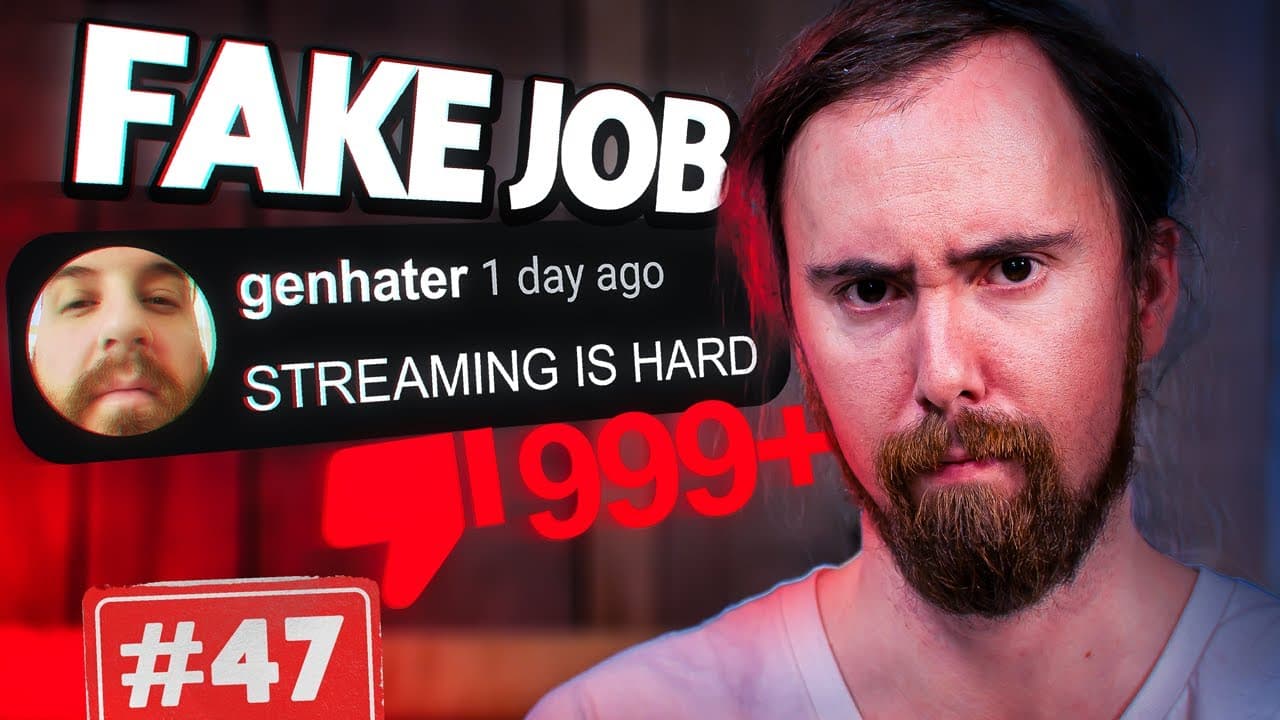
Asmongold Responds to Comments About His Job
TL;DR
The podcast debates the challenges of being a streamer versus traditional jobs.
Transcript
what's up y'all and welcome to episode 47 of steak and eggs uh I'm Emmy and I'm here with techie and asmin and we're doing what we always do just hanging out recording on a uh a Monday afternoon bro it smells like ass in here dude it is so hot it is hot and it smells like it so warm in February and Texas actually [ __ ] disgusting that global warmi... Read More
Key Insights
- 🙈 The conversation heavily revolves around the emotional challenges seen in streaming, which includes social fatigue despite potential financial rewards.
- 🤳 Self-diagnosis of mental health conditions, like autism or ADHD, is criticized as potentially misleading without professional diagnosis.
- 🎏 Streamers' complaints about their jobs are often dismissed by the public due to misconceptions about their income, overlooking the complexities of their emotional and mental struggles.
- 💨 There is concern about the way organizations structure deals for streamers, making sustainability a challenge for many content creators.
- 👻 The hosts emphasize the importance of maintaining perspective and reality in pursuing streaming careers, advocating for a balanced approach.
- 🐎 Discussions on race and culture in streaming highlight broader social issues, questioning if certain behaviors are societal responses rather than just individual actions.
- 👻 Humor is utilized throughout the podcast, creating a more approachable discussion around serious topics, allowing listeners to engage more deeply with issues affecting streamers.
Install to Summarize YouTube Videos and Get Transcripts
Explore YouTube Video Summarizer or Get YouTube Transcript Extractor
Questions & Answers
Q: What are some social challenges faced by streamers according to the podcast discussion?
Streamers frequently experience social fatigue, feeling drained after interacting with audiences for lengthy periods. This leads to concerns about personal relationships and trust, as they might struggle to discern genuine connections from those motivated by their public persona. The conversation highlights that while streaming can be lucrative, it often comes with significant emotional tolls that many external observers might overlook.
Q: How does the podcast define the difference between streaming and traditional jobs?
The discussion points out that while both streaming and traditional jobs can be demanding, the nature of streaming involves unique social pressures that can be psychologically draining. Streamers may feel constantly on display, leading to performance anxiety and emotional exhaustion that is often underestimated by the public, especially when compared to emotionally demanding retail or sales jobs.
Q: What views do the hosts share about self-diagnosis in mental health?
The hosts express skepticism about the reliability of self-diagnosis, particularly concerning conditions like autism. They discuss the potential dangers of self-labeling without professional guidance, emphasizing the importance of accurate diagnosis and treatment by mental health professionals instead of relying solely on personal interpretations found online.
Q: What do the hosts mention regarding streaming organizations and their impact on content creators?
The podcast discusses how many streaming organizations exert significant control over their creators, often leading to exploitative situations. These organizations may take a large portion of creators' earnings while providing minimal benefits, prompting concerns over the fairness of their contracts and the long-term sustainability of a creator's career.
Q: How does the conversation address the public's perception of streamers' complaints about their jobs?
The hosts note that the public may dismiss streamers' grievances due to the perception of their lucrative incomes. They highlight that while financial success exists for some, the majority of streamers struggle and must deal with the harsh realities of the industry that often go unnoticed by those outside of it.
Q: Are there any mentioned solutions for those wishing to pursue streaming sustainably?
The podcast encourages aspiring streamers to have backup plans and not solely rely on streaming as their only source of income. This includes pursuing education or maintaining other job opportunities alongside streaming to mitigate risks associated with the unpredictable nature of the streaming industry.
Q: What common misconceptions about streaming do the hosts aim to clarify during their discussion?
The hosts aim to dispel the belief that streaming is an easy or particularly glamorous job. They highlight the hard work, dedication, and emotional labor involved in engaging audiences constantly, as well as the extreme competition in the field that often leads aspiring streamers to disappointment.
Summary & Key Takeaways
-
The hosts talk about the misconception that streaming is an easy job, highlighting its social demands and the various challenges streamers face, including mental health implications.
-
A discussion arises on the ethics between self-diagnosis of autism, perceptions on mental health, and how it relates to the challenges of social media platforms.
-
They touch on the controversial behavior of a specific streamer and compare it to larger cultural issues regarding race and the streaming industry's treatment of its creators.
Read in Other Languages (beta)
Share This Summary 📚
Summarize YouTube Videos and Get Video Transcripts with 1-Click
Try YouTube Summary with ChatGPT & Claude or YouTube Transcript Generator
Explore More Summaries from Steak and Eggs Podcast 📚

Summarize YouTube Videos and Get Video Transcripts with 1-Click
Try YouTube Summary with ChatGPT & Claude or YouTube Transcript Generator