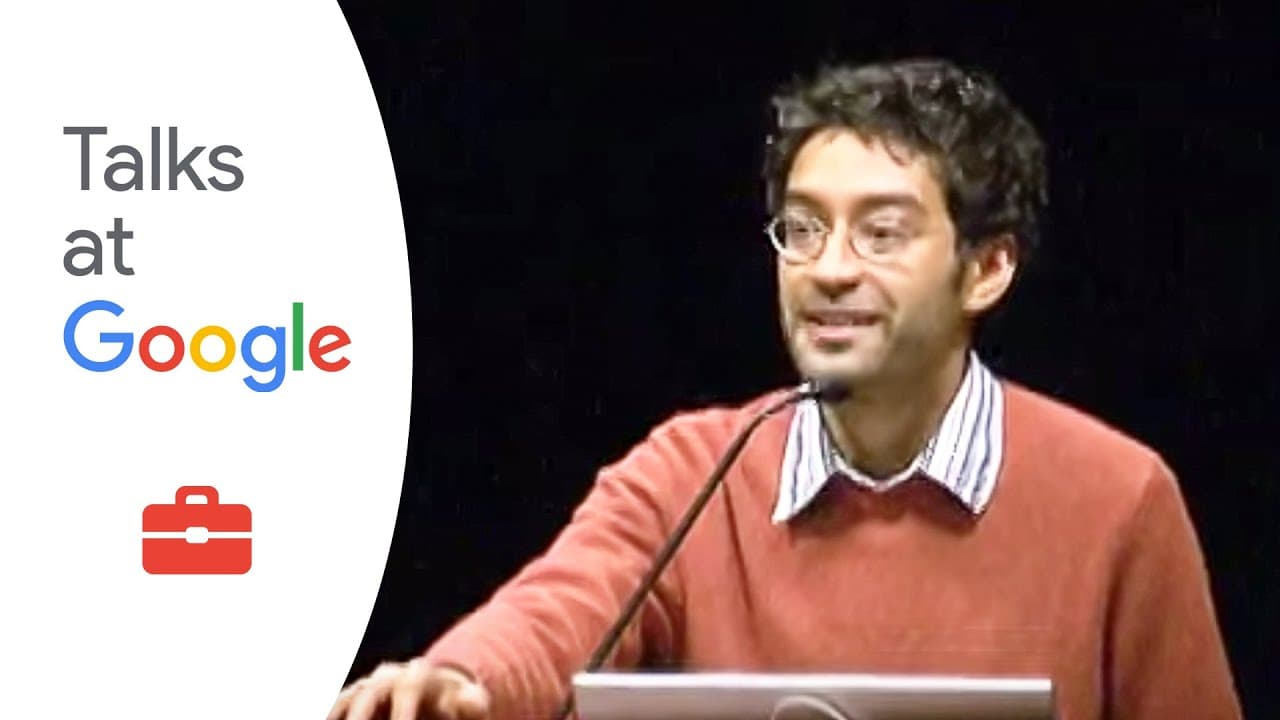
True Enough | Farhad Manjoo | Talks at Google
TL;DR
Technology has amplified our tendency to choose information that aligns with our beliefs, leading to the spread of fact-free claims in society.
Transcript
uh hey everyone thanks for coming today uh we're pleased to have Farhad Manu visit us as part of the author's a Google lecture series to talk about his new book true enough learning to live in a Posta Society uh farad work writes for salon.com machinist blog which covers among other things the intersection of technology and culture uh farad's book ... Read More
Key Insights
- 💁 Technology has amplified our tendency to consume information that aligns with our existing beliefs.
- 🥶 Fact-free claims, such as the connection between vaccines and autism or 9/11 conspiracy theories, continue to gain traction in society.
- ℹ️ Selective exposure to information contributes to the spread of fact-free claims, as individuals seek out sources that confirm their existing beliefs.
- 🥶 The media, especially partisan outlets, play a role in reinforcing fact-free claims through selective exposure and framing stories based on personal biases.
Install to Summarize YouTube Videos and Get Transcripts
Explore YouTube Video Summarizer or Get YouTube Transcript Extractor
Questions & Answers
Q: What is "truthiness" and how does it relate to the concept of truth?
"Truthiness" refers to the feeling that something is true without concrete evidence. It relates to the concept of truth by highlighting the psychological tendency to believe things that "feel" true rather than those that are objectively proven.
Q: How does technology contribute to the spread of fact-free claims?
Technology has facilitated the dissemination of information and allowed individuals to selectively expose themselves to information that aligns with their beliefs. This has resulted in the proliferation of fact-free claims and the ability to avoid information that causes cognitive dissonance.
Q: What role does the media play in perpetuating fact-free claims?
The media, especially right-wing outlets or partisan blogs, tend to echo and reinforce fact-free claims through selective exposure. This allows such claims to gain credibility among like-minded individuals, creating an echo chamber effect.
Q: Is there a solution to the challenges posed by the prevalence of fact-free claims in society?
While critical thinking education and promoting independent research may help, there is no easy solution due to the rapid evolution of technology and the nature of human perception. Fact-checking websites like Snopes can be a valuable resource, but they may not reach all individuals susceptible to fact-free claims.
Summary & Key Takeaways
-
Farhad Manjoo discusses his book, "True Enough: Learning to Live in a Post-Truth Society," which explores the phenomenon of "truthiness," where something feels true without evidence.
-
He highlights examples of fact-free claims gaining traction in society, such as the connection between vaccines and autism or conspiracy theories surrounding 9/11.
-
Manjoo argues that technological advancements have amplified our tendency to consume news that aligns with our beliefs, leading to a society unmoored from objective facts.
Read in Other Languages (beta)
Share This Summary 📚
Summarize YouTube Videos and Get Video Transcripts with 1-Click
Try YouTube Summary with ChatGPT & Claude or YouTube Transcript Generator
Explore More Summaries from Talks at Google 📚
Summarize YouTube Videos and Get Video Transcripts with 1-Click
Try YouTube Summary with ChatGPT & Claude or YouTube Transcript Generator