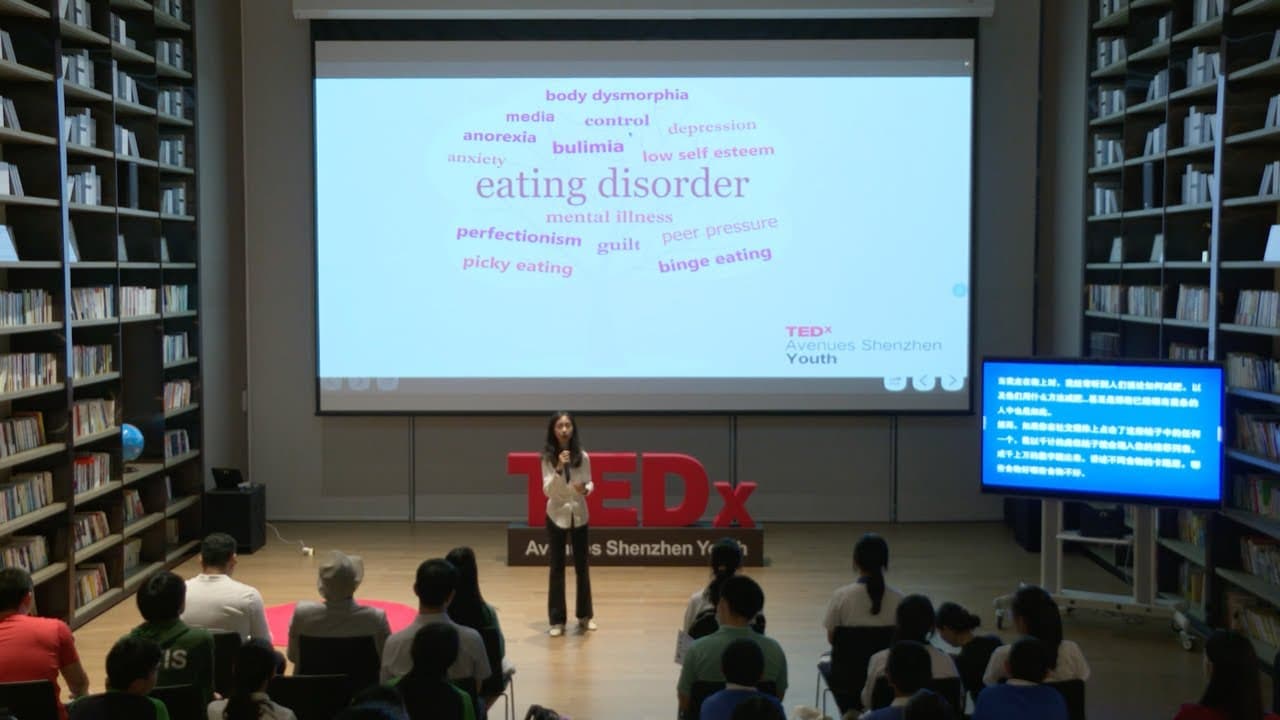
How social media distorts your mirror? | Joan Hu, | TEDxAvenues School Shenzhen Youth
TL;DR
Social media influences eating attitudes and behaviors by promoting unrealistic body standards and harmful weight loss products.
Transcript
Transcriber: Daniel Francelino Ribeiro Reviewer: Thien Vo Today I will deliver a story about the interesting roles of numbers. Now firstly, take a look at this picture, although it seems a little blurry in the screen, but you can have some guesses. The picture was taken in November in 2020. Do you now have a better guess? And before I tell you what... Read More
Key Insights
- 🏋️ Numbers have a powerful impact on our perceptions, influencing how we feel about temperature, speed, and weight.
- 😅 Social media platforms promote harmful weight loss products and unrealistic body ideals, leading to disordered eating patterns.
- 😋 Algorithms on social media perpetuate harmful messages by recommending similar content, creating a cycle of negative body image and food attitudes.
- 😅 Eating disorders often coexist with mental health issues, such as anxiety and depression.
- 🤳 Social media commodifies our bodies, perpetuating a culture of comparison and self-criticism.
- 🥵 Seeking professional help and support from friends and family is crucial for individuals struggling with disordered eating.
- 🔉 Education and media literacy are vital in countering the negative influence of social media on eating attitudes.
Install to Summarize YouTube Videos and Get Transcripts
Explore YouTube Video Summarizer or Get YouTube Transcript Extractor
Questions & Answers
Q: How does social media influence eating attitudes and behaviors?
Social media promotes unrealistic body standards, encourages the use of harmful weight loss products, and constructs a culture where body shape and size are heavily scrutinized, leading to disordered eating patterns and dissatisfaction with one's body.
Q: What are the consequences of these messages on social media?
The consequences include increased rates of eating disorders, anxiety, and depression, as well as a distorted view of one's body. It also creates a culture of comparison and self-criticism, affecting individuals' self-esteem and mental well-being.
Q: How can individuals seek help for these issues?
Seeking professional help from therapists or nutritionists specializing in eating disorders is crucial. Additionally, engaging in open conversations with friends and family, promoting body acceptance, and appreciating the positive value of food can contribute to recovery.
Q: What can be done to counter the negative influence of social media on eating attitudes?
Education plays a key role, both in terms of mental health education and media literacy. Promoting realistic body standards and challenging the diet culture perpetuated by social media platforms are also important steps.
Summary & Key Takeaways
-
The speaker shares personal experiences with weight and body image issues, highlighting the power of numbers to influence perceptions of temperature, speed, and weight.
-
Social media plays a significant role in promoting harmful weight loss products and unrealistic body ideals, leading to disordered eating patterns.
-
Algorithms on social media platforms perpetuate these harmful messages by recommending similar content, further influencing people's attitudes and behaviors towards food and their bodies.
Read in Other Languages (beta)
Share This Summary 📚
Summarize YouTube Videos and Get Video Transcripts with 1-Click
Try YouTube Summary with ChatGPT & Claude or YouTube Transcript Generator
Explore More Summaries from TEDx Talks 📚




Summarize YouTube Videos and Get Video Transcripts with 1-Click
Try YouTube Summary with ChatGPT & Claude or YouTube Transcript Generator