What Are the Causes of the Amazon River Drought?
TL;DR
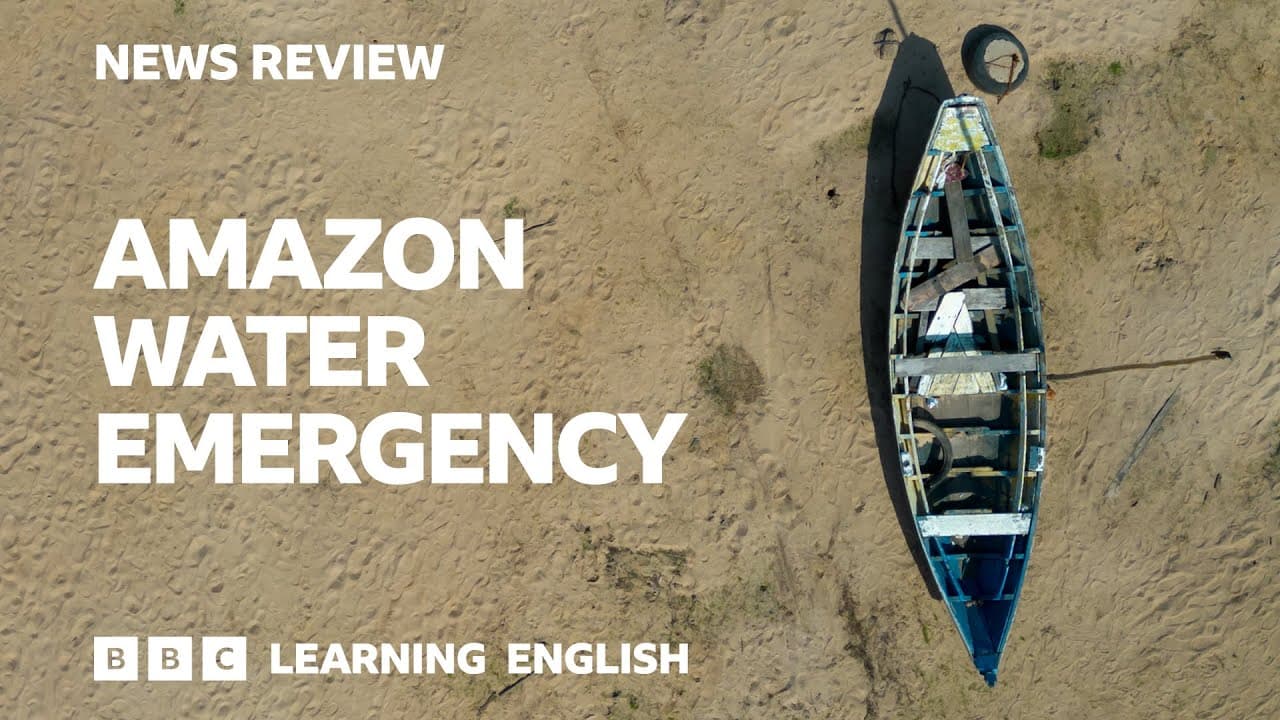
The Amazon River is facing its lowest water levels in 121 years due to a severe drought caused by the El Niño phenomenon and climate change. This has triggered a state of emergency in Manaus and surrounding cities, highlighting the urgent environmental crisis.
Transcript
Amazon River hits its lowest water levels in over 120 years. This is News Review from BBC Learning English. I'm Beth. And I'm Phil. Make sure you watch to the end to learn the vocabulary that you need to talk about this story. And don't forget to subscribe to our channel, like this video and try the quiz on our website. Now, today's story. Water le... Read More
Key Insights
- The Amazon River's water levels are at their lowest in over a century, primarily due to a lack of rainfall.
- The El Niño effect is a natural phenomenon contributing to the current drought in the Amazon region.
- Brazilian scientists also attribute the low water levels to the impacts of climate change, emphasizing its urgency.
- A state of emergency has been declared in Manaus and 20 other cities due to the severe drought conditions.
- The term 'drought' refers to an extended period of dry weather, leading to problems like crop failure and wildfires.
- The word 'overwhelm' is used to describe situations where something is completely and quickly covered, such as forest fires overwhelming the Amazon Basin.
- The term 'taint' is used when something good is turned bad, like wildfire smoke tainting the air quality in Brazil.
- The vocabulary discussed includes 'drought', 'overwhelm', and 'taints', each with specific environmental and general usage.
Install to Summarize YouTube Videos and Get Transcripts
Explore YouTube Video Summarizer or Get YouTube Transcript Extractor
Questions & Answers
Q: What is causing the Amazon River's low water levels?
The low water levels in the Amazon River are primarily due to a severe drought caused by a lack of rainfall. The natural El Niño effect has significantly contributed to this shortage of rain. Additionally, Brazilian scientists point to climate change as a major factor exacerbating the situation.
Q: What measures have been taken in response to the Amazon drought?
In response to the severe drought affecting the Amazon River, a state of emergency has been declared in Manaus and 20 other cities. This measure aims to address the urgent needs arising from the water shortage and its associated impacts, such as potential wildfires and agricultural challenges.
Q: How is the term 'drought' used in environmental contexts?
In environmental contexts, 'drought' refers to a prolonged period of dry weather with little to no rainfall, leading to significant problems such as crop failures, water shortages, and increased risk of wildfires. It is used to describe both specific events and general conditions of water scarcity.
Q: What does the term 'overwhelm' mean in the context of the Amazon fires?
In the context of the Amazon fires, 'overwhelm' refers to the forest fires completely and quickly covering the Amazon Basin area. This usage highlights the rapid and extensive spread of fires due to the dry conditions, posing a significant threat to the environment and local communities.
Q: How does the word 'taint' apply to the situation in Brazil?
The word 'taint' applies to the situation in Brazil by describing how wildfire smoke has negatively affected the air quality, turning it from good to bad. This term is used to convey the deterioration of environmental conditions and the impact on public health and safety.
Q: What role does climate change play in the Amazon drought?
Climate change plays a significant role in the Amazon drought by exacerbating the natural effects of the El Niño phenomenon. It contributes to more extreme weather patterns, reducing rainfall and increasing temperatures, which intensify the drought conditions and their impacts on the environment and local communities.
Q: What are the implications of the Amazon's low water levels?
The implications of the Amazon's low water levels are far-reaching, affecting biodiversity, agriculture, and local economies. The drought increases the risk of wildfires, threatens wildlife habitats, and disrupts water supply for communities, highlighting the urgent need for sustainable water management and climate change mitigation strategies.
Q: How can the vocabulary from the video be applied in everyday contexts?
The vocabulary from the video, such as 'drought', 'overwhelm', and 'taints', can be applied in everyday contexts to describe various situations. 'Drought' can refer to any prolonged scarcity, 'overwhelm' can describe being overloaded with tasks, and 'taints' can be used for situations where something positive is negatively affected.
Summary & Key Takeaways
-
The Amazon River is experiencing its lowest water levels in 121 years due to a severe drought caused by the El Niño effect and exacerbated by climate change. This has led to a state of emergency being declared in Manaus and 20 other cities.
-
The vocabulary discussed in the News Review includes 'drought', which refers to a period of no rain, 'overwhelm', meaning to cover something completely, and 'taints', which means to make something good turn bad.
-
The video emphasizes the environmental impact of the drought, including the threat of forest fires overwhelming the Amazon Basin and the tainting of air quality by wildfire smoke, highlighting the urgent need to address climate change.
Read in Other Languages (beta)
Share This Summary 📚
Summarize YouTube Videos and Get Video Transcripts with 1-Click
Try YouTube Summary with ChatGPT & Claude or YouTube Transcript Generator
Explore More Summaries from BBC Learning English 📚

Summarize YouTube Videos and Get Video Transcripts with 1-Click
Try YouTube Summary with ChatGPT & Claude or YouTube Transcript Generator