Ottoman Empire
TL;DR
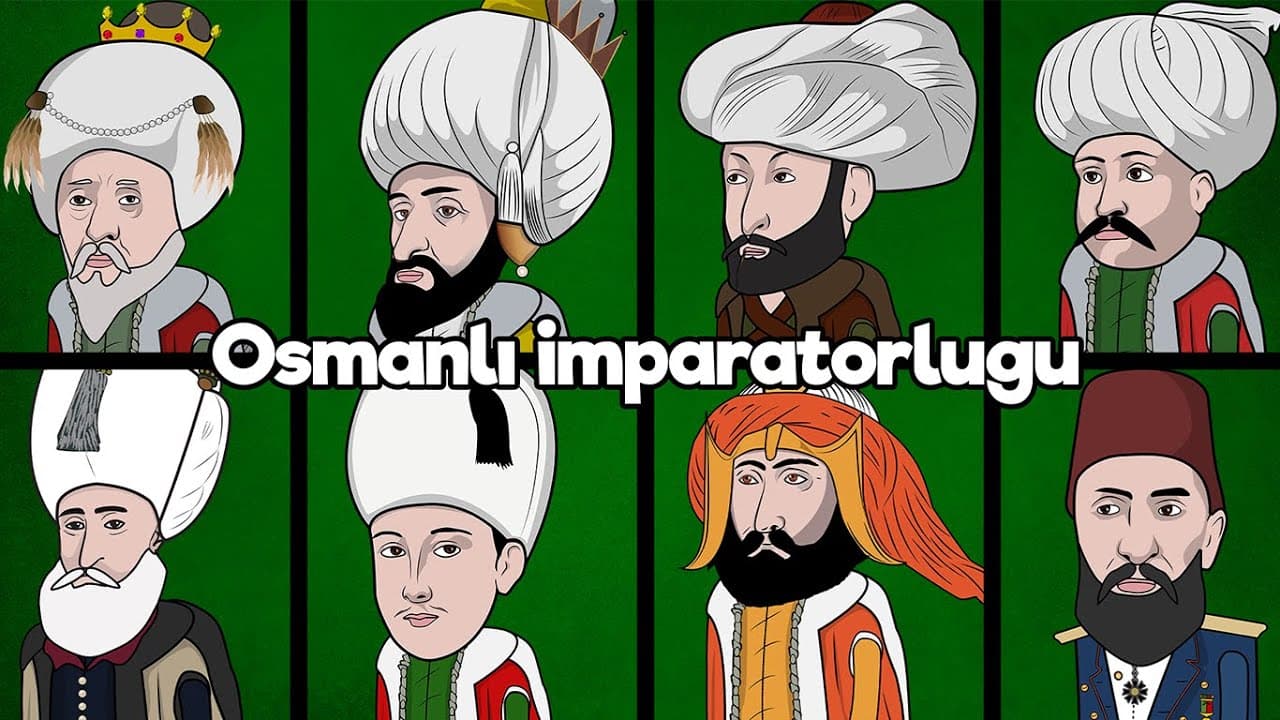
The video chronicles the rise and fall of the Ottoman Empire.
Transcript
This video was produced with the contributions of World of Tanks. The Great Seljuk Empire... It was founded by Tuğrul Bey, the groundwork for its rise was laid by Alparslan, it reached its peak by Melikşah, but later it collapsed due to unsuccessful rulers and external powers and was divided into small parts. Who is your successor, my friend? Anato... Read More
Key Insights
- The Ottoman Empire was founded by Osman Bey and expanded through strategic conquests, becoming a dominant power in the region.
- Osman Bey's successors, like Orhan Gazi and Murad I, continued to expand the empire, facing resistance from neighboring states.
- The empire's military prowess was demonstrated through victories against large coalitions, including European Crusaders.
- Under Sultan Mehmed II, known as Fatih, the empire reached new heights, capturing Constantinople and initiating a period of significant growth.
- Internal strife, such as civil wars and succession disputes, often threatened the stability and continuity of the empire.
- Reforms and modernization efforts, particularly under rulers like Mahmud II, attempted to revitalize the empire amidst growing challenges.
- The empire's decline was marked by territorial losses, economic troubles, and increasing European influence and intervention.
- The eventual dissolution of the Ottoman Empire was precipitated by World War I and the rise of nationalist movements within its territories.
Install to Summarize YouTube Videos and Get Transcripts
Explore YouTube Video Summarizer or Get YouTube Transcript Extractor
Questions & Answers
Q: What role did Osman Bey play in the Ottoman Empire's history?
Osman Bey was the founder of the Ottoman Empire. He was known for his bravery and strategic vision, which allowed him to expand his principality into a formidable state. His conquests laid the groundwork for the empire's future expansion and dominance in the region.
Q: How did Mehmed II contribute to the Ottoman Empire's expansion?
Mehmed II, also known as Fatih, was instrumental in the expansion of the Ottoman Empire. He captured Constantinople in 1453, transforming the empire into a dominant European power. His strategic brilliance and military campaigns significantly enlarged the empire's territories and influence.
Q: What were some challenges faced by the Ottoman Empire during its decline?
During its decline, the Ottoman Empire faced numerous challenges, including territorial losses, economic difficulties, and internal strife. The rise of nationalist movements within its territories and increasing European intervention further weakened the empire, leading to its eventual disintegration.
Q: How did internal conflicts impact the Ottoman Empire?
Internal conflicts, such as succession disputes and civil wars, often destabilized the Ottoman Empire. These conflicts weakened central authority and diverted resources from external threats, making it difficult for the empire to maintain its territorial integrity and political stability.
Q: What reforms did Mahmud II implement in the Ottoman Empire?
Mahmud II implemented significant reforms aimed at modernizing the Ottoman Empire. He dismantled the Janissary Corps, established new military and administrative structures, and introduced Western-style education and dress codes. These reforms were part of his efforts to strengthen the empire amidst growing internal and external challenges.
Q: How did World War I affect the Ottoman Empire?
World War I had a profound impact on the Ottoman Empire, leading to its eventual dissolution. The empire sided with the Central Powers and suffered significant territorial losses. The war exacerbated existing economic and political issues, paving the way for nationalist movements and the eventual establishment of the Republic of Turkey.
Q: What was the significance of the Tanzimat Edict?
The Tanzimat Edict, issued during the reign of Sultan Abdulmecid, was a series of reforms aimed at modernizing the Ottoman Empire. It sought to centralize and streamline administration, improve civil rights, and promote economic development. The edict marked a significant shift towards European-style governance and legal systems.
Q: Why was the capture of Constantinople pivotal for the Ottoman Empire?
The capture of Constantinople in 1453 by Mehmed II was pivotal for the Ottoman Empire as it marked the end of the Byzantine Empire and established the Ottomans as a major power in both Europe and Asia. It also provided the empire with a strategic and economically significant capital, facilitating further expansion and consolidation of power.
Summary & Key Takeaways
-
The video explores the foundation and expansion of the Ottoman Empire, highlighting key figures like Osman Bey and Orhan Gazi who played crucial roles in its early development.
-
As the empire grew, it faced numerous challenges from European powers and internal conflicts, but strategic leadership allowed it to maintain dominance for centuries.
-
Despite efforts to modernize and reform, the Ottoman Empire eventually succumbed to internal and external pressures, leading to its dissolution after World War I.
Read in Other Languages (beta)
Share This Summary 📚
Summarize YouTube Videos and Get Video Transcripts with 1-Click
Try YouTube Summary with ChatGPT & Claude or YouTube Transcript Generator