Super Coral That Can Survive Global Warming | National Geographic
TL;DR
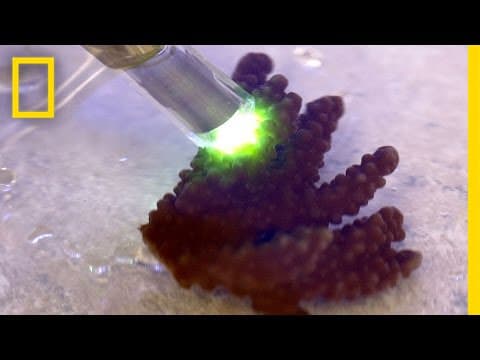
The world's coral reefs are in critical condition due to climate change. Scientists are working to breed corals that can adapt to warmer and more acidic ocean conditions.
Transcript
in 1998 18% of the world's reefs died as a result of a global bleaching event many people believe that um we've now lost up to 30% of the world's reefs another 30% are critically endangered and the potential for us to see massive degradation in all Reef habitats worldwide is high by 2050 what we now know with our climate changing the water is warmi... Read More
Key Insights
- 🙈 1998 saw a significant loss of coral reefs due to a global bleaching event.
- 🪸 Warming and acidification of the oceans are major stressors for corals.
- 🪸 Some corals show more resilience to these stressors and could be bred to withstand future ocean conditions.
- ☠️ The goal is to match the rate of environmental change with the rate at which corals can adapt.
- 🪸 The scale of the problem should not paralyze us from taking action to save coral reefs.
- ⛽ Mitigating climate change through reducing fossil fuel burning is crucial.
- 👨🔬 Scientists are at the early stages of research and exploring various methods to help corals adapt.
Install to Summarize YouTube Videos and Get Transcripts
Explore YouTube Video Summarizer or Get YouTube Transcript Extractor
Questions & Answers
Q: How much of the world's reefs have been lost or are endangered?
It is believed that up to 30% of the world's reefs have already been lost, and an additional 30% are critically endangered.
Q: What are the two stressors that make it difficult for corals to cope?
The two stressors are warming water and increased acidity. These changes occur too rapidly for corals to adapt naturally.
Q: What is the focus of the scientists' research?
The scientists are focusing on corals that show resilience to environmental changes. They hope to breed corals that can withstand warmer and more acidic waters.
Q: Why is it important to accelerate the rate at which corals adapt?
The rate of climate change caused by human intervention is very fast. To save coral reefs, corals need to adapt quickly enough to keep up with these changes.
Summary & Key Takeaways
-
In 1998, 18% of the world's reefs died from a bleaching event. Now, up to 30% of reefs are lost and another 30% are endangered.
-
Climate change has led to warming and acidification of the oceans, stressing corals. Some corals show more resilience and scientists want to focus on breeding these individuals.
-
The goal is to help corals adapt to the changing environment at a rate that matches the rate of change caused by human intervention.
Read in Other Languages (beta)
Share This Summary 📚
Summarize YouTube Videos and Get Video Transcripts with 1-Click
Try YouTube Summary with ChatGPT & Claude or YouTube Transcript Generator
Explore More Summaries from National Geographic 📚



Summarize YouTube Videos and Get Video Transcripts with 1-Click
Try YouTube Summary with ChatGPT & Claude or YouTube Transcript Generator