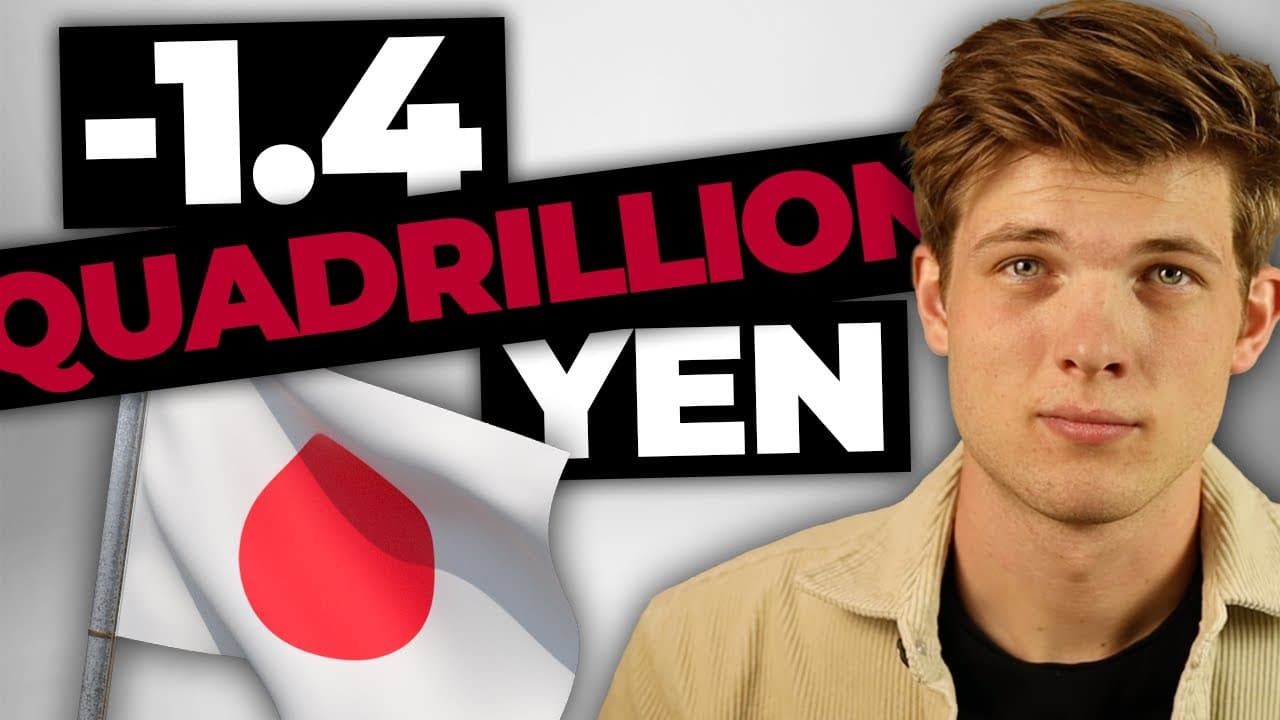
Japan's Debt Crisis Is Nearing Collapse
TL;DR
Japan's high debt-to-GDP ratio, massive bond-buying program, and potential recession pose a significant threat to the global economy.
Transcript
hey everyone welcome back to the channel So today we're talking about the debt crisis in Japan this is something that is likely coming to a head uh sometime in the next couple of years it's something that I think everyone should be very aware of you know we hear about China and the real estate bubble there but I think the problem in Japan which is ... Read More
Key Insights
- 📊 Japan's debt to GDP ratio is the highest in the world, indicating potential default and a drain on tax dollars for servicing debt instead of investing in infrastructure and services.
- 💸 The Plaza Accord of the 1980s led to a spike in Japan's currency, hindering its ability to export goods and causing an asset bubble in the late 80s that eventually burst.
- 🏢 Japan's economy has been stagnant for 30 years, resulting in decreasing exports and GDP stagnation, contributing to the need for yield curve control and bond buying programs.
- 💣 If the Bank of Japan stops buying bonds, yields on Japanese debt will skyrocket, potentially leading to an economic collapse and high interest rates for businesses and individuals.
- 💼 The Bank of Japan owns over 50% of Japanese government debt and about 7% of the total stock market, complicating the situation and limiting their ability to sell assets.
- 💰 Japan's reliance on quantitative easing and bond buying has put the country in a delicate situation, with the potential for a recession that could impact global markets. ⏰ The timing of Japan's debt crisis is uncertain, but the longer it continues, the more likely it is to bring about a recession that could have worldwide implications.
- 💡 Exploring in-depth topics like bond markets and providing engaging content can help educate viewers on complex financial matters and encourage meaningful discussions. Note: The provided content is a transcript of a video and has been edited for clarity.
Install to Summarize YouTube Videos and Get Transcripts
Explore YouTube Video Summarizer or Get YouTube Transcript Extractor
Questions & Answers
Q: How does Japan's high debt-to-GDP ratio impact its ability to invest in infrastructure and public services?
Japan's high debt-to-GDP ratio means that a significant portion of tax dollars goes towards servicing the debt rather than investing in infrastructure or public services. This limits the country's ability to stimulate economic growth and provide essential services to its citizens.
Q: What were the negative consequences of the Plaza Accord for Japan's economy?
The Plaza Accord, although intended to weaken the U.S. currency, caused the value of the yen to spike. This led to a decline in Japan's export competitiveness, subsequent decrease in exports, and an asset bubble in the late 1980s. The bursting of the asset bubble contributed to Japan's decades-long economic stagnation.
Q: How does the Bank of Japan's bond-buying program impact the economy?
The Bank of Japan's bond-buying program, implemented to keep interest rates low and stimulate the economy, has resulted in the central bank holding over 50% of the country's debt. This massive scale of bond purchases poses risks and limits the bank's ability to exit the program without causing a surge in bond yields, which could have detrimental effects on the economy.
Q: What is the potential outcome if Japan's debt crisis escalates?
If Japan's debt crisis escalates and the Bank of Japan stops buying bonds, bond yields could skyrocket, causing a recession in the country. Given that Japan is the world's third-largest economy, a recession in Japan would have severe global economic repercussions. Other countries, including the United States, could experience a ripple effect.
Summary & Key Takeaways
-
Japan's debt-to-GDP ratio is the highest in the world, which hinders the country's ability to invest in infrastructure and public services.
-
The debt crisis in Japan started with the Plaza Accord in the 1980s, which led to an asset bubble, deflation, and stagnation in the economy.
-
The Bank of Japan's yield curve control program, massive bond-buying, and ownership of equities pose risks to the country's economy and could trigger a recession with global consequences.
Read in Other Languages (beta)
Share This Summary 📚
Summarize YouTube Videos and Get Video Transcripts with 1-Click
Try YouTube Summary with ChatGPT & Claude or YouTube Transcript Generator
Explore More Summaries from Nate O'Brien 📚






Summarize YouTube Videos and Get Video Transcripts with 1-Click
Try YouTube Summary with ChatGPT & Claude or YouTube Transcript Generator