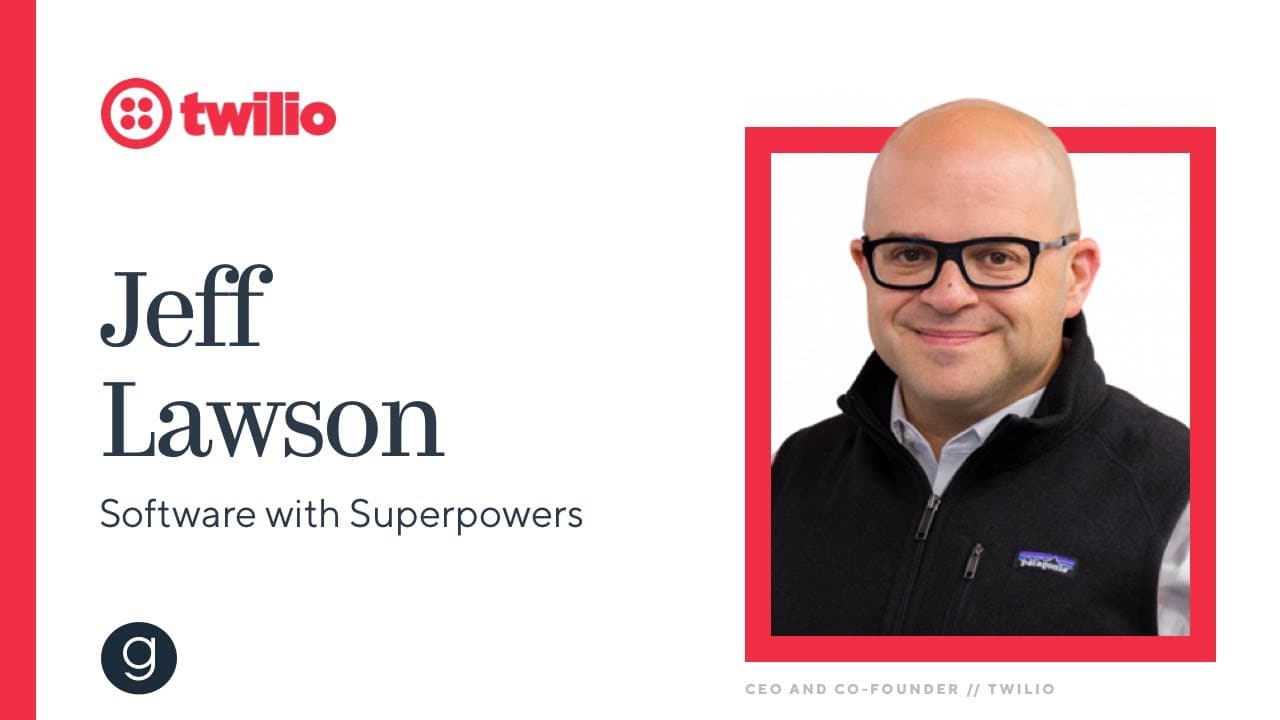
Twilio's Jeff Lawson on Building Software with Superpowers
TL;DR
Jeff Lawson built Twilio by focusing on empowering developers with cloud communications APIs, enabling them to solve problems creatively. Initially faced with skepticism from investors during the 2008 financial crisis, Lawson prioritized developer feedback to drive product development, ultimately attracting a diverse range of customers and establishing a strong developer-led culture.
Transcript
i'm sarah gua a general partner at greylock and our guest today is twilio ceo and co-founder jeff lawson i've been so looking forward to this chat because i have an amazing love for companies that really invent a new type of business from first principles and twilio was an outlier when it came onto the scene in 2008. mobile and cloud technology wer... Read More
Key Insights
- 😑 Twilio's success as a platform relied on recognizing that software development is a creative process and empowering developers to solve problems rather than providing them with pre-determined solutions.
- 🥺 By understanding the needs and mindset of developers, Twilio built a developer-led business culture that drove innovation and customer satisfaction.
- 🧡 Twilio's platform attracted a wide range of customers, from digital leaders to researchers, showcasing the versatility of its offerings.
- 🖐️ The company's early customers played a crucial role in shaping Twilio's growth by providing feedback and driving adoption.
- 🏛️ Twilio's ability to adapt and provide composable building blocks enabled developers to create innovative solutions, expanding the possibilities of what can be built using its platform.
- 🏛️ Twilio values the importance of community and engagement, leveraging conferences, meetups, and hackathons to connect with developers and build relationships.
Install to Summarize YouTube Videos and Get Transcripts
Explore YouTube Video Summarizer or Get YouTube Transcript Extractor
Questions & Answers
Q: How did Jeff Lawson get started as an entrepreneur?
Jeff Lawson's entrepreneurial journey started in middle school when he started his first business, and it continued through college and various ventures, leading him to co-found Twilio.
Q: How did developers play a crucial role in Twilio's success?
Developers were the target audience for Twilio's cloud communications APIs, and their adoption and feedback helped shape the platform's growth. Twilio focused on understanding developers' needs and providing self-service tools to empower them.
Q: How did Twilio overcome challenges in fundraising and gaining traction in the early days?
Twilio faced difficulties during the financial crisis of 2008 and investor skepticism about the developer market. However, the company relied on the feedback and adoption of early developers to prove the value of its platform and attract funding.
Q: What were some unique use cases and customers that Twilio worked with early on?
Twilio's early customers spanned various industries, including companies like Sony, as well as innovative use cases such as diagnosing Parkinson's disease through voice analysis and tracking the migratory habits of bears using technology.
Summary
In this video, Sarah Guo interviews Jeff Lawson, the CEO and co-founder of Twilio, about his entrepreneurial journey and the early days of building Twilio. They discuss the importance of developers as customers, the power of software, and the challenges they faced in reaching developers. Jeff shares insights about their marketing strategy and the influential early customers who helped shape the product.
Questions & Answers
Q: How did Jeff get started as an entrepreneur in middle school?
When Jeff was young, he was interested in video production and wanted to figure out how it worked. He started a business videotaping weddings and bar mitzvahs to earn money to buy professional camera gear. His first company, Video Visions, grew from small gigs to full weddings by the time he graduated high school.
Q: How did Jeff transition from the video business to tech companies like StubHub and Twilio?
Jeff's interest in tech started in college when he discovered the internet and its potential. He started his first internet company, Varsity.com, which provided online lecture notes for college students. After selling Varsity.com, he joined StubHub as the CTO and helped build the technology behind the ticketing platform. Jeff later joined Amazon Web Services (AWS) to learn how larger companies operate. Inspired by his experiences and the power of software, he co-founded Twilio to bring communication tools to developers.
Q: How did Jeff and his team market Twilio in the early days?
Twilio's marketing strategy was simple: be everywhere and be awesome. They focused on reaching developers through meetups, hackathons, advertising on websites frequented by developers, and running a weekly developer contest called the Netbook Contest. They also formed partnerships, such as a joint contest with AWS, to expand their reach. They used guerrilla tactics and thought like developers to identify the places where developers congregate and how to engage with them effectively.
Q: Were investors initially skeptical of Twilio's target audience of developers?
Yes, in the early days, investors didn't understand the value of targeting developers as customers. They believed developers didn't have decision-making power or budgets. Some advised Twilio to build an app first and add APIs later, following the example of companies like Facebook. However, Twilio stayed focused on developers and followed their customers' feedback and adoption. They showed investors the traction they were gaining with developers, which eventually led to successful fundraising.
Q: How did Twilio prioritize building a strong developer community?
Twilio prioritized building a strong developer community by actively engaging with developers where they were. They attended meetups and hackathons, ran developer contests, and sought partnerships with other platforms like AWS. They listened to developers' feedback, incorporated it into their product roadmap, and iterated quickly based on their needs. This close connection with developers helped Twilio establish a trusted brand and build a loyal community.
Q: Which early customers were influential in shaping Twilio's product and direction?
Many early customers were influential in shaping Twilio's product and direction. One notable customer was Intuit, who became a customer early on. Their feedback and use cases helped Twilio understand the value of integrating communication tools into existing business processes. Intuit's partnership with Twilio demonstrated that there was demand for Twilio's services beyond the startup ecosystem. Other early customers who pushed the boundaries of what could be built with Twilio's APIs also played a pivotal role in shaping the product.
Q: How did Twilio overcome the challenges of the financial crisis and skeptical investors?
Twilio faced funding challenges during the financial crisis, with investors hesitant to invest in the early stages. However, Twilio's focus on developing a strong product and staying close to their customers helped them gain traction. They followed their customers' feedback and continued building, even when investors suggested building an app instead. Twilio's focus on developers as customers eventually paid off, and their growing revenue and customer base attracted investors' attention.
Q: How did Twilio's belief in building for developers lead to their success?
Twilio's belief in building for developers was instrumental in their success. They understood the power of software and how it could quickly solve customer problems. By providing developers with accessible, self-service communication tools, Twilio empowered them to build innovative solutions without needing specialized knowledge or large investments. Their developer-centric approach allowed them to scale rapidly and gain a widespread adoption among developers worldwide.
Q: What were some of the key takeaways from Twilio's early journey?
Some key takeaways from Twilio's early journey include the importance of targeting developers as customers, listening to customer feedback, following traction rather than investor advice, and building a strong developer community. Twilio's success was fueled by their focus on solving customer problems quickly and iterating based on their needs. They demonstrated the power of software in transforming industries and showed how developers can create significant impact at scale.
Q: How did Twilio's early marketing efforts help them reach developers and build their brand?
Twilio's early marketing efforts focused on being present wherever developers congregated. They attended meetups and hackathons, advertised on websites frequented by developers, and formed partnerships with other platforms. Their weekly developer contest, the Netbook Contest, encouraged engagement and provided a platform for developers to showcase their projects. Through these efforts, Twilio built a strong brand and community among developers, establishing themselves as a leading provider of communication tools for developers.
Q: How did Twilio's early experiences with influential customers shape their understanding of the market and the direction of their product?
Twilio's experiences with influential early customers, such as Intuit, provided valuable insights into the market and the potential applications of their communication tools. These customers showed Twilio how communication could be seamlessly integrated into business processes, expanding the use cases beyond traditional messaging and voice calls. Their feedback helped Twilio refine their product and recognize the broader demand for communication APIs across various industries.
Takeaways
Twilio's early journey demonstrates the power of targeting developers as customers and engaging with them directly to understand their needs. By being present where developers gather, promoting self-service access, and actively listening to feedback, Twilio built a strong developer community and established itself as a leader in communication tools. Their focus on delivering value to developers and iterating quickly based on their needs helped them navigate challenges and ultimately achieve success. The early experiences with influential customers shaped Twilio's product and market understanding, enabling them to provide innovative solutions to a diverse range of customers.
Summary & Key Takeaways
-
Jeff Lawson shares his entrepreneurial journey, starting with his first business in middle school and leading up to the creation of Twilio.
-
The early days of Twilio involved convincing investors and gaining traction among developers who were starting to recognize the power of cloud communications APIs.
-
Twilio's platform attracted a wide range of customers, from digital leaders like Uber and Airbnb to researchers tracking bears, showcasing the versatility of their offerings.
Read in Other Languages (beta)
Share This Summary 📚
Summarize YouTube Videos and Get Video Transcripts with 1-Click
Try YouTube Summary with ChatGPT & Claude or YouTube Transcript Generator
Explore More Summaries from Greylock 📚






Summarize YouTube Videos and Get Video Transcripts with 1-Click
Try YouTube Summary with ChatGPT & Claude or YouTube Transcript Generator