Israel and Iran: A love story?
TL;DR
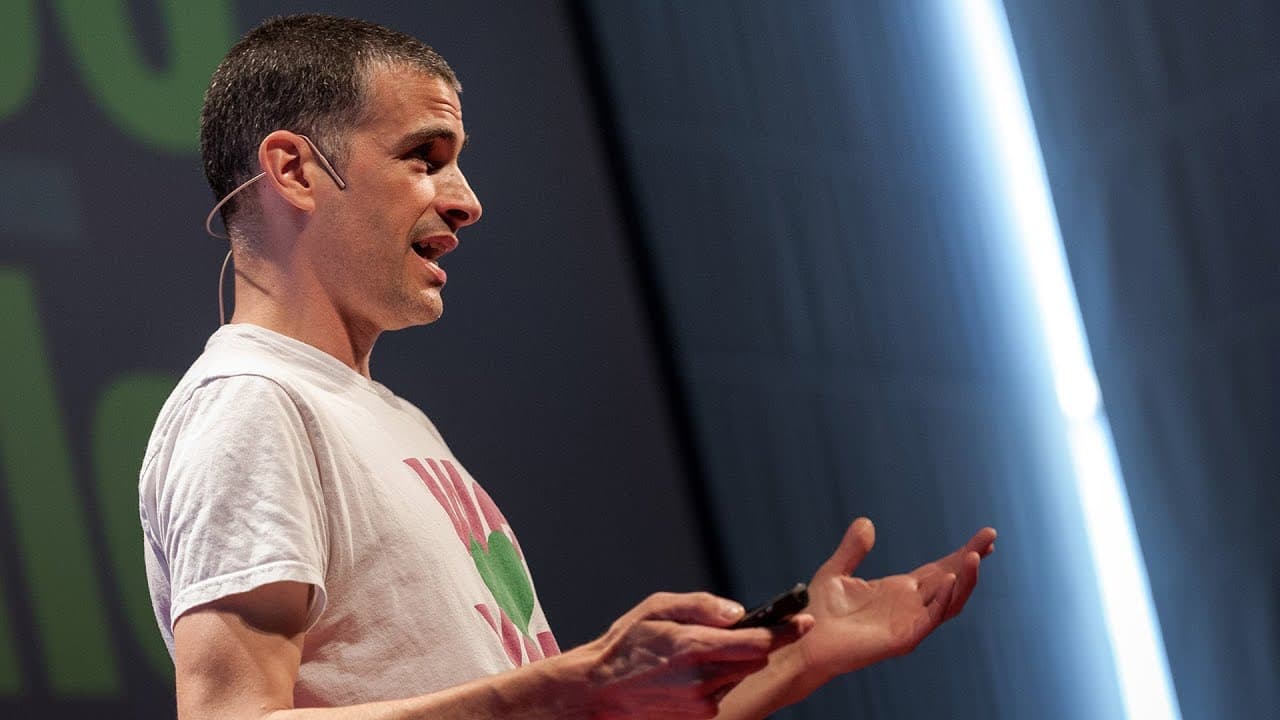
Ronny Edry, an Israeli graphic designer, shares his experience of using graphic design and social media to promote peace between Israel and Iran.
Transcript
Translator: Joseph Geni Reviewer: Morton Bast On March 14, this year, I posted this poster on Facebook. This is an image of me and my daughter holding the Israeli flag. I will try to explain to you about the context of why and when I posted. A few days ago, I was sitting waiting on the line at the grocery store, and the owner and one of the clients... Read More
Key Insights
- 🌍 The speaker, Ronny Edry, is an Israeli graphic designer who posted a poster on Facebook holding the Israeli flag to express his fear and concern about the war with Iran.
- 💻 After posting the image, Edry received an overwhelming response from people, including ones from Iran, which is unusual because Israelis and Iranians do not typically communicate or interact on social media platforms.
- ❤️ The posters and messages created by Edry and his friends helped foster communication and understanding between Israelis and Iranians, showing that there are people on both sides who do not want war.
- 🌎 The impact of their campaign was significant, with millions of people around the world engaging with and sharing the images, changing the perception of the Middle East from one of hostility to one of compassion and friendship.
- 📷 The campaign also inspired Iranians to create their own posters and messages expressing their love and support for Israel, demonstrating that ordinary people can overcome political boundaries and prejudices.
- 🌟 The campaign received attention from various news outlets, who recognized it as a positive development in the Middle East, offering a refreshing and hopeful perspective amidst the usual negative news.
- 💪 Through their images and messages, Edry and his friends aimed to challenge the negative stereotypes associated with Israel and promote a new reality of peace and understanding in the region.
- 🙌 The campaign not only changed how the world sees the Middle East, but also led to real-life meetings and friendships between Israelis and Iranians, bridging the divide created by politics and history.
Install to Summarize YouTube Videos and Get Transcripts
Explore YouTube Video Summarizer or Get YouTube Transcript Extractor
Questions & Answers
Q: How did the poster that the speaker posted on Facebook gain so much attention?
The poster gained attention when people from Iran started responding to it, which was unusual because people from Israel and Iran do not typically communicate on social media.
Q: What did the girl from Iran say to the speaker after seeing the poster?
The girl from Iran told the speaker that she saw the poster and asked her family to come look at it. They were all sitting in the living room crying because of the emotional impact the poster had on them.
Q: What did the speaker and his wife decide to do after the initial poster gained attention?
The speaker and his wife decided to involve more people by taking pictures of friends, neighbors, and students and making posters for them to share. This helped to spread the message further and involve more people in the movement.
Q: How did the Israel-Loves-Iran movement change how people perceive the Middle East?
The movement showed a new reality by sharing positive and compassionate images, which countered the usual negative images associated with the Middle East. It demonstrated that people from different countries and supposed enemies could come together and form friendships.
Q: What was the significance of the Iran-Loves-Israel page created by someone in Tehran?
The creation of the Iran-Loves-Israel page showed that the movement and message of love and peace was not one-sided. People from Iran also wanted to spread the same message and show respect and compassion towards Israelis.
Q: How did the Israel-Loves-Iran movement help to break down barriers between people from different countries?
People from Israel and Iran who had previously viewed each other as enemies were able to connect on social media, become friends, and even meet in person. The movement fostered understanding, friendship, and open dialogue between individuals who had been isolated from each other due to political tensions.
Q: What was the purpose of the "Not ready to die in your war" campaign?
The purpose of this campaign was to send a more aggressive message and emphasize the desire for peace. It aimed to show solidarity between Israelis and Iranians who did not want to be involved in a war between their countries.
Q: How did the Israel-Loves-Iran movement demonstrate the power of individuals to make a difference?
The movement showed that individuals have the power to change how people perceive a conflict, even through something as simple as sharing images on social media. By reaching out and connecting with others, individuals can contribute to dialogue, understanding, and potentially avoiding conflict.
Summary & Key Takeaways
-
The speaker posted a picture on Facebook of him and his daughter holding an Israeli flag to express his concerns about the war with Iran.
-
The picture gained attention and sparked conversations between people from Israel and Iran, who don't typically interact.
-
The exchange of posters and messages between Israelis and Iranians on Facebook created a new form of communication and challenged stereotypes.
Read in Other Languages (beta)
Share This Summary 📚
Summarize YouTube Videos and Get Video Transcripts with 1-Click
Try YouTube Summary with ChatGPT & Claude or YouTube Transcript Generator
Explore More Summaries from TED 📚



Summarize YouTube Videos and Get Video Transcripts with 1-Click
Try YouTube Summary with ChatGPT & Claude or YouTube Transcript Generator