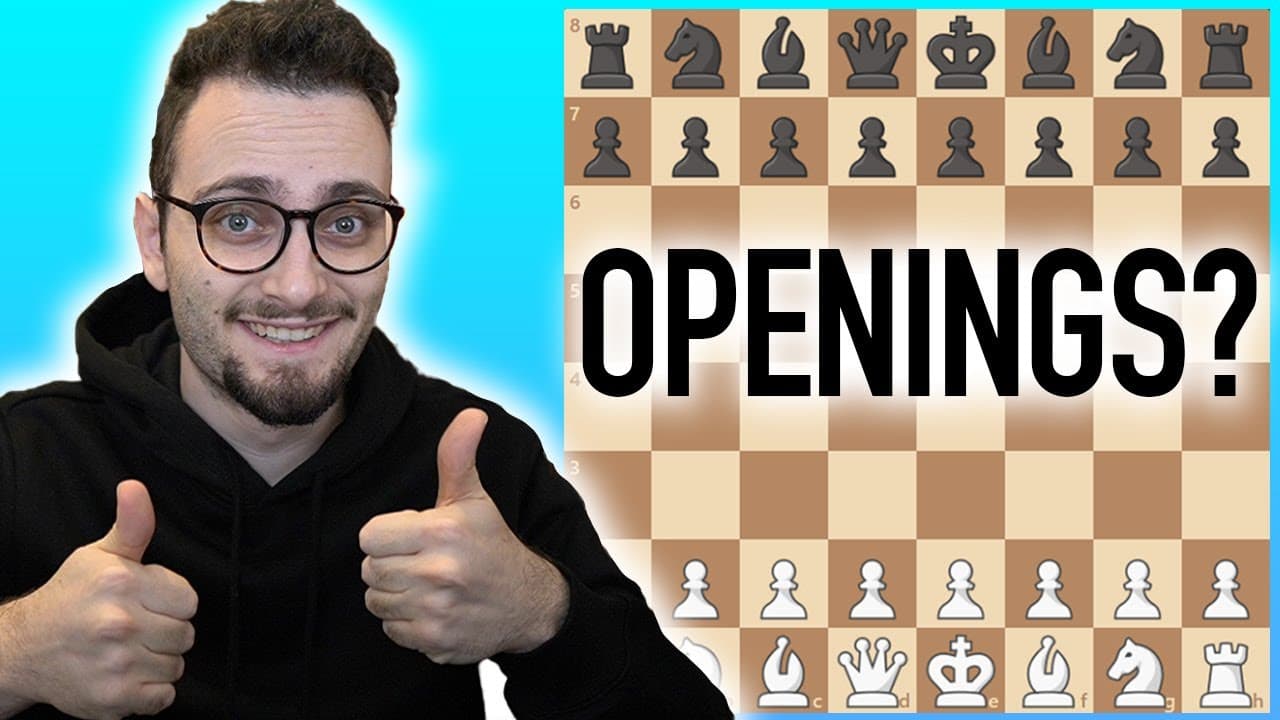
How To Learn & Study Chess Openings
TL;DR
Learn about different chess openings, how to use databases for studying openings, and how to analyze your own games to improve.
Transcript
this is going to be a video about chess openings and how you should approach them it does not matter what your level is you will absolutely learn something from this video if you're beginner intermediate or advanced i've split it into three parts in the first part we'll talk about different openings like theoretical and setup based ones a... Read More
Key Insights
- 🧠 The video discusses different chess openings, including theoretical and setup-based ones, and explains the concepts of theory and novelty.
- 🎯 When starting to learn chess, it is encouraged to focus on developing pieces safely and following the basic rules.
- ♟️ Chess is a competitive game, and players need to start making decisions based on their opponent's moves and adapting their strategies accordingly.
- 🌍 There are various types of openings, such as gambits, the Vienna, and unconventional strategies like cheesing or the Scholar's Mate.
- 🔀 The difference between theory-based and setup-based openings is that in theory-based openings, you need to adapt your strategy based on your opponent's moves, while setup-based openings have a predetermined structure.
- 📚 Players can study openings through videos, books, courses, and databases, such as ChessBase or online platforms like Chess.com.
- 🔎 Analyzing your own games and incorporating computer analysis is crucial for learning and improving your play.
- 💡 It is important to experiment with different moves and strategies and learn from your mistakes to become better at chess.
Install to Summarize YouTube Videos and Get Transcripts
Explore YouTube Video Summarizer or Get YouTube Transcript Extractor
Questions & Answers
Q: What is the difference between a theoretical-based chess opening and a setup-based chess opening?
A theoretical-based chess opening refers to positions that have already been extensively explored by grandmasters and computers and are recorded in databases. On the other hand, a setup-based chess opening is more flexible and allows the player to follow a set structure regardless of the opponent's moves.
Q: How can beginners approach studying chess openings?
Beginners can start by playing standard developing moves and gradually incorporate less popular openings or gambits to surprise opponents and gain experience in different positions.
Q: Why is it important to study openings databases?
Studying openings databases allows players to explore popular moves, winning percentages, and variations played by both masters and amateurs. It helps in understanding strategic plans, avoiding known traps, and finding new ideas in established positions.
Q: How can analyzing your own chess games improve your opening play?
Analyzing your own games helps identify any mistakes or missed opportunities in the opening phase. By studying the computer evaluations and comparing your moves to theoretical recommendations, you can find improvements and develop a better understanding of the opening's key ideas.
Summary & Key Takeaways
-
Part 1: Discusses different chess openings, including theoretical and setup-based ones, and explains the concepts of theory and novelty.
-
Part 2: Explores how to use openings databases, break down branches, and prepare for opponents.
-
Part 3: Demonstrates how to analyze your own games using a computer engine and offers tips on incorporating the analysis into opening study.
Read in Other Languages (beta)
Share This Summary 📚
Summarize YouTube Videos and Get Video Transcripts with 1-Click
Try YouTube Summary with ChatGPT & Claude or YouTube Transcript Generator
Explore More Summaries from GothamChess 📚




Summarize YouTube Videos and Get Video Transcripts with 1-Click
Try YouTube Summary with ChatGPT & Claude or YouTube Transcript Generator