Planned Obsolescence (ft. Louis Rossmann)
TL;DR
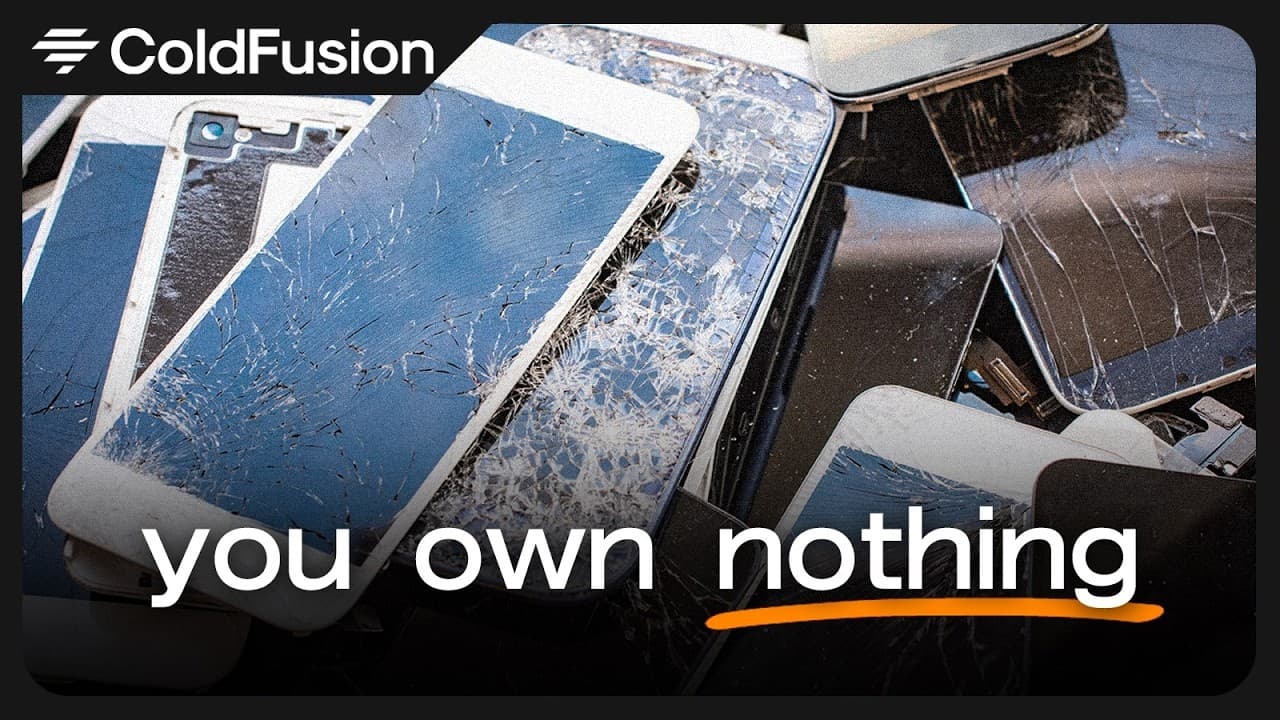
Consumers are losing control over products they own due to restrictive repair practices by manufacturers.
Transcript
this video was brought to you by brilliant hi welcome to another episode of Cold Fusion look at the phone or the laptop that you're watching this video on you think you own it right well you kind of don't over the years you and I have slowly lost control and ownership of the products we buy maybe you've noticed it maybe not or maybe it just hasn't ... Read More
Key Insights
- ↘️ The right to repair movement is gaining traction as consumers demand more control over their owned devices.
- 🥳 Restrictions like parts pairing and software-locking are making repairs increasingly challenging for independent repairers and consumers.
- 🥺 Manufacturers often prioritize profit over sustainability, leading to a throwaway culture and increasing electronic waste.
- 🥳 Legislative changes are beginning to support consumer rights, with some states implementing laws that require manufacturers to provide repair tools and parts.
- 🤳 The complexity of new technology often complicates simple repairs, making self-repair intimidating for average consumers.
- ❎ Companies like Apple have garnered negative reputations due to their restrictive repair policies and practices.
- 🫷 Some consumers are pushed to the fringes of legality, resorting to illegal methods to acquire necessary repair tools and software.
Install to Summarize YouTube Videos and Get Transcripts
Explore YouTube Video Summarizer or Get YouTube Transcript Extractor
Questions & Answers
Q: Why are manufacturers resisting the right to repair movement?
Manufacturers argue that allowing consumers the right to repair threatens their intellectual property and could lead to safety issues with mishandled repairs. They assert that these restrictions are necessary to maintain product integrity and ensure a consistent user experience, even though many see it as a ploy to drive more sales by limiting repairs.
Q: What is parts pairing, and how does it affect repairs?
Parts pairing is a practice that links specific hardware components to unique serial numbers, restricting the use of third-party parts in devices. For example, when repairing an iPhone, if a replacement part doesn't have a matching serial number, the phone may refuse to function properly. This trend severely limits consumer options for repairs and forces reliance on manufacturer-authorized services.
Q: How have companies like Apple hindered independent repairs?
Apple has implemented various restrictive practices, including soldering critical components to mainboards and geo-fencing repairs, limiting where and how repairs can take place. Their approach has made it extremely difficult for independent repair shops to work on their products, requiring specialized knowledge and tools that are often not accessible to regular consumers.
Q: What impact does the right to repair have on the environment?
The right to repair can significantly reduce electronic waste by encouraging consumers to fix rather than discard broken devices. With nearly 50% of broken products being thrown away, advocating for repair can lead to more sustainable consumption patterns, ultimately benefiting the environment by decreasing landfill waste and resource depletion.
Q: What recent legislative changes have taken place regarding the right to repair?
In October 2023, California passed the Right to Repair Act, which mandates manufacturers to provide the tools and parts necessary for consumers to repair their electronic devices. This legislative victory indicates a growing trend in consumer rights advocacy, with several other states considering similar laws.
Q: Why do some consumers resort to illegal means to repair their devices?
In extreme cases, such as with John Deere tractors, farmers have turned to the dark web in search of software and parts for repairs, driven by prohibitively high authorized repair costs and long downtimes. This desperation highlights the significant barriers posed by corporate practices limiting repair options for essential equipment.
Q: How do software updates play a role in consumer dissatisfaction?
Frequent and often unwanted software updates can change or remove features, leading to a frustrating user experience. Consumers may find themselves losing functionality in products they previously owned fully, transitioning from a model of ownership to one where they feel as if they are renting software and services instead of owning them outright.
Q: How can consumers champion the right to repair?
Consumers can advocate for their rights by supporting businesses and legislation that promote repairability, sharing their experiences with product repairs, and educating others on the importance of maintaining ownership over the devices they purchase. Grassroots efforts and social media campaigns can amplify these messages, helping shift corporate practices and consumer behavior.
Summary & Key Takeaways
-
Consumers increasingly face barriers to repairing their own devices, with companies implementing policies that limit replacement parts and access to repair information.
-
The right to repair movement advocates for legislative changes to ensure consumers can maintain and fix their products without corporate interference, reflecting a shift toward sustainable practices.
-
Recent legislative efforts, particularly in California, demonstrate a growing recognition of consumers' rights, but significant challenges remain due to corporate interests and the complexity of repair technologies.
Read in Other Languages (beta)
Share This Summary 📚
Summarize YouTube Videos and Get Video Transcripts with 1-Click
Try YouTube Summary with ChatGPT & Claude or YouTube Transcript Generator
Explore More Summaries from ColdFusion 📚




![How This Man Just Caused a $45 BILLION Crash [Terra Luna] thumbnail](/_next/image?url=https%3A%2F%2Fi.ytimg.com%2Fvi%2F3KZY41SqaTI%2Fhqdefault.jpg&w=750&q=75)
Summarize YouTube Videos and Get Video Transcripts with 1-Click
Try YouTube Summary with ChatGPT & Claude or YouTube Transcript Generator