What Are Common Cognitive Biases and Fallacies?
TL;DR
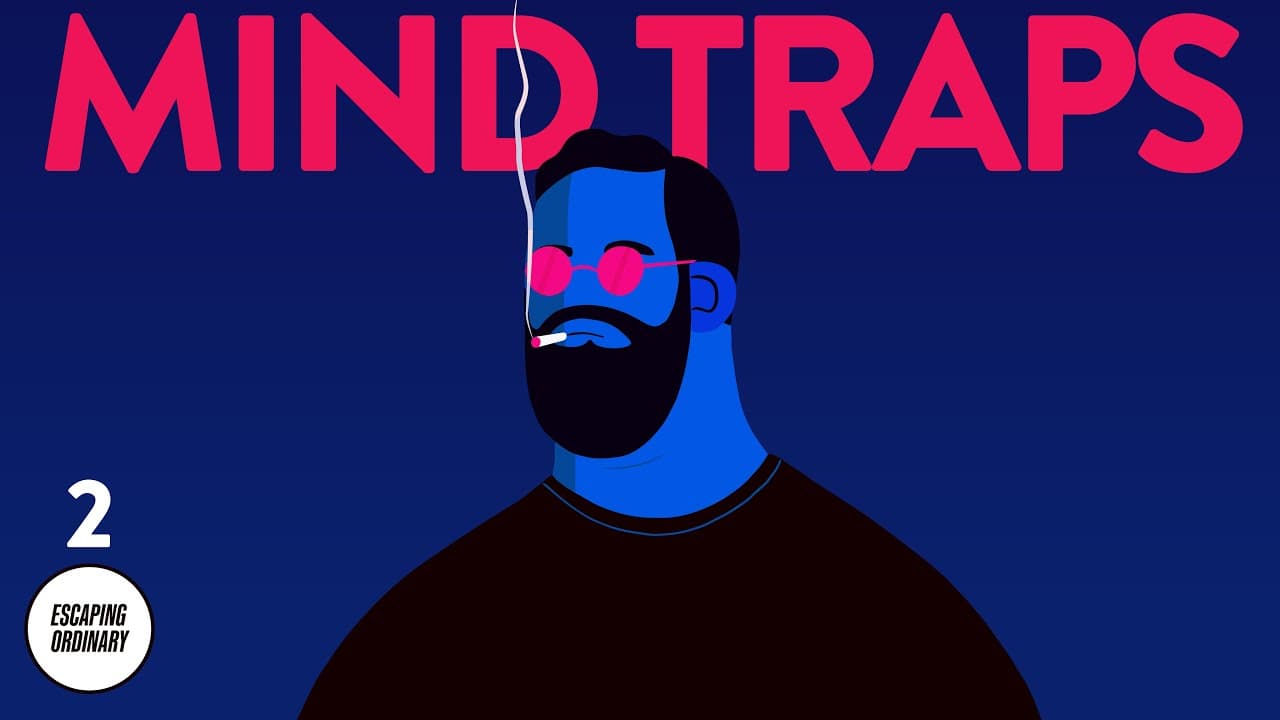
Cognitive biases and fallacies, such as survivorship bias, self-serving bias, and hindsight bias, impact how we perceive reality and make decisions. Being aware of these mental traps can help you improve decision-making by recognizing these influences in your everyday life.
Transcript
You probably think you are in complete control of your decisions and thoughts….But how often are they guided by something else? Something you don’t even notice occurring deep within your mind… Here are 21 cognitive mind traps, fallacies, biases and other phenomenon that exist within your brain. Strange things that are hard wired into all h... Read More
Key Insights
- 🔮 Survivorship bias: We tend to focus on the things that have survived a filtering process and overlook the ones that have failed.
- 🙌 Self-serving bias: We attribute our successes to internal actions and our failures to external forces.
- 🕰️ Hindsight bias: We tend to have an overconfidence in our memory of past events, distorting our perception of what we believed or said at the time.
- 🤔 Availability bias: We rely on information that is easily available in our memory, leading to irrational fears or decisions.
- 🌊 Availability cascade: A minor event can lead to a chain of events and public panic, based on popularity rather than truth.
- 💰 Sunk cost fallacy: We often make decisions based on past investments of money, time, or energy, rather than evaluating the current situation.
- 🖼️ Framing effect: The way information is presented can influence our decision-making, leading to different conclusions based on how the information is framed.
- 💥 Clustering illusion: We tend to find patterns and rules even when they don't exist, which can lead to poor decision-making, such as relying on technical analysis in investing.
- 📈 Exponential growth: We have difficulty comprehending exponential growth, which can lead to misunderstandings of how things will progress over time.
- 🔮 Barnum Effect: We easily attribute vague statements to our own personalities, even if they apply to a wide range of people, leading us to believe in astrology or quizzes.
Install to Summarize YouTube Videos and Get Transcripts
Explore YouTube Video Summarizer or Get YouTube Transcript Extractor
Questions & Answers
Q: Why is survivorship bias a logical error?
Survivorship bias occurs when the data we have is only representative of the subset of the population that has already survived some filtering process. This means that we are only considering the successes and ignoring the failures. The error lies in drawing conclusions based on incomplete data, leading to potentially flawed decision-making.
Q: How can self-serving bias impact our perception of our own abilities?
Self-serving bias leads us to attribute our successes to our internal actions while blaming external factors for failures. This bias can boost our confidence and belief in our abilities, but it also prevents us from recognizing our weaknesses or mistakes. By acknowledging this bias and seeking feedback from others, we can gain a more accurate understanding of our strengths and weaknesses.
Q: How does hindsight bias affect decision makers?
Hindsight bias distorts our memory of past events, making us believe that we knew something was going to happen all along. This overconfidence in our ability to predict outcomes can be detrimental, especially for decision makers who are judged solely based on the outcome of their decisions. It is important to recognize hindsight bias and evaluate decisions based on the information available at the time, rather than the outcome.
Q: How does the availability bias influence our perception of risk?
The availability bias leads us to estimate the likelihood of something happening based on information that is most readily available in our memory. This can result in an irrational fear of rare or dramatic events that are more easily recalled, while underestimating the risks of more common or mundane events. It is important to consider objective data and statistical information when evaluating risks.
Q: How does the framing effect impact decision making?
The framing effect demonstrates that people draw different conclusions from the same information depending on how it is presented. The way information is framed can influence our decisions and perceptions of value. For example, offering a discount for cash payment versus adding a surcharge for credit card payment can lead to different choices, even though the underlying cost is the same. Being aware of framing can help us make more rational decisions.
Q: How does the clustering illusion affect our perception of patterns?
The clustering illusion is a tendency to perceive patterns or rules where none exist. Our brains seek patterns and rules, which can lead us to make connections or see patterns in random or unrelated data. This illusion can impact decision making, as we may mistakenly identify patterns or trends in data where there are none. It is important to remain skeptical and critically evaluate whether patterns are based on genuine information or simply a product of the clustering illusion.
Q: How does exponential growth differ from linear growth?
Exponential growth refers to a pattern where something increases at an accelerating rate over time. Linear growth, on the other hand, refers to a constant rate of increase over time. Exponential growth can be difficult for our brains to comprehend because our evolutionary experiences were mainly based on linear growth. Understanding exponential growth is important for making informed decisions, especially in areas like finance, investment, and population growth.
Q: What is the Barnum Effect and why does it occur?
The Barnum Effect occurs when individuals attribute personal relevance and accuracy to vague and generalized statements that could apply to a wide range of people. This effect can be seen in astrology readings or personality quizzes where individuals feel that the statements accurately describe them. The Barnum Effect happens because our brains tend to seek validation and personal meaning in information, even if it is not specific or tailored to us.
Summary & Key Takeaways
-
Survivorship Bias: Focusing on the things that have survived a process while ignoring the ones that failed.
-
Self-Serving Bias: Blaming external factors for failures but attributing successes to internal actions.
-
Hindsight Bias: Distorting past events to align with your current knowledge or beliefs.
Read in Other Languages (beta)
Share This Summary 📚
Summarize YouTube Videos and Get Video Transcripts with 1-Click
Try YouTube Summary with ChatGPT & Claude or YouTube Transcript Generator
Explore More Summaries from Escaping Ordinary (B.C Marx) 📚



Summarize YouTube Videos and Get Video Transcripts with 1-Click
Try YouTube Summary with ChatGPT & Claude or YouTube Transcript Generator