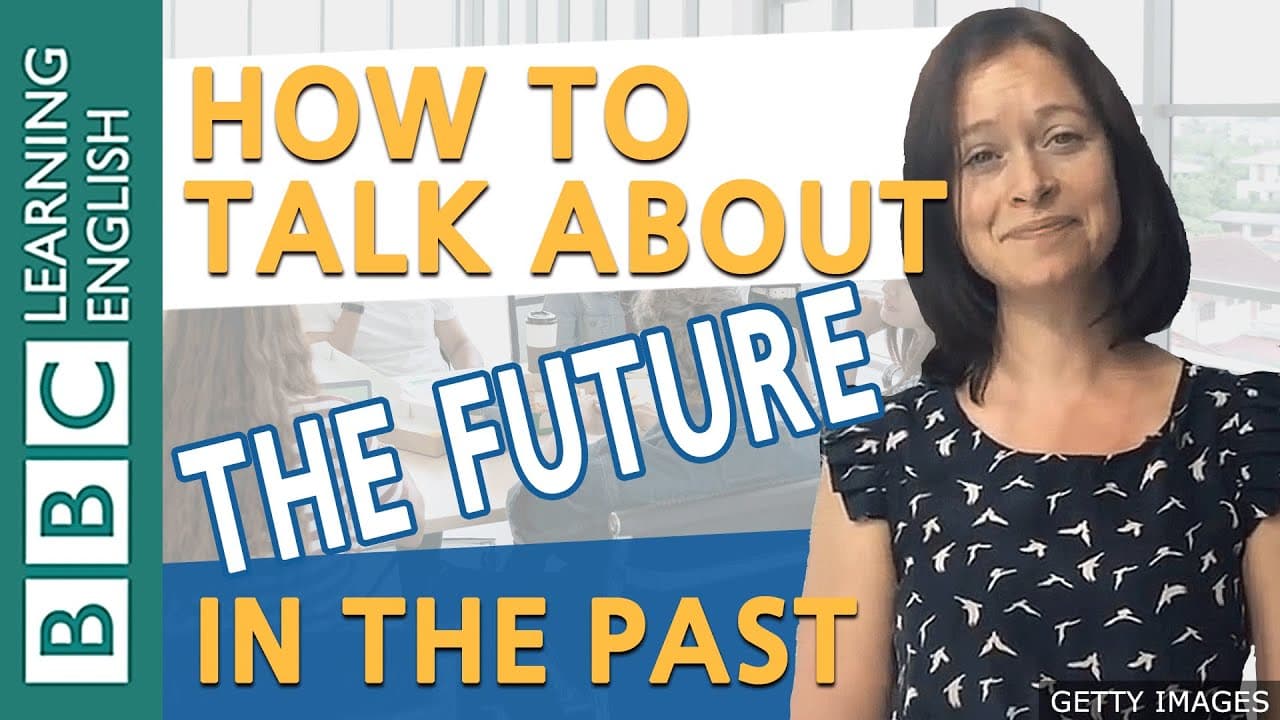
How to Talk About Future Events from the Past
TL;DR
To express future plans from a past perspective in English, convert 'going to' to 'was going to' and 'will' to 'would.' Use past continuous for future arrangements, saying 'was meeting' instead of 'am meeting,' and shift 'am about to' to 'was about to' for imminent actions. Mastering these structures helps convey past intentions and expectations effectively.
Transcript
Sian Hi Sian here for BBC Learning English - today is an exciting day because we are going to go back to the past and look at the future! So, you know that we have a past tense, a present tense, lots of future forms, but did you know we also have the future in the past? When we talk about the past, sometimes we want to talk about something that was... Read More
Key Insights
- The concept of 'future in the past' allows us to discuss events that were anticipated in the past to occur in the future.
- To express intentions that changed, 'am going to' becomes 'was going to', highlighting plans that were altered.
- Present continuous turns into past continuous to describe future arrangements that were planned but possibly not executed.
- The word 'will' becomes 'would' when referring to future events from a past perspective, often contracted to 'd.
- The phrase 'am about to' changes to 'was about to' to describe imminent actions that were anticipated in the past.
- Future perfect tense 'will have' shifts to 'would have' when discussing completed actions expected in the past.
- Pronunciation plays a key role; 'I was going to' often becomes 'I was gonna' in spoken English.
- Understanding these structures helps in accurately conveying past intentions and expectations in English.
Install to Summarize YouTube Videos and Get Transcripts
Explore YouTube Video Summarizer or Get YouTube Transcript Extractor
Questions & Answers
Q: What is the main focus of the video?
The main focus of the video is to explain how to use the concept of 'future in the past' in English grammar. It demonstrates how to express events that were anticipated in the past to occur in the future using various grammatical structures such as 'was going to', 'would', and 'was about to'.
Q: How does 'going to' change when expressing future in the past?
When expressing future in the past, 'going to' changes to 'was going to'. This shift is used to describe intentions or predictions that were made in the past about future events. For example, 'I am going to go for a run' becomes 'I was going to go for a run'.
Q: What happens to the present continuous tense when discussing future in the past?
When discussing future in the past, the present continuous tense changes to the past continuous. This transformation is used to describe arrangements that were planned for the future from a past perspective. For instance, 'I am meeting Neil' becomes 'I was meeting Neil'.
Q: How is 'will' modified when referring to future in the past?
When referring to future in the past, 'will' is modified to 'would'. This change is used to express future actions or events that were expected or planned from a past standpoint. In spoken English, 'would' is often contracted to 'd, as in 'I said I'd call Neil'.
Q: What does 'am about to' become in the context of future in the past?
In the context of future in the past, 'am about to' becomes 'was about to'. This alteration is used to describe imminent actions that were anticipated from a past perspective. For example, 'I am about to call Neil' changes to 'I was about to call Neil'.
Q: How is the future perfect tense adapted for future in the past?
The future perfect tense 'will have' is adapted to 'would have' when discussing future in the past. This transformation is used to talk about actions that were expected to be completed in the past. For example, 'I will have finished' becomes 'I would have finished'.
Q: What pronunciation changes are highlighted in the video?
The video highlights pronunciation changes such as 'I was going to' often becoming 'I was gonna' in spoken English. This contraction reflects natural speech patterns and is important for learners to understand how these grammatical forms sound in everyday conversation.
Q: Why is understanding 'future in the past' important?
Understanding 'future in the past' is important because it allows speakers to accurately convey past intentions, plans, and expectations. Mastering these grammatical structures enhances communication skills, enabling learners to express complex temporal relationships in English effectively.
Summary & Key Takeaways
-
The video explains how to express future events from a past perspective using different grammatical structures. It covers changes like 'going to' becoming 'was going to' and 'will' turning into 'would'. These shifts help convey past intentions, plans, and predictions that were expected to occur.
-
Using examples, the video illustrates how present continuous becomes past continuous to describe future arrangements that were planned in the past. It also explains how 'am about to' becomes 'was about to' for imminent actions. Pronunciation nuances such as 'gonna' are also highlighted.
-
The explanation includes how future perfect 'will have' changes to 'would have' in past contexts. The lesson emphasizes the importance of these grammatical forms in expressing past intentions and expectations, providing a comprehensive understanding of 'future in the past'.
Read in Other Languages (beta)
Share This Summary 📚
Summarize YouTube Videos and Get Video Transcripts with 1-Click
Try YouTube Summary with ChatGPT & Claude or YouTube Transcript Generator
Explore More Summaries from BBC Learning English 📚
Summarize YouTube Videos and Get Video Transcripts with 1-Click
Try YouTube Summary with ChatGPT & Claude or YouTube Transcript Generator