Financial Ratio Analysis
TL;DR
This content explains the concepts of inventory turnover and debt service coverage ratio in finance and accounting.
Transcript
you your inventory turnover ratio I lightly explained again thank you there in the meanwhile let me just share a link where you can give your feedback about this session so I have shared the link just click on that and please I request all of you to give your inputs on this so that we can plan how we can improve how we can share you this course oka... Read More
Key Insights
- 🥳 Debt service coverage ratio measures if a company has enough cash flow to repay a loan.
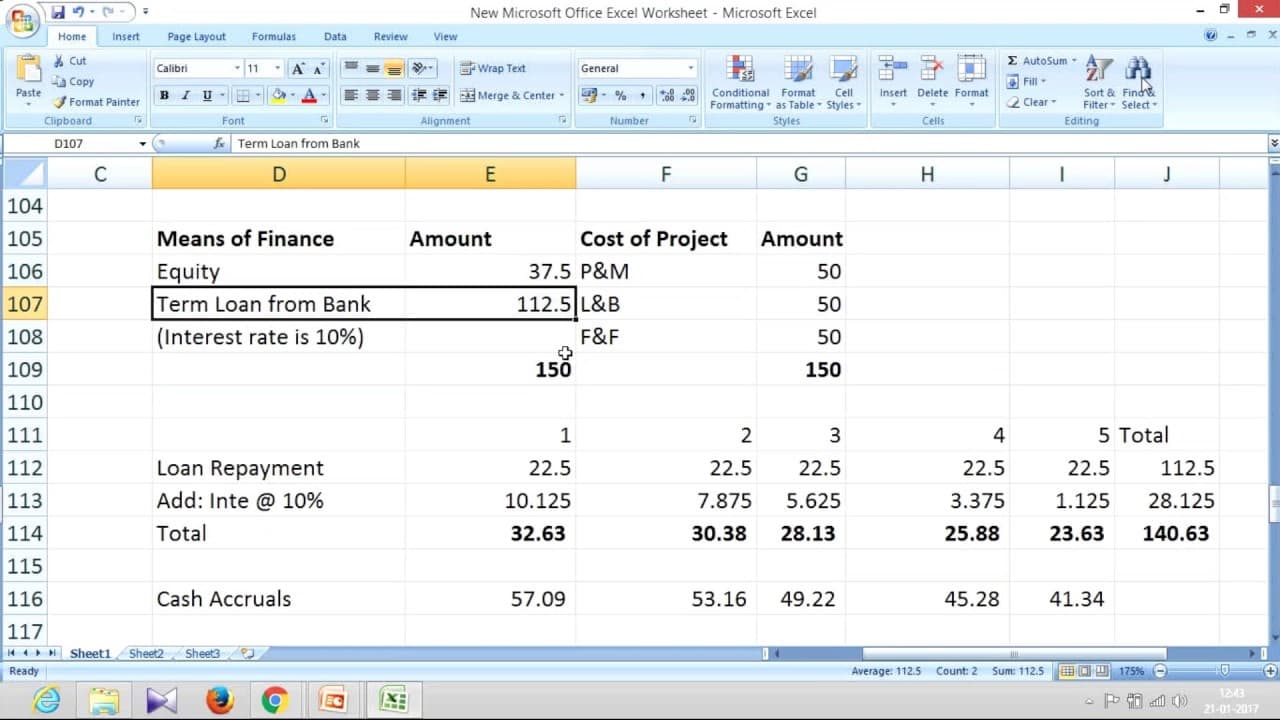
- 🏦 Cash accruals should be at least 1.75 times the repayment obligation for banks to be convinced of viability.
- 🥳 The inventory turnover ratio reflects sales efficiency, with a higher ratio indicating faster turnover and higher profits.
- 🍉 Negative net working capital suggests using short-term funds for long-term purposes, leading to repayment difficulties.
- 🙊 Peak and non-peak sales periods require separate assessment of inventory holding ratios for accurate analysis.
- 🔠 Capital turnover ratios are higher in service industries that have low capital investment compared to revenue.
- 🍻 Manufacturing entities have a direct link between capital employed, production, sales, and profit.
Install to Summarize YouTube Videos and Get Transcripts
Explore YouTube Video Summarizer or Get YouTube Transcript Extractor
Questions & Answers
Q: What is the debt service coverage ratio?
The debt service coverage ratio is a measure used by banks to determine if a borrower has enough cash flow to repay a loan. It compares the cash accruals of a company to its repayment obligations.
Q: How is the inventory turnover ratio calculated?
The inventory turnover ratio is calculated by dividing the annual cost of goods sold by the average inventory. It measures how quickly a company sells its inventory and indicates the efficiency of inventory management.
Q: What does negative net working capital mean?
Negative net working capital occurs when short-term funds are used for long-term purposes. It indicates a mismatch between short-term liabilities and current assets and can lead to financial difficulties and repayment issues.
Q: How should inventory holding ratios be analyzed for businesses with peak and non-peak sales periods?
For businesses with peak and non-peak sales periods, inventory holding ratios should be assessed separately. The peak period inventory holding should be annualized and linked to cash credit facilities provided by banks.
Summary & Key Takeaways
-
Inventory turnover ratio measures how quickly a company sells its inventory. A higher ratio indicates faster turnover and more sales, while a lower ratio suggests slower turnover and lower profits.
-
Debt service coverage ratio is used by banks to assess if a borrower has enough cash flow to repay a loan. It compares the cash accruals of a company to its repayment obligations.
-
Negative net working capital occurs when short-term funds are used for long-term purposes, which can lead to financial difficulties and repayment issues.
Read in Other Languages (beta)
Share This Summary 📚
Summarize YouTube Videos and Get Video Transcripts with 1-Click
Try YouTube Summary with ChatGPT & Claude or YouTube Transcript Generator
Explore More Summaries from Elearnmarkets by StockEdge 📚


Summarize YouTube Videos and Get Video Transcripts with 1-Click
Try YouTube Summary with ChatGPT & Claude or YouTube Transcript Generator