Master ORDER FLOW TRADING in Less than ONE HOUR!
TL;DR
Learn order flow trading fundamentals and strategies in under an hour.
Transcript
welcome to the ultimate beginners guide to orderflow trading in this course you will gain Superior knowledge about the tools of orderflow analysis in record time technical analysis focuses on analyzing historical data to predict future price movements based on known patterns in contrast order flow delves deeper into the Dynamics of how prices are f... Read More
Key Insights
- Order flow trading provides a deeper understanding of market microstructure, focusing on real-time price formation and historical analysis.
- Auction Market Theory underpins order flow trading, emphasizing the dynamic equilibrium in markets driven by supply and demand.
- Market orders and pending orders (limit and stop) play crucial roles in trading, with aggressive players using market orders to initiate price movements.
- Order book and DOM tools can be manipulated, making real-time order flow analysis challenging due to spoofing and iceberg orders.
- Historical order flow tools like the footprint chart, volume profile, and cumulative volume delta offer more reliable insights into market activity.
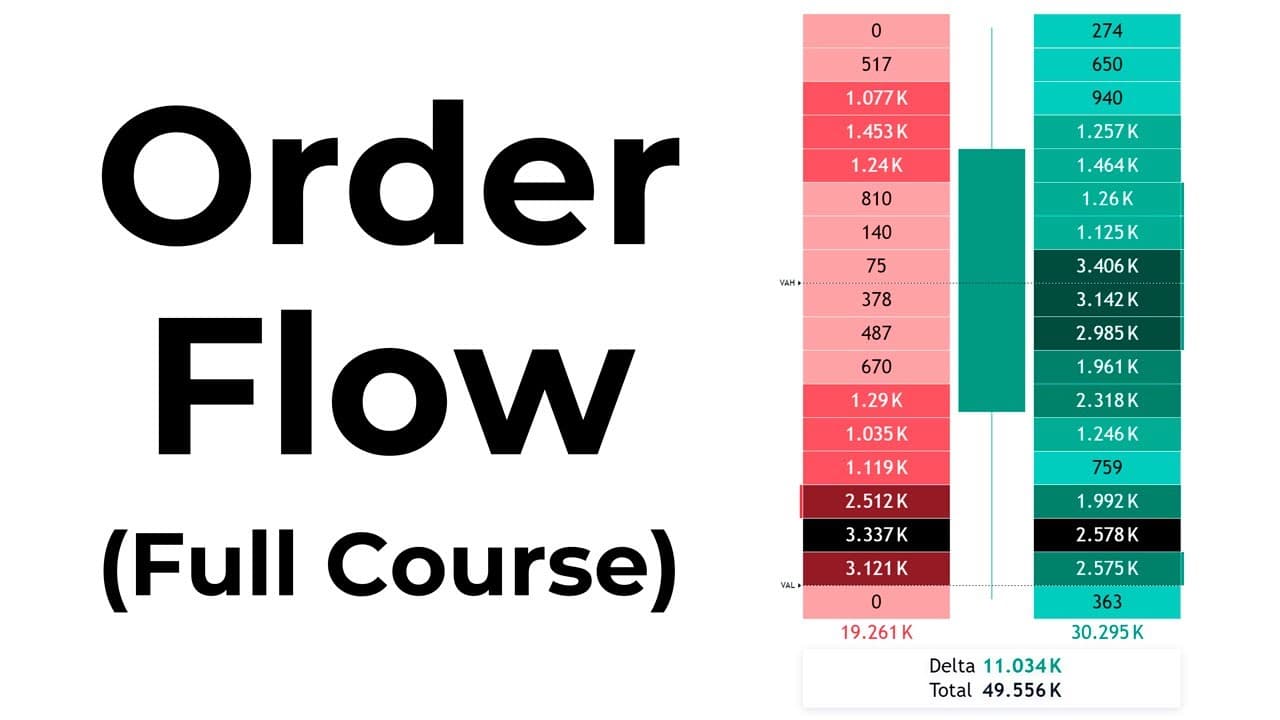
- Footprint charts reveal buyer and seller aggression, helping identify support and resistance levels through high volume nodes and imbalances.
- Volume profile analysis highlights areas of price acceptance and rejection, aiding in identifying potential reversal zones.
- Order flow analysis has advantages such as providing granular market insights but also faces challenges like ambiguity and manipulation.
Install to Summarize YouTube Videos and Get Transcripts
Explore YouTube Video Summarizer or Get YouTube Transcript Extractor
Questions & Answers
Q: What is the main focus of order flow trading?
Order flow trading focuses on understanding the microstructure of markets, specifically how buy and sell orders are placed, matched, and executed. It delves into real-time and historical price formation, providing traders with insights that go beyond traditional technical analysis. By analyzing order flow, traders can gain a deeper understanding of market dynamics and identify key levels of support and resistance.
Q: How does Auction Market Theory relate to order flow trading?
Auction Market Theory is a foundational concept in order flow trading, developed by Peter Steidlmayer. It views financial markets as auction processes where buyers and sellers interact to find equilibrium prices. This theory emphasizes the dynamic nature of supply and demand, helping traders understand how market balance and imbalances lead to price discovery and trends. It serves as a theoretical framework for interpreting order flow data.
Q: What are the main types of orders in trading?
In trading, there are two main types of orders: market orders and pending orders. Market orders are executed immediately at the current market price, used by traders looking to enter or exit positions quickly. Pending orders include limit and stop orders. Limit orders are set to execute at a better price than the current market, while stop orders execute at a worse price once a predetermined level is reached. Each order type serves different strategic purposes in trading.
Q: What challenges do traders face with real-time order flow tools?
Real-time order flow tools, such as the order book and DOM, face challenges like manipulation and ambiguity. Manipulation tactics, such as spoofing and iceberg orders, can distort the perceived market depth and intent of traders. Additionally, the diverse nature of market participants, including speculators and arbitragers, adds ambiguity to interpreting order flow data. These challenges make it difficult for traders to rely solely on real-time tools for accurate market insights.
Q: How do historical order flow tools improve trading analysis?
Historical order flow tools, such as the footprint chart, volume profile, and cumulative volume delta, provide more reliable insights by focusing on executed orders rather than real-time intent. These tools help traders identify areas of high and low trading activity, offering a clearer picture of market dynamics. By analyzing historical data, traders can better understand support and resistance levels, price acceptance, and rejection zones, enhancing their trading strategies.
Q: What is the role of the footprint chart in order flow analysis?
The footprint chart is a historical order flow tool that displays executed orders within a candlestick, showing buyer and seller aggression. It helps traders identify support and resistance levels through high volume nodes and imbalances. The footprint chart reveals the true activity of market participants, allowing traders to understand the dynamics of price movements and validate potential reversal points. It provides a detailed view of market activity beyond traditional candlestick analysis.
Q: How does the volume profile aid in market analysis?
The volume profile is a tool that displays trading volume at different price levels over a series of candlesticks. It highlights areas of price acceptance, where high trading activity indicates agreement on fair value, and areas of rejection, where low activity suggests disagreement. By analyzing the volume profile, traders can identify potential reversal zones and assess the strength of support and resistance levels. It complements other order flow tools by providing a broader context for market analysis.
Q: What are the advantages and disadvantages of order flow analysis?
Order flow analysis offers advantages such as providing a granular view of market dynamics, enhancing the understanding of support and resistance levels, and offering insights into volume activity. However, it also has disadvantages, including complexity in learning, challenges with manipulation and ambiguity, and the need for contextual analysis skills. Despite these challenges, order flow analysis can be a powerful tool for traders seeking a deeper understanding of market behavior.
Summary & Key Takeaways
-
Order flow trading offers a comprehensive view of market dynamics by analyzing the microstructure of buy and sell orders. This course introduces the foundational concepts and tools, including the footprint chart and volume profile, to help traders understand price formation and market behavior.
-
The course discusses the limitations of real-time order flow tools due to potential manipulation and ambiguity. It emphasizes the importance of historical order flow analysis to gain more accurate insights into market activity and highlights the role of different market participants like speculators and arbitragers.
-
Order flow tools provide a granular view of price action, aiding in the identification of support and resistance levels. While offering valuable insights, these tools require traders to overcome challenges such as learning complexity and dealing with manipulation, making them suitable for informed and experienced traders.
Read in Other Languages (beta)
Share This Summary 📚
Summarize YouTube Videos and Get Video Transcripts with 1-Click
Try YouTube Summary with ChatGPT & Claude or YouTube Transcript Generator
Explore More Summaries from Fractal Flow - Pro Trading Strategies 📚
Summarize YouTube Videos and Get Video Transcripts with 1-Click
Try YouTube Summary with ChatGPT & Claude or YouTube Transcript Generator