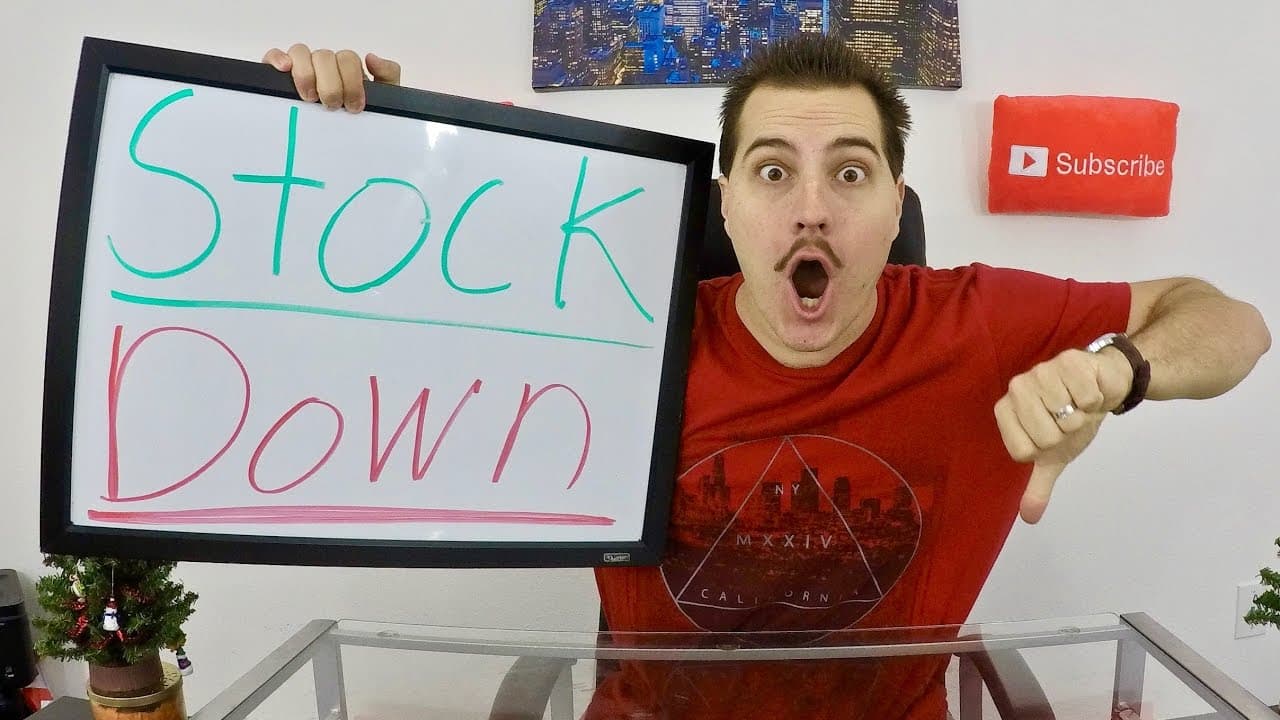
5 things you can do when your Stock goes DOWN!
TL;DR
When your stock goes down, you have five options: buy more stock, sell your position, hold your shares, buy long-term call options, or buy short-term put options.
Transcript
good day subscribers thank you so much for joining me today I am Jeremy this is the financial education Channel and today we're talking about the five things you can do out there when your stock goes down so after you invest in a stock there's a 50% chance that stock might go down there's a 50% chance that it might go up it's 5050 at the end of the... Read More
Key Insights
- 🤪 Investing in stocks entails a 50% chance of the stock going down, which is why it's essential to consider different options when this happens.
- 💐 Buying more stock at a lower price can effectively lower your cost basis and potentially increase future gains.
- 🧘 Selling your position may be necessary if the company's fundamentals and performance are consistently poor.
- 🤑 Holding shares without buying or selling can be an option if you have a significant position and don't want to invest more money.
- 🍉 Buying long-term call options can lead to significant gains if you believe in the stock's long-term performance.
- 🤑 Buying short-term put options can potentially make you money if the stock continues to go down, allowing you to buy at a cheaper price.
- 🧘 Hedging a position by combining different strategies can provide investors with more flexibility and potential profits.
Install to Summarize YouTube Videos and Get Transcripts
Explore YouTube Video Summarizer or Get YouTube Transcript Extractor
Questions & Answers
Q: How can buying more stock when the price goes down lower my cost basis?
By buying more stock at a lower price, you can decrease the average price you paid per share, which reduces your cost basis and potentially increases your overall gain when the stock eventually goes up.
Q: When should I consider selling my entire position or part of it?
You should consider selling if the company's new products or services are performing poorly, causing decreased revenue and profits. If you don't see the situation improving in the long term, it may be a sign to sell.
Q: Is holding my shares without buying or selling a reasonable option?
Yes, holding can be a viable strategy if you already have a significant position in the company and don't want to invest more money. It allows you to wait and see how the stock performs in the future.
Q: How can buying long-term call options benefit me?
Long-term call options allow you to potentially make larger gains if you believe the stock will perform well in the next year or two. However, there is also a higher risk as you could lose your investment if the stock does not reach the desired price.
Summary & Key Takeaways
-
After investing in a stock, there is a 50% chance it will go down. If your stock has gone down 20% in the last 6 months, you have five options to consider.
-
Option 1: Buy more stock if you still have confidence in the business fundamentals and no negative changes have occurred.
-
Option 2: Sell your entire position or part of it if you realize you were wrong about the business fundamentals and the company's performance has been consistently poor.
-
Option 3: Hold your shares without buying or selling, especially if you already have a significant position in the company.
-
Option 4: Buy long-term call options if you believe in the business fundamentals and expect the stock to perform well in the next year or two.
-
Option 5: Buy short-term put options to hedge your position and potentially make money even if the stock goes down.
Read in Other Languages (beta)
Share This Summary 📚
Summarize YouTube Videos and Get Video Transcripts with 1-Click
Try YouTube Summary with ChatGPT & Claude or YouTube Transcript Generator
Explore More Summaries from Financial Education 📚




Summarize YouTube Videos and Get Video Transcripts with 1-Click
Try YouTube Summary with ChatGPT & Claude or YouTube Transcript Generator