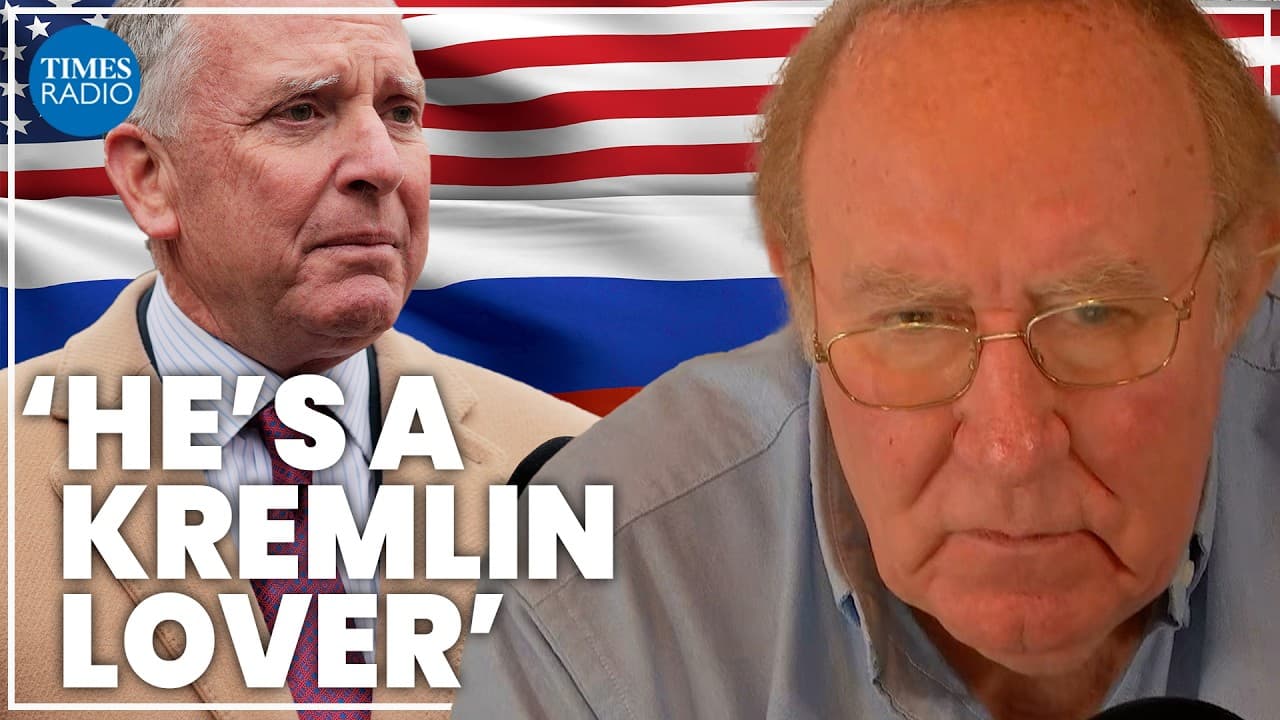
Steve Witkoff is a ‘Kremlin lover’ | Andrew Neil
TL;DR
US envoy Steve Witkoff criticized for pro-Kremlin stance.
Transcript
one is just a busted flush mad American broadcaster but the other is the president's um special envoy and and he knows nothing about what he's talking about i mean this guy's a property billionaire he's never been involved in this level of geopolitics he doesn't know anything about it let's talk about... Read More
Key Insights
- Steve Witkoff, a property billionaire, is criticized for his lack of geopolitical experience, especially regarding Ukraine and Russia relations.
- Witkoff's comments with Tucker Carlson have been perceived as pro-Kremlin, raising concerns about US foreign policy direction.
- Critics argue Witkoff's views echo Kremlin propaganda, undermining the US's stance on Ukraine and European security.
- The interview highlights a disconnect between US administration officials and the geopolitical realities in Eastern Europe.
- Concerns are raised over the potential sidelining of European interests in US-led peace talks with Russia.
- The discussion suggests a peace arrangement might be imposed on Ukraine without its involvement, favoring US interests.
- There is skepticism about the effectiveness of the US's current negotiation strategy with Russia, given the lack of European and Ukrainian participation.
- The interview underscores the potential risks of US foreign policy being influenced by individuals with limited expertise in international relations.
Install to Summarize YouTube Videos and Get Transcripts
Explore YouTube Video Summarizer or Get YouTube Transcript Extractor
Questions & Answers
Q: What are the main criticisms against Steve Witkoff?
Steve Witkoff faces criticism for his lack of experience in geopolitics, specifically in handling complex international issues like Ukraine-Russia relations. His comments during an interview with Tucker Carlson have been perceived as pro-Kremlin, raising concerns about his understanding and approach to US foreign policy and its implications for European security.
Q: Why is Andrew Neil concerned about the US foreign policy direction?
Andrew Neil expresses concern that the US foreign policy, particularly regarding Ukraine and Russia, might be influenced by individuals like Steve Witkoff, who have limited geopolitical expertise. Neil argues that Witkoff's pro-Kremlin stance and lack of understanding of Eastern European issues could undermine the US's position and lead to a peace arrangement that does not involve Europe or Ukraine.
Q: What are the implications of Witkoff's comments on US-Ukraine relations?
Witkoff's comments, perceived as pro-Kremlin, could strain US-Ukraine relations by suggesting a peace arrangement that might be imposed without Ukraine's involvement. This stance risks sidelining Ukrainian interests and could lead to a diplomatic approach that favors US interests over those of its European allies, potentially destabilizing the region further.
Q: How does the interview reflect on US negotiation strategies with Russia?
The interview suggests skepticism about the US's current negotiation strategy with Russia, highlighting concerns that European and Ukrainian interests might be sidelined. It raises questions about the effectiveness of the US's approach, given the lack of experienced geopolitical negotiators and the potential for peace talks that do not adequately address the complexities of Eastern European security issues.
Q: What is the potential risk of US foreign policy being influenced by individuals with limited expertise?
The potential risk is that US foreign policy could be misguided or ineffective, particularly in complex geopolitical situations like the Ukraine-Russia conflict. Individuals with limited expertise may not fully grasp the intricacies of international relations, leading to decisions that could destabilize regions, undermine alliances, and fail to achieve long-term peace and security goals.
Q: What concerns are raised about the peace talks involving Russia?
Concerns are raised that the peace talks might lead to an arrangement imposed on Ukraine without its involvement, potentially favoring US interests over those of Europe and Ukraine. Critics argue that such talks could result in a 'surrender' rather than a fair and balanced peace agreement, undermining the sovereignty and security of Ukraine and its European allies.
Q: How does the interview address the potential influence of Kremlin propaganda?
The interview suggests that both Steve Witkoff and Tucker Carlson are echoing Kremlin propaganda, which could influence US foreign policy direction. This alignment with Kremlin narratives raises concerns about the objectivity and effectiveness of US strategies in dealing with Russia and supporting Ukraine, potentially compromising the US's stance on European security.
Q: What is the significance of European involvement in US-Russia negotiations?
European involvement is crucial to ensure that any peace agreement considers the interests and security of Ukraine and its neighboring countries. Sidelining Europe in negotiations could lead to arrangements that destabilize the region, undermine alliances, and fail to address the broader geopolitical challenges posed by Russian aggression, emphasizing the need for a unified and informed approach.
Summary & Key Takeaways
-
Steve Witkoff, despite being a property billionaire, faces criticism for lacking geopolitical expertise, particularly in handling Ukraine-Russia relations. His recent comments in an interview with Tucker Carlson have been perceived as aligning with Kremlin narratives, raising concerns about the direction of US foreign policy.
-
The discussion suggests a disconnect between US administration officials and the geopolitical realities of Eastern Europe. Critics argue that Witkoff's stance undermines the US's position on Ukraine and European security, as his views seemingly echo Kremlin propaganda.
-
Concerns are raised about the potential sidelining of European and Ukrainian interests in US-led peace talks with Russia. The interview highlights skepticism about the effectiveness of the US's negotiation strategy, emphasizing the risks of foreign policy being influenced by individuals with limited expertise.
Read in Other Languages (beta)
Share This Summary 📚
Summarize YouTube Videos and Get Video Transcripts with 1-Click
Try YouTube Summary with ChatGPT & Claude or YouTube Transcript Generator
Explore More Summaries from Times Radio 📚

Summarize YouTube Videos and Get Video Transcripts with 1-Click
Try YouTube Summary with ChatGPT & Claude or YouTube Transcript Generator