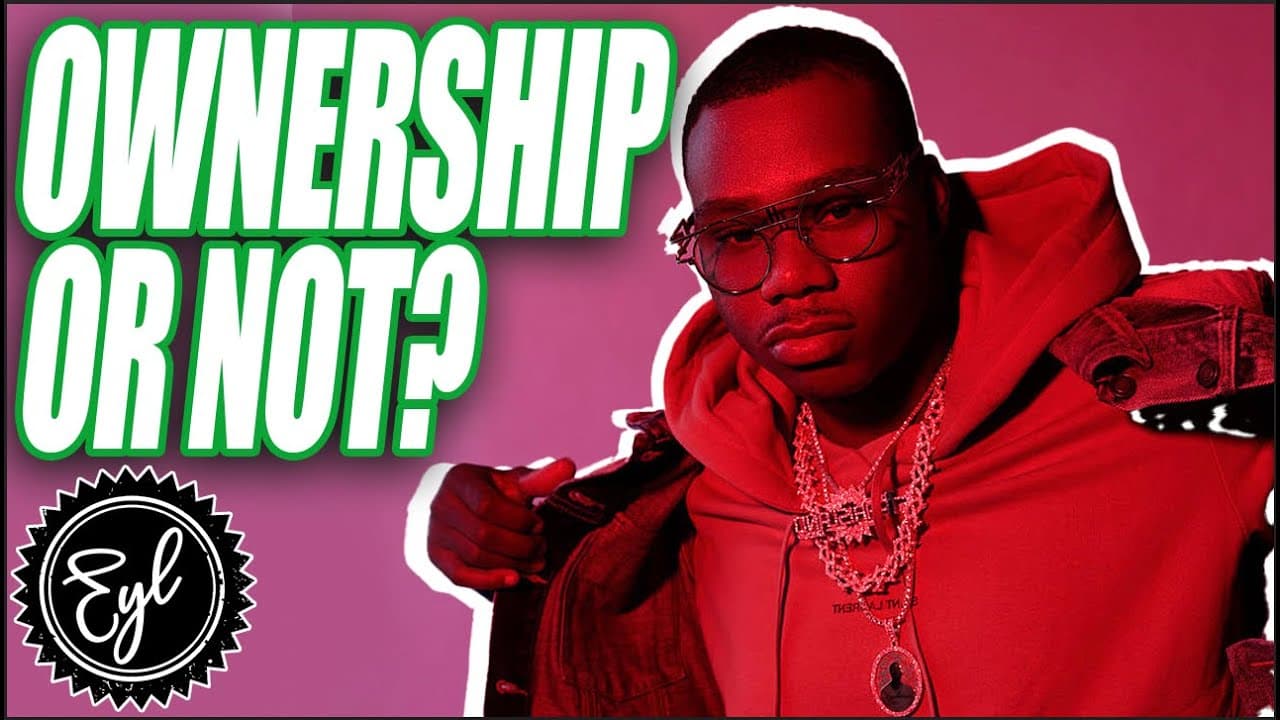
Symba on Why He's Okay with Not Owning His Masters & What He Did with His First $150k Advance
TL;DR
A budding artist shares his experiences of hustling, signing a major label deal, and the importance of owning your masters.
Transcript
I come down to LA come to La I'm hustling at the time doing my thing I got a couple dollars right I go broke in 90 days that's the name of the Bible please the 90-day challenge I go broke it 90 days because I'm thinking I gotta buy the DJs drinks and do all these different things and buy the tables in the club so I'm just blowing it but I'm not rea... Read More
Key Insights
- 🥺 Financial management is crucial in the music industry, as excessive spending without investing in one's craft can lead to financial struggles.
- 🧑🎨 Learning from experienced artists and collaborating with them can significantly impact an artist's growth and knowledge of the evolving music industry.
- 🙃 Major label deals provide stardom and exposure, but they often come with the sacrifice of owning one's masters.
- 🙃 Owning masters can be more valuable than stardom to an artist, as it allows them to maintain control over their music and potentially generate substantial income in the long run.
- 🏷️ Being dropped from a major label does not necessarily result in financial obligations, as label deals often operate differently from personal loans.
- 🤩 Understanding the industry and building relationships with key players in streaming platforms and other companies can be vital for an artist's future success.
- 🙈 The artist values the journey and learning process in the music industry, seeing it as an opportunity to acquire knowledge that can be applied in future endeavors.
Install to Summarize YouTube Videos and Get Transcripts
Explore YouTube Video Summarizer or Get YouTube Transcript Extractor
Questions & Answers
Q: How did the artist spend the initial money he earned in LA?
The artist spent the money on drinks, DJs, and tables in clubs, neglecting to invest it in his craft, such as buying equipment and software.
Q: How did the artist improve his songwriting skills?
He paid songwriters to teach him how to write hooks and sought guidance from other experienced artists like Phonics and D Brooks.
Q: Why did the artist sign with Columbia Records even though he knew he would be dropped eventually?
The artist needed the money at the time to sustain his studio, and the opportunity to sign with Columbia provided him with financial relief, despite the lack of creative freedom.
Q: Did the artist recoup his investment after being dropped by Columbia?
No, the artist only released one song during his deal with Columbia, and shortly after, there was a regime change, resulting in him being dropped. He did not owe the label anything.
Summary & Key Takeaways
-
The artist starts in LA, spending money frivolously instead of investing in his craft, leading to financial struggles.
-
He eventually gets a studio and learns about the evolving music industry from fellow artists, leading to a meeting with Columbia Records.
-
Columbia signs him, but the music he releases isn't true to himself, and he eventually gets dropped without releasing much music.
Read in Other Languages (beta)
Share This Summary 📚
Summarize YouTube Videos and Get Video Transcripts with 1-Click
Try YouTube Summary with ChatGPT & Claude or YouTube Transcript Generator
Explore More Summaries from Earn Your Leisure 📚
Summarize YouTube Videos and Get Video Transcripts with 1-Click
Try YouTube Summary with ChatGPT & Claude or YouTube Transcript Generator