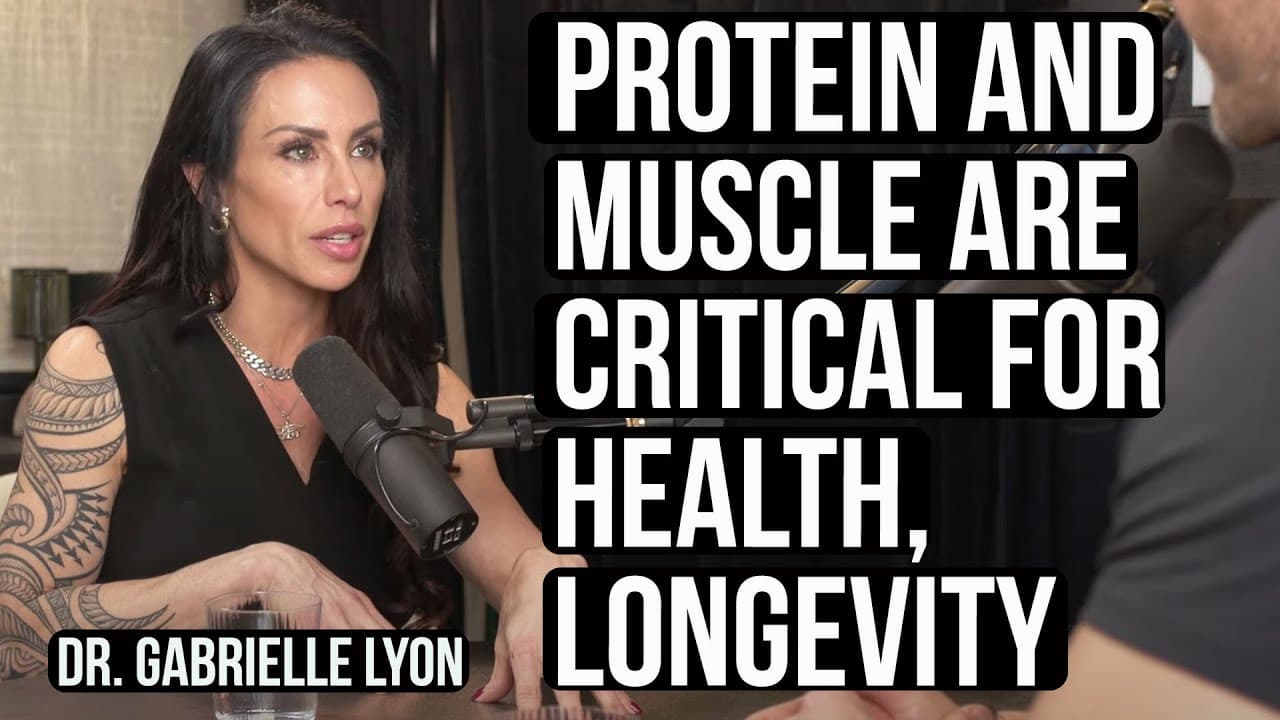
Protein for Muscle Gain, Fat Loss & Longevity | Dr. Gabrielle Lyon
TL;DR
Maintaining and increasing muscle mass plays a crucial role in overall health, longevity, and disease prevention.
Transcript
one gram per pound ideal body weight so I'm 110 pounds that's 110 grams of protein not that hard to do it's not that hard it's not that hard to do carbohydrates are fats after that this one there are tibia levels of body composition goals all of that based upon their activity level based upon are they you know insulin sensitive can they tolerate ca... Read More
Key Insights
- 🏋️ Protein is essential for maintaining muscle mass and should be consumed at a rate of one gram per pound of ideal body weight. Dietary protein restriction should only be done judiciously and in targeted periods, not as a lifestyle.
- 🔬 The mechanistic target of rapamycin (mTOR) pathway, which plays a role in growth and muscle protein synthesis, should not be simply dampened as it is critical for longevity, muscle health, and survivability in cancer. Decreasing mTOR stimulation is not directly linked to longevity.
- 💪 Creatine is a natural supplement that can support muscle health and optimize muscle mass when combined with exercise. Creatine, electrolytes, and taurine can have synergistic benefits for muscle recovery and performance during exercise.
- 🔍 Skeletal muscle is crucial for longevity, aging, and overall health. The importance of muscle mass is often overlooked, and more accurate ways of measuring skeletal muscle are needed. Current methods, such as lean body mass, do not provide an accurate representation of muscle mass.
- ♀️ Strength training is important for building and maintaining muscle mass. Progressive overload, training for strength, and hypertrophy are all valuable for muscle growth. Strength training should be coupled with other forms of exercise, such as cardiovascular activity and metabolic conditioning, for overall health.
- 🍳 It is recommended to consume 1.6 grams per kilogram or one gram per pound of ideal body weight of dietary protein for muscle health and longevity. Protein intake should be adjusted based on individual goals, activity level, and insulin sensitivity.
- 💔 Sarcopenia, a decline in muscle mass and function, can occur even in individuals as young as 30 years old. Muscle mass and quality are more important than bone quality for fracture risk and overall health.
- 😓 Overweight individuals who are under muscled are at risk for several health issues. Obesity tends to occur with low muscle mass and strength, and maintaining muscle mass is crucial for overall health and disease prevention.
- ♀️ Women should not fear weightlifting or resistance training as it will not create excessive muscle mass. Women typically gain muscle mass at half the rate of men and have a hard time building significant muscle mass.
- 💊 Supplements like creatine, vitamin D, fish oil, and urolithin A have shown promising benefits for muscle health, cognition, and overall well-being. However, it is important to consult with a healthcare professional before adding supplements to your routine.
Install to Summarize YouTube Videos and Get Transcripts
Explore YouTube Video Summarizer or Get YouTube Transcript Extractor
Questions & Answers
Q: How does protein intake affect muscle health and longevity?
Protein intake is crucial for building and maintaining muscle mass, which is directly linked to longevity and overall health. Adequate protein intake, around one gram per pound of ideal body weight, supports muscle health, prevents muscle loss, and helps with disease prevention.
Q: What are the key factors influencing muscle quality and function?
Several factors affect muscle quality and function, including protein intake, exercise, and overall lifestyle. Adequate protein intake supports muscle health, while regular exercise, particularly strength training, improves muscle mass, strength, and overall function. A balanced diet, sufficient rest, and lifestyle habits also play a role in maintaining muscle health.
Q: How does muscle mass impact disease prevention and aging?
Muscle mass is a critical factor in disease prevention and healthy aging. Higher muscle mass is associated with improved insulin sensitivity, metabolic health, and lower risk of chronic diseases such as cardiovascular disease and diabetes. Additionally, preserving muscle mass can help individuals maintain their independence and overall quality of life as they age.
Q: Can muscle mass be improved in older individuals?
Yes, it is possible to improve muscle mass, strength, and function in older individuals through proper nutrition and regular exercise. While muscle gains may be slower compared to younger individuals, strength training and resistance exercises can still have a significant impact on muscle health, even in older age. It is important for older individuals to engage in strength and resistance training exercises under the guidance of a healthcare professional to ensure safety and proper technique.
Summary & Key Takeaways
-
Muscle mass is a vital organ system that is often overlooked and underappreciated.
-
Skeletal muscle is critical for longevity, aging, and disease prevention.
-
Protein intake is essential for maintaining and building muscle mass, with the recommendation of one gram of protein per pound of ideal body weight.
-
Insulin resistance and obesity are closely linked to poor muscle quality, highlighting the importance of muscle health in preventing chronic diseases.
-
Strength training and exercise are crucial for improving muscle mass, strength, and overall health.
Read in Other Languages (beta)
Share This Summary 📚
Summarize YouTube Videos and Get Video Transcripts with 1-Click
Try YouTube Summary with ChatGPT & Claude or YouTube Transcript Generator
Explore More Summaries from High Intensity Health 📚

Summarize YouTube Videos and Get Video Transcripts with 1-Click
Try YouTube Summary with ChatGPT & Claude or YouTube Transcript Generator