Why Don't All Birds Fly in V Shapes?
TL;DR
Birds fly in different formations, such as V-shapes and clumps, depending on their size, energy conservation, and predator protection.
Transcript
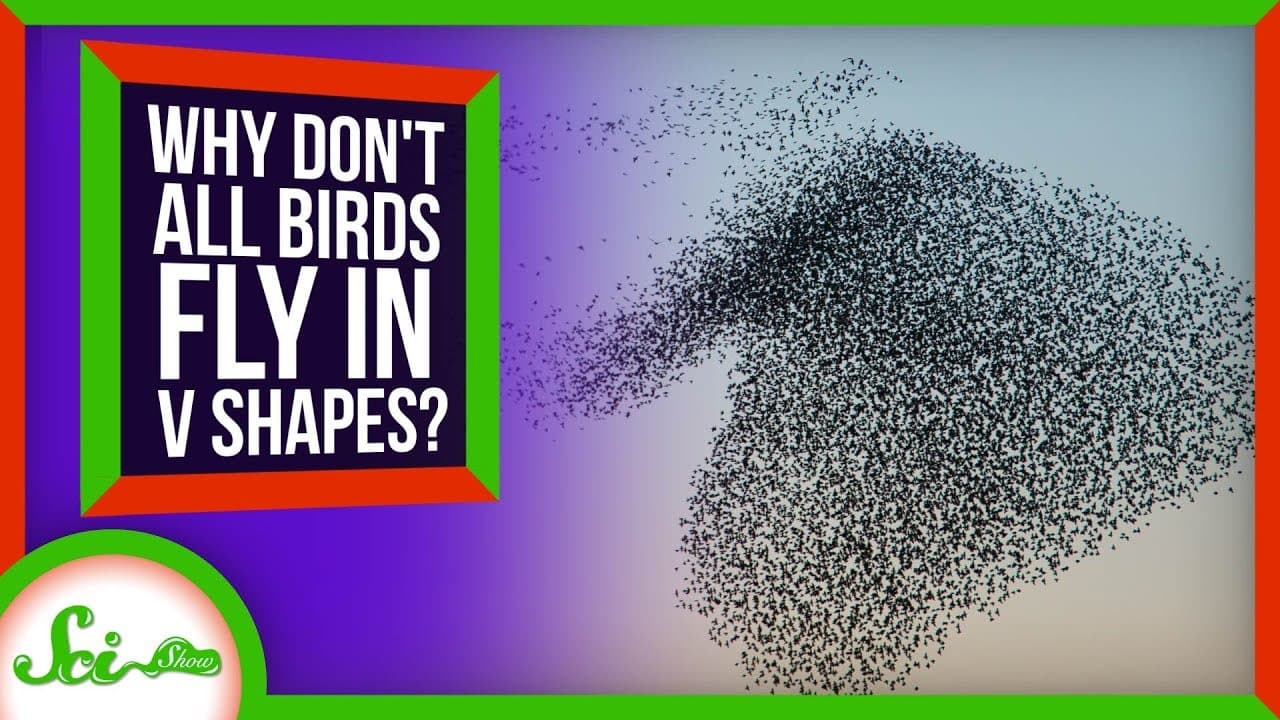
think of a flock of birds and you probably imagine that classic v-shape a leader with sets of trailing birds on either side not all flocks fly this way starlings for example travel and large three-dimensional clusters that seem to move like a wave so why do some species fly in v's and others in clumps well it turns out it has a lot to do with the i... Read More
Key Insights
- 🛬 Some bird species, like geese and swans, fly in V-shaped formations to conserve energy during long flights.
- 😘 The wing flaps of larger birds create consistent vortices that provide an upward force for flock mates.
- 🪽 Small birds have different wing motions and size, making it inefficient to fly in V-shapes, but they fly in groups for predator protection.
- 🥇 The theory of The Selfish Herd proposes that placing another animal between oneself and a predator reduces individual risk.
- 🙈 Flying in groups is a common survival strategy seen in various animal species.
- 😘 The size and wing structure of birds determine their flight formations.
- 💥 Flying in formations helps birds maintain visual contact and avoid collisions.
Install to Summarize YouTube Videos and Get Transcripts
Explore YouTube Video Summarizer or Get YouTube Transcript Extractor
Questions & Answers
Q: Why do some bird species fly in V-shaped formations?
V-shaped formations, like those of geese and swans, help birds conserve energy during long flights by creating vortices that provide an upward force, saving approximately 15% of their energy.
Q: Why don't all birds fly in V-shaped formations?
Small birds have different wing motions and sizes that make it inefficient to fly in V-shaped formations. Their wing flaps do not generate consistent vortices for flock mates to use, and they rely on traveling in groups for predator protection instead.
Q: What is the purpose of flying in groups for small birds?
Small birds fly in groups for predator protection. Placing another bird between themselves and a possible predator reduces their individual risk. This behavior is part of the theory called The Selfish Herd proposed by William David Hamilton.
Q: Are there any other explanations for bird flight formations?
Other theories also suggest that flying in groups is a common survival strategy, seen not only in birds but also in schools of fish and swarms of insects. The primary purposes are energy conservation and protection from predators.
Summary & Key Takeaways
-
Different bird species fly in different formations, with geese, pelicans, swans, and ibises typically flying in V-shaped formations to conserve energy during long treks.
-
The V formation allows birds to stay in visual contact, avoid collisions, and take advantage of the upward force created by wing flaps.
-
Small birds, with their different wing motions and smaller size, do not generate consistent vortices for flock mates to use, instead they rely on flying in groups for predator protection.
Read in Other Languages (beta)
Share This Summary 📚
Summarize YouTube Videos and Get Video Transcripts with 1-Click
Try YouTube Summary with ChatGPT & Claude or YouTube Transcript Generator
Explore More Summaries from SciShow 📚


Summarize YouTube Videos and Get Video Transcripts with 1-Click
Try YouTube Summary with ChatGPT & Claude or YouTube Transcript Generator