What Are the Steps for Fabricating a MOS Transistor?
TL;DR
The fabrication of a MOS transistor involves six key steps: oxidation, photolithography, diffusion, chemical vapor deposition (CVD), ion implantation, and metallization. Each step plays a crucial role in building the transistor's multi-layer structure, ensuring proper conductivity and functionality in electronic devices.
Transcript
hi everyone in this video I am going to explain about what are the various steps involved in the fabrication of a mass transistor so previously I have explained what is the mass transistor structure how the structure will be and what are the different layers that a mass transistor consisting of so if you take a mass transistor the structure of the ... Read More
Key Insights
- 💁 Mass transistors are multi-layer structures with diverse regions that are essential for их functionalities, including channel formation.
- 🛟 Oxidation serves a dual purpose of protecting the substrate and ensuring that unwanted conduction does not occur in certain areas.
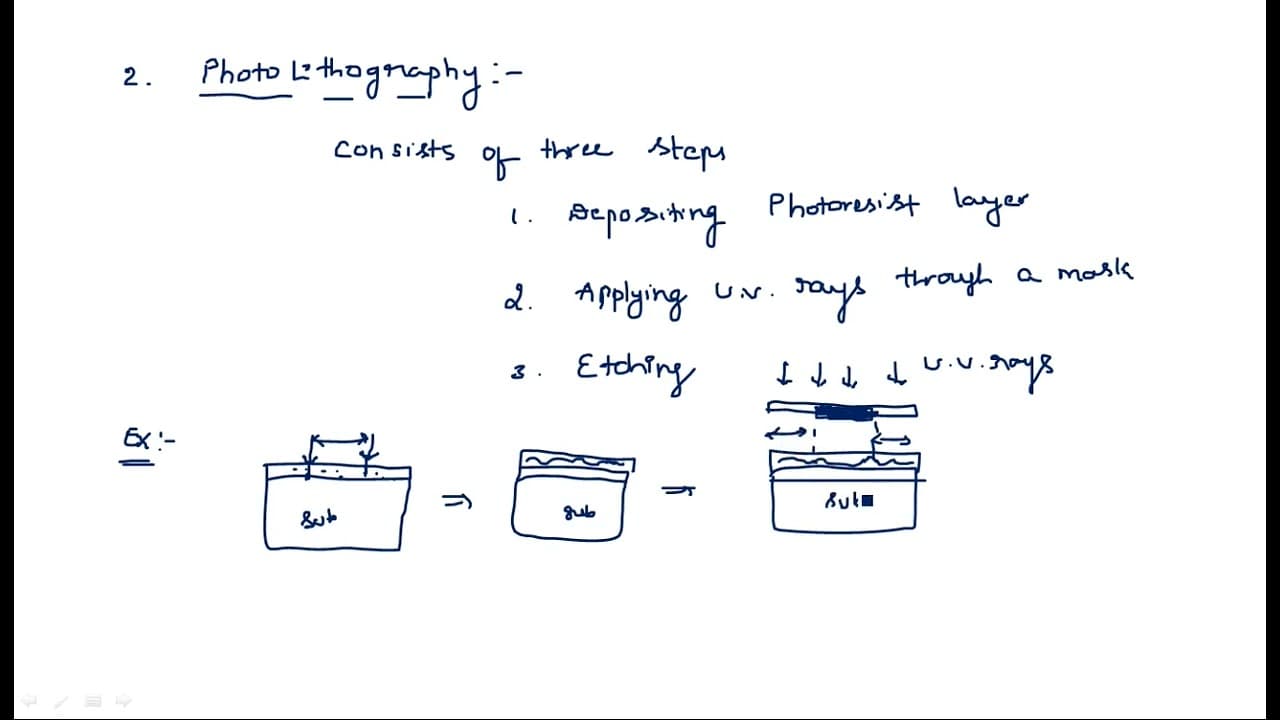
- 💠 Photolithography is a critical technique for defining the shapes and paths in the transistor layers by selectively removing unwanted material.
- ❓ The diffusion process enhances the conductivity and electrical characteristics of specific regions, which is vital for transistor operation.
- 👷 Chemical vapor deposition is integral for constructing the gate layer without altering the underlying substrate significantly.
- 📳 Ion implantation is essential for creating charge channels in enhancement-mode transistors, which are widely used for switching applications.
- 👻 Metallization is crucial as it provides connectivity to the transistor terminals, allowing integration into complex circuits.
Install to Summarize YouTube Videos and Get Transcripts
Explore YouTube Video Summarizer or Get YouTube Transcript Extractor
Questions & Answers
Q: What are the primary layers found in a mass transistor structure?
A mass transistor consists of several key layers, including a substrate (either p-type or n-type), an auxiliary layer, a polysilicon layer, and metallization components for the drain, source, and gate terminals. Understanding these layers is essential for grasping how the transistor operates and integrates with other circuit elements.
Q: How does oxidation contribute to mass transistor fabrication?
Oxidation involves creating an insulating silicon dioxide layer on the silicon substrate, which can range from 0.1 to 1 micrometer in thickness. This layer prevents interference between the substrate and other components of the transistor and allows for proper function by insulating regions that should not conduct electricity. Multiple oxidation steps enhance the structure's reliability.
Q: Can you explain the photolithography process?
Photolithography encompasses several steps including depositing a photoresist layer, applying ultraviolet (UV) light, and etching to remove unwanted material. This technique shapes the transistor's layers and prepares the surface for subsequent diffusion and deposition processes, ensuring precise control over where conductive paths are created.
Q: What is the role of diffusion in mass transistors?
Diffusion is crucial for creating p+ and n+ regions within the substrate by introducing impurities at high temperatures. This process alters the electrical characteristics of the silicon, enabling the formation of the required conductive pathways for either NMOS or PMOS transistors, based on the device's intended function.
Q: How does chemical vapor deposition (CVD) differ from diffusion?
Chemical vapor deposition (CVD) specifically focuses on creating polysilicon layers at the gate terminal without injecting impurities into the substrate. In contrast, diffusion involves introducing atoms into the substrate to modify its conductivity. CVD is essential for forming the gate material while diffusion is key for forming source and drain regions.
Q: What is ion implantation and its significance in mass transistors?
Ion implantation is the process that creates a conductive channel between the source and drain terminals in enhancement-mode transistors, where such a channel does not exist by default. This process is vital for the transistor's switching capabilities and its overall performance in electronic circuits.
Q: Why is metallization necessary in the fabrication of mass transistors?
Metallization is the final step in transistor fabrication, where metal contacts are established with the source, drain, and gate terminals. This process uses materials like copper to connect these terminals to external devices, thus enabling the transistor to function within a broader electronic circuit.
Q: What future topics will follow in subsequent videos regarding transistors?
Future videos will delve into how the fabrication processes discussed are utilized to create various types of transistors, including NMOS, PMOS, and CMOS devices. This will provide a more comprehensive understanding of how these foundational elements are employed in modern electronic applications.
Summary & Key Takeaways
-
The video explains the mass transistor structure, focusing on the various layers such as substrates and diffusion regions crucial for its function.
-
It outlines six primary steps in the fabrication process: oxidation, photolithography, diffusion, chemical vapor deposition, ion implantation, and metallization, emphasizing their importance.
-
Each step involves specific procedures that dictate how layers are formed and how the physical properties of transistors are engineered for functionality in devices.
Read in Other Languages (beta)
Share This Summary 📚
Summarize YouTube Videos and Get Video Transcripts with 1-Click
Try YouTube Summary with ChatGPT & Claude or YouTube Transcript Generator