What Causes Supply Curve Shifts?
TL;DR
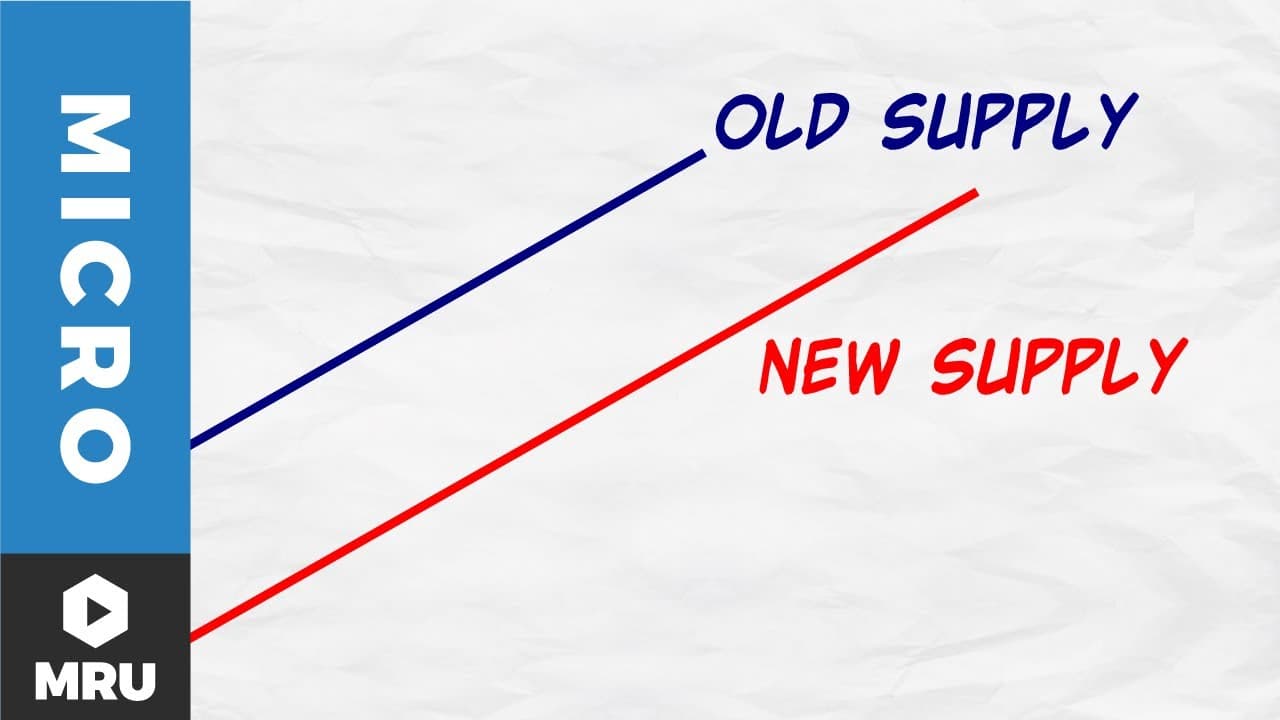
Supply curves shift due to changes in factors affecting production costs, such as technological innovations, input prices, taxes, subsidies, and producer expectations. These shifts influence the quantity a firm is willing to supply at a given price. Understanding these factors helps predict supply curve movements and their impact on market dynamics.
Transcript
♪ [music] ♪ - [Prof. Alex Tabarrok] Now that you've got the basics of the supply curve down, we'll jump into factors which shift the supply curve. Here's the same list I showed you before of important supply shifters. Remember, the most basic one is a change in costs. So really the only question is, how does technological innovations change costs? ... Read More
Key Insights
- Technological innovations reduce production costs, increasing supply by shifting the supply curve down and to the right.
- An increase in input prices raises production costs, leading to a decrease in supply and shifting the supply curve up and to the left.
- Taxes on production are akin to increased costs, decreasing supply by shifting the supply curve upward by the tax amount.
- Subsidies decrease production costs, thereby increasing supply and shifting the supply curve down and to the right.
- Expectations of higher future prices raise current opportunity costs, reducing current supply as firms store goods for future sale.
- Entry of new producers increases market supply, while exit decreases it, impacting supply curve positions.
- Opportunity costs affect supply; higher alternative production values can decrease supply of the current product.
- Understanding supply shifters involves analyzing cost effects; decreased costs increase supply, while increased costs decrease it.
Install to Summarize YouTube Videos and Get Transcripts
Explore YouTube Video Summarizer or Get YouTube Transcript Extractor
Questions & Answers
Q: How do technological innovations affect the supply curve?
Technological innovations typically lower production costs, allowing firms to supply more at a given price or the same quantity at a lower price. This results in an increase in supply, shifting the supply curve down and to the right. Innovations like genetically modified seeds, which reduce the need for inputs like fertilizer, exemplify this effect.
Q: What happens to the supply curve when input prices increase?
An increase in input prices raises the cost of production, leading to a decrease in supply. This causes the supply curve to shift up and to the left, as firms are now willing to supply less at each price point or require a higher price to supply the same quantity as before.
Q: How do taxes influence the supply curve?
Taxes on production act as additional costs for firms, decreasing supply. The supply curve shifts upward by the amount of the tax, reflecting the higher minimum price firms require to supply the same quantity. This shift occurs uniformly across all price points, effectively reducing the overall supply.
Q: In what way do subsidies impact the supply curve?
Subsidies reduce production costs by providing financial assistance per unit produced, thereby increasing supply. This causes the supply curve to shift down and to the right, as firms can supply more at each price point or maintain the same quantity at a lower price, enhancing market supply.
Q: How do expectations of future prices affect current supply?
Expectations of higher future prices increase the opportunity cost of selling goods now, leading firms to store products for future sale. This reduces current supply, shifting the supply curve up and to the left. Firms anticipate higher profits later, influencing their current production and supply decisions.
Q: What role does the entry or exit of producers play in supply shifts?
The entry of new producers into a market increases the overall supply, shifting the supply curve to the right as more goods are available at each price point. Conversely, the exit of producers decreases supply, shifting the supply curve to the left due to reduced market competition and availability.
Q: How do changes in opportunity cost affect the supply curve?
Opportunity cost changes impact supply by altering the value of alternative uses for production resources. For instance, if the price of wheat rises, farmers may shift land from soybeans to wheat, reducing soybean supply. This results in a leftward shift of the soybean supply curve due to increased opportunity costs.
Q: What is the general procedure for analyzing supply curve shifts?
To analyze supply curve shifts, first determine the effect of a change on production costs. If costs decrease, supply increases, shifting the curve down and to the right. If costs increase, supply decreases, shifting the curve up and to the left. This method applies to various factors like technology, taxes, and input prices.
Summary & Key Takeaways
-
Supply curves shift based on changes in production costs influenced by various factors like technology, input prices, and government policies. Technological advancements typically lower costs, increasing supply, while higher input prices or taxes increase costs, reducing supply. Understanding these dynamics aids in predicting market behavior.
-
Taxes and subsidies significantly impact supply curves. Taxes act as additional costs, decreasing supply, whereas subsidies reduce costs, boosting supply. Firms' expectations about future prices also play a role, as anticipated price increases can lead to reduced current supply due to increased opportunity costs.
-
The entry and exit of producers alter market supply levels, with more producers increasing supply and fewer decreasing it. Opportunity costs, often overlooked, are crucial as they represent the next best alternative use of resources, influencing supply decisions and curve shifts.
Read in Other Languages (beta)
Share This Summary 📚
Summarize YouTube Videos and Get Video Transcripts with 1-Click
Try YouTube Summary with ChatGPT & Claude or YouTube Transcript Generator
Explore More Summaries from Marginal Revolution University 📚

Summarize YouTube Videos and Get Video Transcripts with 1-Click
Try YouTube Summary with ChatGPT & Claude or YouTube Transcript Generator